
European Parliament’s budgetary and audit committees urged the European Commission to take a more resolute line against member states that flout EU law. They backed a report saying as much regarding the Union’s rule-of-law conditionality regime.
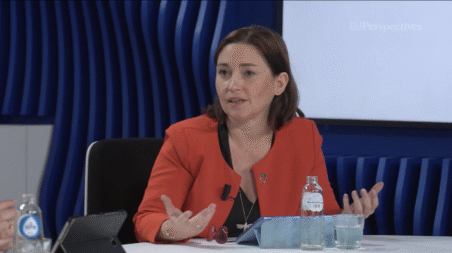
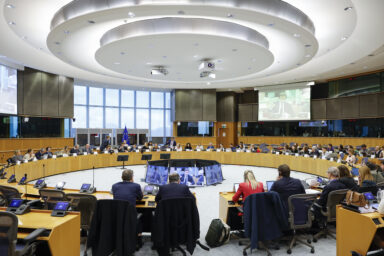
Johan van Overtveldt, chair of the budget committee, banged his imaginary gavel after a brisk roll-call vote on Thursday morning. “The vote is closed. It is approved, 39 in favour, 11 against, no abstentions. Thank you very much,” he declared on 20 November, as the members of the Parliament’s BUDG and CONT committees voiced their support for a joint report on the “implementation of the rule-of-law regime“. Moments earlier, he ceded the floor to the report’s co-rapporteurs, Jean-Marc Germain (S&D/FRA) and Monika Hohlmeier (EPP/DEU). Their report calls for a harder line against member states whose disrespect of European values reaches a critical legal level.
What link is “sufficiently direct“?
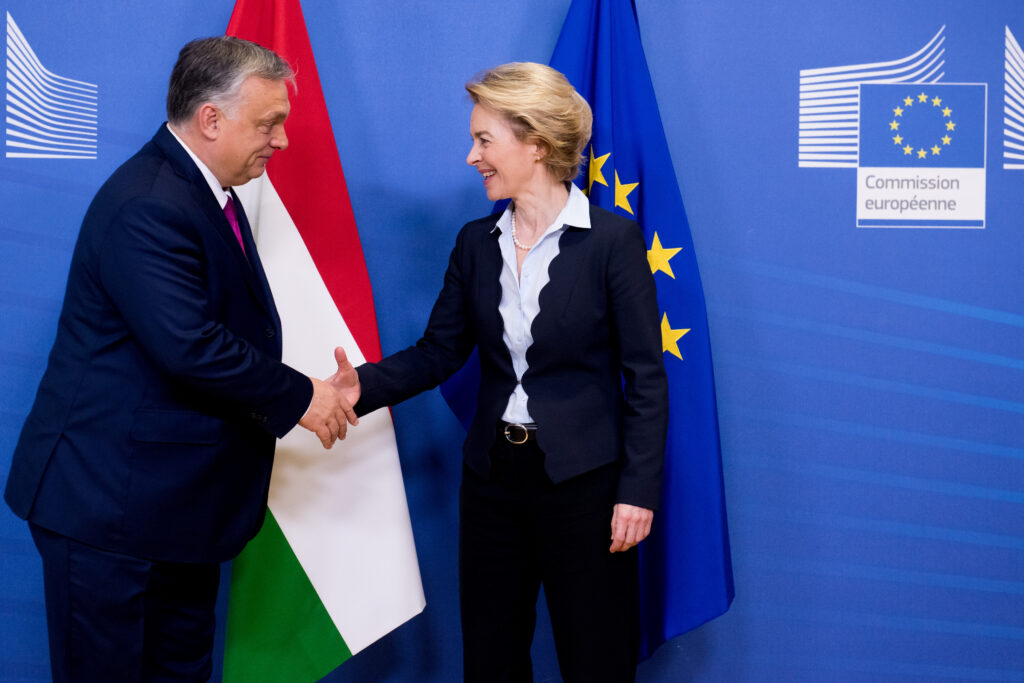
The report—formally an own-initiative resolution labelled 2025/2061(INI)—does three things. First, it calls rule-of-law conditionality a “core pillar” for shielding the entire EU budget, whatever the funding source, from kleptocratic raids. Second, it scolds the Commission for tardiness. The executive waited almost two years before proposing to freeze cohesion cash for Hungary, and has still not dared to wield the weapon against any other country. Third, it demands transparency: written exchanges between Brussels and the capitals should flow to MEPs through a secure channel.
MEPs want one coherent timetable tying together the conditionality regulation, the “horizontal enabling condition” attached to ordinary structural funds and the “super milestones” governing the disbursement of recovery money. All rule-of-law fixes should come in a single package. They urge the Commission to spell out what counts as a “sufficiently direct link” between an illiberal judge-packing scheme and a threat to EU cash. And they fret about small beneficiaries who risk becoming collateral damage when funds are frozen.
Legal storms, political squalls
Parliament’s rapporteurs also eye the next multi-annual financial framework, due to take effect in in 2028. The Commission, they note, is pondering fresh tools. Fine, say the MEPs—so long as there is no duplication or contradiction. One instrument, one standard, one message: the Union pays only when its values are safe.
All this sits atop a shaky legal edifice. Hungary and Poland marched to Luxembourg in 2021, pleading that Regulation 2020/2092 bypassed the Article 7 procedure, breached equality of member states and left “rule of law” undefined. The European Court of Justice swatted away the complaints in February 2022. But the sparring laid bare a deeper crack: some governments see conditionality as federal over-reach.
You might be interested

Even when the law is clear, practice wobbles. Scholars talk of “indeterminacy”. No-one knows how much judicial reform is enough to unlock billions. The Commission enjoys wide discretion; capitals complain of moving goalposts. Such uncertainty, critics say, risks turning a legal safeguard into a political bargaining chip—and undermines the credibility of the Union’s purse-string threats.
Psychology at play
Compromise has already dulled the blade. In December 2020 EU leaders agreed, sotto voce, to delay the regulation’s activation until court challenges were settled. That pause, plus the need for a qualified-majority vote in Council to endorse any freeze, hands recalcitrant states time and allies. Observers doubt such a vote “will probably ever take place”, as governments tend to duck confrontation.
The stand-off breeds psychological as well as legal obstacles. Brussels strikes, Budapest counters, Warsaw gloats, and mutual trust erodes. Far from nudging wayward countries back to liberal norms, the cycle may push them further away. The rule-of-law mechanism thus risks becoming another chapter in the EU’s long history of half-used sanctions.
A second structural flaw lurks. Conditionality focuses on protecting money, not values. By linking action to the “serious risk” of budgetary harm, the Union implicitly concedes that violations without fiscal fingerprints may escape censure. Yet systemic threats to democracy often inflict diffuse, long-term costs no audit can easily trace.
Future battle lines
The Parliament’s answer is simple: harden the terms and widen the scope. Tie the Commission’s annual rule-of-law report to concrete funding milestones. Update the guidelines to tackle fund diversion schemes. Lock in safeguards for innocent recipients while squeezing kleptocrats. And give legislators a front-row seat, not a back-row briefing, in every step of the process.
(The report) invites the Commission, in this context, to review its interpretation of the Conditionality
Regulation as a last resort instrument and to be more proactive in it use. — Draft report on the implementation of the rule of law conditionality regime by BUDG, CONT committees
hether the Commission listens is another matter. Some officials fear legal overreach; others prefer quiet bargaining to public showdowns. National governments, meanwhile, jealously guard budgetary prerogatives. Yet the prospect of a tighter, bigger seven-year budget after 2027 will thrust conditionality back on the table. Money is leverage; the Parliament’s committees mean to use it.
The immediate test remains Hungary. Mr Germain said the report “examined the way the decisions have been taken very carefully” and concluded that the executive should “strengthen the measures”. Ms Hohlmeier warned that equal treatment across programmes, including the internal market, is “not fully guaranteed”. Both rapporteurs want faster infringement actions if Budapest drags its feet.
Act, reveal, repeat
For now the conditionality regime has frozen only a slice of cohesion funds. The Commission insists progress is under review. Parliament’s message on 20 November is sharper: act, reveal, repeat. The real game, though, will unfold in the plenary chamber, then—should the text pass—in the court of public opinion across a Union that still hopes its money can buy compliance with its values.
“This is a very important moment,” said Mr Germain. He reminded colleagues that the conditionality regulation, adopted in 2020, translates Article 2 of the EU treaty—respect for the rule of law—into a budgetary veto. The report, he added, shows how the tool works in practice and “bolsters the legislation on Hungary”. Ms Hohlmeier praised “teamwork” across the aisle and insisted that the mechanism must become “even quite more tough”, with earlier disclosure to MEPs of Commission dealings with suspect governments.