
The Council presidency and the European Parliament’s representatives on Wednesday, 10 December reached a provisional agreement on amending the European Climate Law. The deal includes intermediate climate target for 2040 of a 90 per cent reduction in greenhouse gas emissions compared to 1990 levels. It also introduces a number of so-called flexibilities including controversial international carbon credits.
The agreement confirms that Council and Parliament support postponing the entry into application of the EU emissions trading system for buildings and road transport (ETS2) by one year. As a result, ETS2 will become fully operational only in 2028.
Over the past year, the ETS2 system has become the subject of heated political debate in a number of member states. Populist parties in particular have pointed out that the system could significantly increase the cost of living for large sections of the population.
Carbon credits as a point of contention
Council and Parliament agreed to allow, from 2036 onwards, the use of high-quality international credits to make an adequate contribution towards the 2040 target, up to 5 per cent of 1990 EU net emissions. This corresponds to achieving domestic emission reductions of 85 per cent by 2040. A pilot phase for 2031–2035 may also be established to support the development of a high-integrity international credit market.
Though the co-legislators introduce additional safeguards to prepare the future rules on the use of international carbon credits (including quality control), many environmental NGOs keep criticizing the system. As an example, Fabiola De Simone from Carbon Market Watch calls these carbon credits ’damaging’ and argues that ’EU should not count on emissions reductions achieved by other countries’.
You might be interested

In addition to international carbon credits, the agreement also stresses the role of domestic permanent carbon removals under the EU ETS, and enhanced flexibility within and across sectors and instruments.
“A clear direction for climate policy”
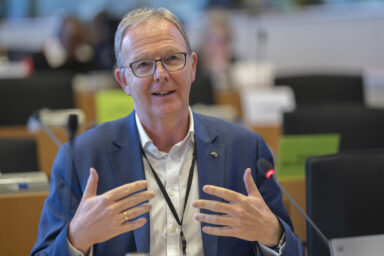
According to Lars Aagaard, Denmark’s minister for climate, energy and utilities, the agreement is based on science and protects Europe’s security and competitiveness. “Europe has united around our clear direction for climate policy,” Danish minister said.
We can now focus on delivering the policies and cooperation needed to move Europe toward a more sustainable, safe and prosperous future. – Lars Aagaard, Denmark’s minister for climate, energy and utilities
Mr Aagaard also said that “the target delivers on the need for climate action (…) We can now focus on delivering the policies and cooperation needed to move Europe toward a more sustainable, safe and prosperous future.”
The agreement reached by the Council and Parliament is provisional, pending formal endorsement and adoption by both institutions.