
Parliament and Council negotiators on Thursday, 4 December reached a provisional political agreement on a one-year postponement of the EU Deforestation Regulation for all businesses. The deal is intended to ensure clarity and predictability on the entry into application and the requirements for economic operators.
All businesses will have one more year to comply with new EU rules to prevent deforestation. Large operators and traders will now have to apply the regulation from 30 December 2026, and small operators—private individuals and micro- or small enterprises—from 30 June 2027. This additional time is intended to guarantee a smooth transition and to allow time to improve IT systems.
Relief for small businesses
Postponement of the EU Deforestation Regulation (EUDR) means that responsibility for submitting a due diligence statement should fall to the businesses that are first to place a relevant product on the EU market, and not the operators and traders that subsequently commercialise it.
The agreement reduces the obligations on micro and small primary operators, which will now only have to submit a one-off simplified declaration. That will make it easier for businesses to comply with the law without compromising on its objectives.
Council and Parliament also agreed to exclude printed products from the scope of the regulation, as requested by Parliament.
You might be interested

The agreement reached by the European Parliament and Council provides the necessary certainty and predictability to businesses, so that they can prepare for the application of the EUDR. – Jessika Roswall, Commissioner for Environment, Water Resilience and a Competitive Circular Economy
“The agreement reached by the European Parliament and Council provides the necessary certainty and predictability to businesses, so that they can prepare for the application of the EUDR,” commented Jessika Roswall, Commissioner for Environment, Water Resilience and a Competitive Circular Economy. “I am glad that we managed to swiftly address the capacity issues of the IT system and we will now work on the implementation of the law in the most efficient way possible, so that we can reduce global deforestation,” Ms Roswall added.
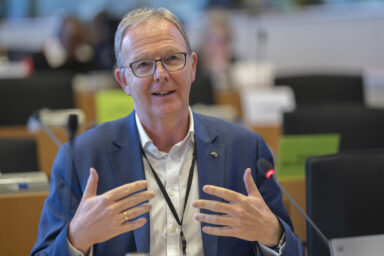
MEP Christine Schneider (EPP, DEU), rapporteur on the file, stressed that “the heart of the EU deforestation regulation remains intact”. Ms Schneider also said that the agreement “takes the concerns of farmers, foresters and businesses seriously and ensures that the regulation can be implemented in a practical and workable way.”
Deforestation among key environmental challenges
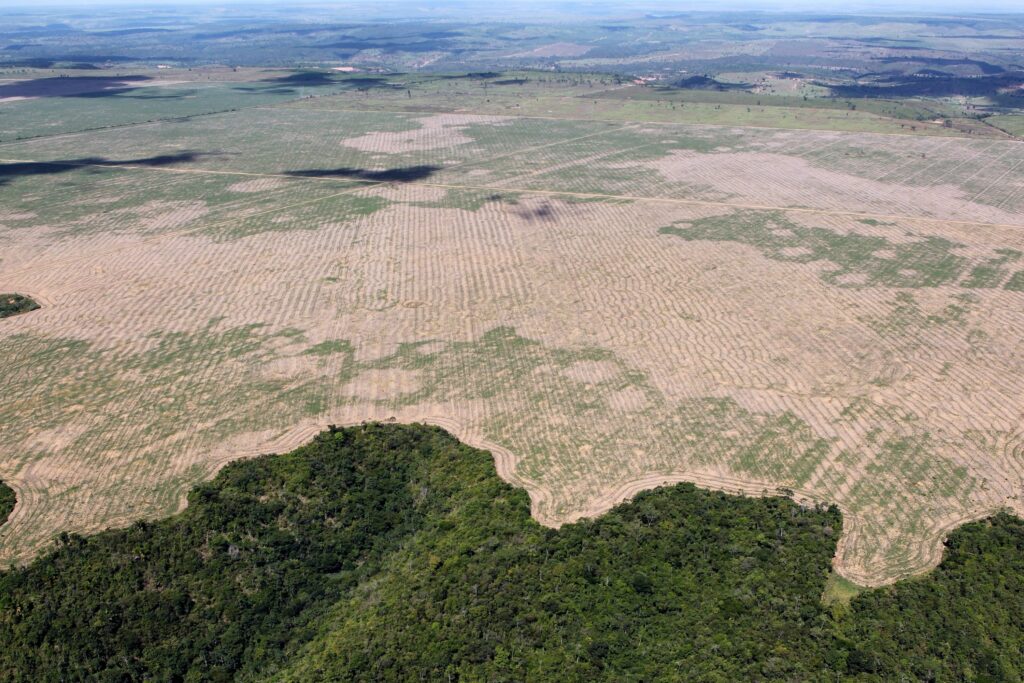
The EU Deforestation Regulation aims to ensure that a set of key goods placed on the EU market will no longer contribute to deforestation and forest degradation in the EU and elsewhere in the world. Deforestation and forest degradation are important drivers of climate change and biodiversity loss—the two key environmental challenges of our time. The Food and Agriculture Organization of the United Nations (FAO) estimates that 420 million hectares of forest—an area larger than the European Union as a whole—were lost to deforestation between 1990 and 2020.
Since the entry into force of the EUDR in June 2023, the Commission has consistently worked with stakeholders on how to facilitate a simple, fair and cost-efficient implementation of the EUDR. The Commission has also undertaken a simplification effort from different angles, which, according to estimations, would lead to 30% reduction of administrative costs and burden for companies.
Next steps
Parliament will vote on the deal during its 15-18 December 2025 plenary session. The text agreed must be endorsed by both Parliament and Council and be published in the EU’s Official Journal before the end of 2025 for the changes to enter into force. Otherwise, the current deadlines will apply.