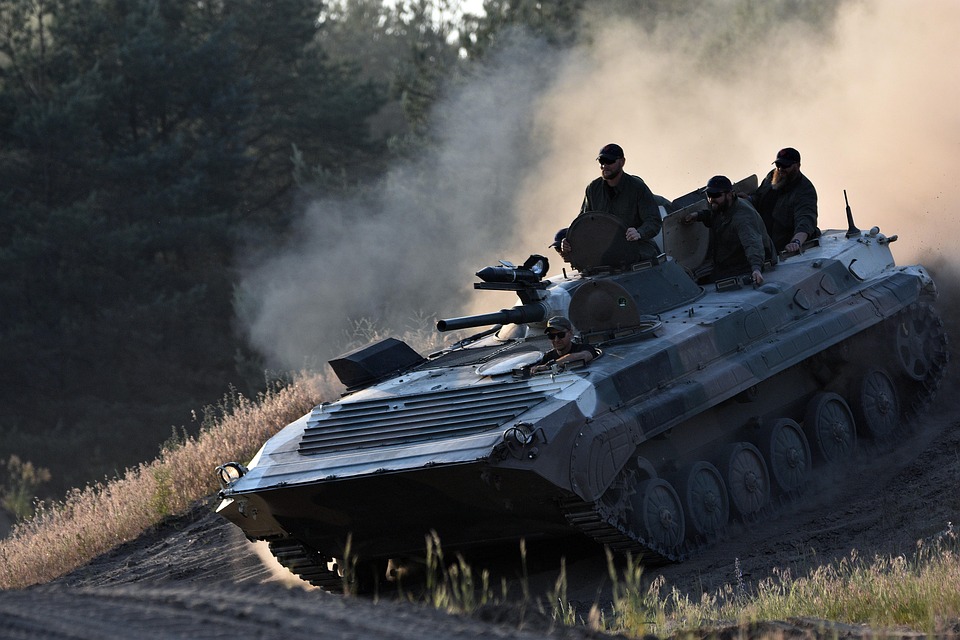

Parliament’s resolution calls for the removal of internal borders for the movement of troops and military equipment across the Union. That includes upgrades to railways, roads, tunnels and bridges so that they can serve military purposes. MEPs welcome the Commission’s proposal to raise the military mobility budget in the next long-term budget to over €17 billion.
The European Parliament’s resolution, adopted on Wednesday, 17 December, stresses that military mobility is an essential enabler for common European security and defence. According to MEPs, it is also crucial for the security of the eastern flank, in particular the Baltic countries and Poland.
Focus on four military corridors
MEPs call on EU countries and the European Commission to invest more in transport infrastructure, especially along the four EU military mobility corridors (North Sea-Baltic, Rhine-Alpine, Atlantic, and Orient/East-Med Corridors). They also want to see more digital solutions applied, and cross-border movement authorisations accelerated by means of a one-stop-shop.
Parliament recommend working towards a so-called Military Schengen Area, reinforced by a military mobility task force and a European coordinator to streamline implementation of the different initiatives, with the Commission providing a roadmap.
Rapid reaction within 24 hours
Parliament stresses that military mobility is a priority for EU-NATO cooperation and essential to enable the movement of allied forces in times of peace, crisis or war. The resolution calls for regular joint exercises and stress tests to identify and remove obstacles. MEPs also want the EU to follow NATO’s example and ensure rapid reaction troops could cross internal EU borders within three days in ’peacetime’ and within 24 hours in a crisis situation.
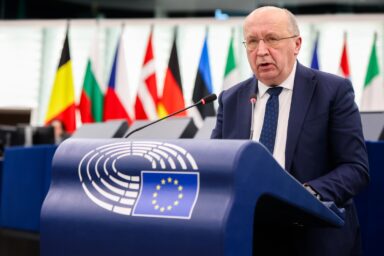
We must build the capacity to deploy troops and equipment rapidly throughout the EU. Overcoming administrative burdens and developing capacity and dual-use infrastructure is a necessity. – MEP Petras Auštrevičius (Renew/LTU)
“We must build the capacity to deploy troops and equipment rapidly throughout the EU. Overcoming administrative burdens and developing capacity and dual-use infrastructure is not a luxury, but a necessity,” said MEP Petras Auštrevičius (Renew/LTU), Parliament’s co-rapporteur
MEPs of the Transport and Defence Committees now will start their legislative work on the Military Mobility Package presented by the European Commission in November.