
Just days before the Carbon Border Adjustment Mechanism enters into force, Commission proposed measures to close loopholes, prevent circumvention, and strengthen the efficacy of the system. It is a response to pressure from industry representatives, who consider the measures taken so far to be insufficient. Questions still remain over the method of calculating carbon footprint of imports from China and other countries.
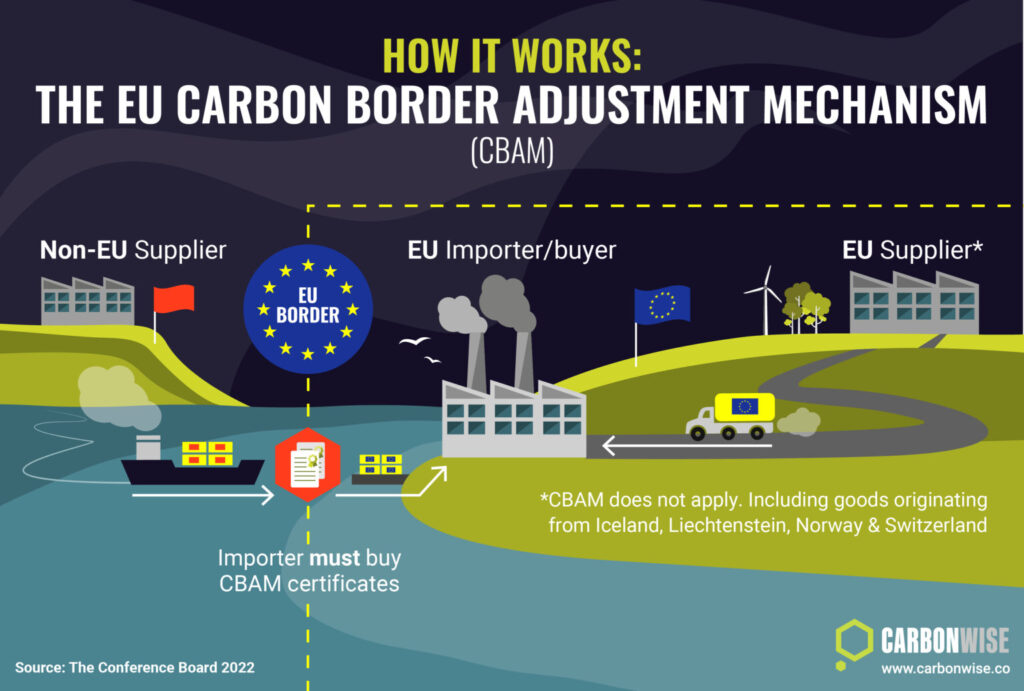
The purpose of Carbon Border Adjustment Mechanism (CBAM) is to level the playing field for European industry, especially for energy-intensive sectors with significant carbon footprint. It is a sort of a tariff on carbon intensive products, such as steel, cement, fertilizers, and more imported to the EU.
The system is currently in the preparatory phase, which among other things, includes mandatory reporting. CBAM will enter into full force on 1 January 2026. From that date on, EU importers or their indirect customs representatives importing more than the single mass-based threshold of 50 tonnes of CBAM goods into the EU will have to apply for the status of authorized CBAM declarants. They will buy CBAM certificates from the national authorities in their country of establishment. The price of the certificates will be calculated based on auction price of EU ETS allowances expressed in €/tonne of CO2 emitted.
Border tax ’too soft’
Representatives of European industries have been pointing out for months that the EU’s carbon border tax would go ’too soft’ on heavily polluting goods imported from China, Brazil and the United States. To such an extent that it could undermine the whole purpose of the measure.
“We call for timely and effective implementation of CBAM. Europe must ensure that imported products bear a carbon cost equivalent to that faced by European producers,” said Łukasz Pasterski, Director of Communication and Public Affairs of Fertilizers Europe to EU Perspectives. He added that “several implementing acts are still being finalised and as usual the devil is in the details. The proposed default values are low and need revisions to reflect the reality better (…). Without a fully operational and well calibrated CBAM, there is a real risk of carbon leakage.”
Without a fully operational and well calibrated CBAM, there is a real risk of carbon leakage. — Łukasz Pasterski, Director of Communication and Public Affairs of Fertilizers Europe
The position of Fertilizers Europe—association representing the majority of fertilizer producers in Europe—is similar to that of other industries concerned. Many fear that circumventing this regulation will be all too easy. “CBAM must covers the full supply chain, all emissions incurred in a product—direct, indirect, and upstream, That is necessary to mitigate carbon leakage,” said a spokesperson of Euromines, association representing several national mining associations from EU countries.
Commission’s last-minute tightening
As a response to industry’s concerns, Commission has proposed measures to close loopholes to prevent circumvention. It announced the move on 17 December, i.e., just two weeks before the CBAM’s full start.
The Commission’s latest measures include expanding CBAM to include specific steel and aluminium-intensive downstream products. Commission also intends to close loopholes and prevent circumvention. A temporary support scheme is to protect EU producers vulnerable to carbon leakage, rewarding cleaner companies globally and fostering a fair, competitive environment, Commission’s press release reads.
Real effects unclear
Industry’s reactions were largely positive. Many praise the Commission’s amendments as ’a step in the right direction’, something that should by followed by furter steps. “Commission deserves recognition for establishing a mechanism that seeks to reconcile climate ambition with industrial competitiveness” said Antoine Hoxha, Director General of Fertilizers Europe.
Commission deserves recognition for establishing a mechanism that seeks to reconcile climate ambition with industrial competitiveness. – Antoine Hoxha, Director General of Fertilizers Europe
Mr Hoxha, however, also warned that the real impact of CBAM remains to be seen once the system comes into full effect. “Addressing the risk of circumvention is essential, and the Commission’s announcement is a step in the right direction. The real test, however, will be whether these measures prove effective and
enforceable in practice,” Fertilizers Europe’s director said.