
EU health ministers have agreed a significant step toward new EU rules to tackle persistent shortages of essential medicines such as antibiotics, insulin and painkillers. The deal sets the stage for further negotiations early next year.
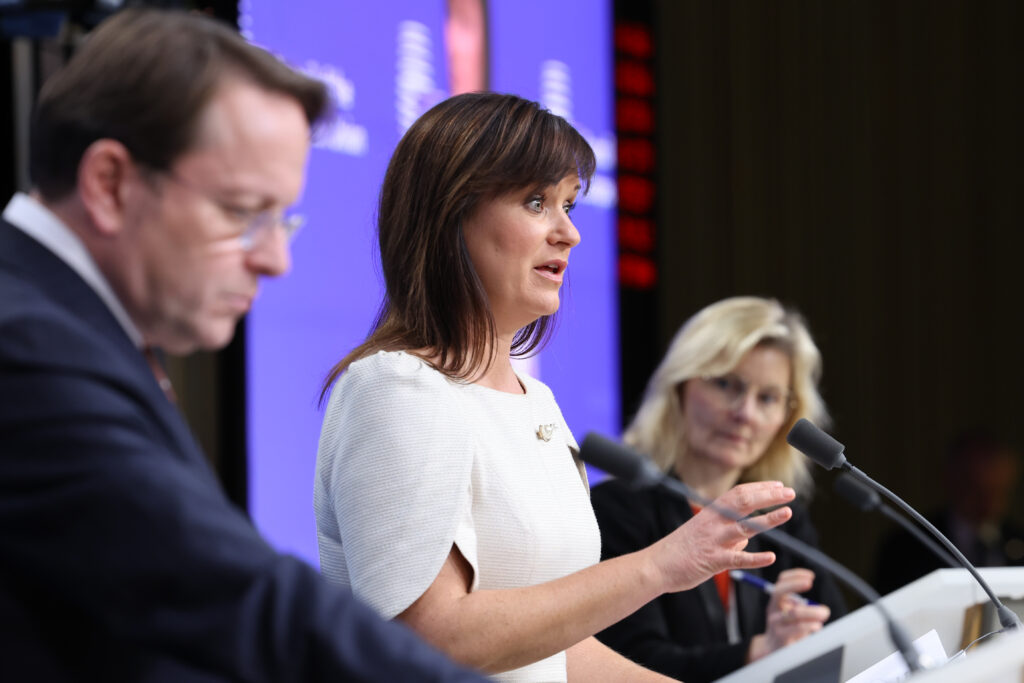
The Council adopted its position on the Critical Medicines Act (CMA) on Monday, 1 December. Announcing the agreement /adopted as general approach), Danish Health Minister Sofie Løhde said the Council had demonstrated that it “can turn words into action”. Not everybody liked the action very much, however.
Several ministers warned that the compromise text weakened strategic elements of the Commission proposal. In particular, this concerns the deletion of Article 4, which set out the Union’s strategic objective on security of supply. Belgium delivered the strongest critique, stating that “the text has become weaker rather than stronger.” He added that “we cannot endorse a council proposal that is less ambitious than the Commission’s original text and that’s the reason why we will abstain today.”
The country “really regrets” the deletion of Article 4. The minister argued that the strategic objective “should guide the architecture of the regulation”. It should also cover “push and pull incentives,” not only procurement measures. Belgium also warned that national contingency stocks “can create challenges for smaller member states”. Minister Vandenbroucke called for “a more systematic Union-wide approach” beyond the current mechanisms.
You might be interested
A task long overdue
Minister Løhde, on the other hand, lauded the act. She said the goal is to ensure that “medicines are available when European patients need them. By making Europe a more attractive market to produce medicines in. And by also setting a framework for common procurement of medicines.” stressed that medicine shortages “put patients’ lives at risk and also place a significant burden on our healthcare system”.
Health Commissioner Olivér Várhelyi called the adoption “a task long overdue”. He emphasised that the Act will help the EU “improve the security of supply of critical medicines” and “reduce our dependencies on third countries and also on single suppliers”.
He also highlighted that diversification through strategic partnerships will be essential to building more reliable supply chains. This is one of the main building blocks of the Commission’s proposal.
Ministerial changes
The Council introduced changes related to the procurement of critical medicines and their active ingredients. It introduced a requirement for the Commission to issue guidance. This includes support for member states in determining whether a critical medicine or active ingredient has been produced in the EU.
The Council facilitated the exchange of information on contingency stocks, and streamlined collaborative procurement, lowering the minimum number of participating member states from nine to six.
We cannot endorse a council proposal that is less ambitious than the Commission’s original text and that’s the reason why we will abstain today. — Frank Vandenbroucke, Belgium’s health minister
It also added an obligation to use resilience-related criteria in the public procurement of critical medicines and improved legal clarity and coherence by aligning terminology with the public procurement directive.
More dissenters
Some delegations also raised concerns about the governance architecture. Italy warned that the functions of the new Coordination Group must be clearly distinguished from the EMA’s shortages steering group to avoid overlap.
Several countries joined the criticism of the watering down of the original text. Malta decried the deletion of Article 4 as “a very disappointing failure to deliver to our patients”. The country said that “when we don’t walk the talk people will lose their trust in the European Union.” It also criticised what it called “a lack of ambition and a series of false starts on joint procurement”.
The Czech Republic argued that key provisions enabling predictable recognition of EU-based production were missing and that the text “is not ambitious enough”. The country stressed that “we must not forget what we have been through in recent years” and the need to reinforce EU manufacturing of active substances.
Manufacturing, procurement
A large number of member states backed a stronger EU manufacturing focus. France said the act should go further to “ensure resilient European industry that can produce APIs in Europe”. The country added that current provisions on EU preference are “insufficient” and could lead to fragmentation without specifications. Spain, Portugal, Poland, Romania and Latvia called for stronger EU-level funding mechanisms to support strategic projects. Latvia stressed that the Act “still lacks ambition” without sustainable EU funding.
Some delegations also raised legal concerns, with Luxembourg supporting the internal market legal basis of the regulation. Bulgaria argued that Article 168 TFEU should be added to ensure national health competences remain protected. (Article 168 TFEU is the provision that requires the Union to respect member states’ responsibility for defining national health policy. This means that, in areas like medicines shortages, EU action must not override national competences.)
A major step forward compared to the current circumstances. — Health Commissioner Oliver Várhelyi
On collaborative procurement, smaller member states such as Estonia and Croatia stressed that joint purchasing is essential to ensure equitable access in small markets. Estonia reiterated its support for allowing the Commission to act as contracting authority in joint procurement. This is a provision that several ministers confirmed had been removed from the Council text.
Contingency stocks
Several delegations warned that unilateral stockpiling risks distorting availability across the single market and called for stronger transparency and information-sharing mechanisms at EU level. Others emphasised that contingency stocks must remain a national competence, underlining subsidiarity and the need for flexibility in national preparedness.
During the press conference, Minister Løhde highlighted that “the CMA does not include common EU stockpiles… that still remains as a national competency.” while the Commissioner noted that improved coordination facilitated by the Commission is already “a major step forward compared to the current circumstances”.
Asked why the Council pushed for a rapid general approach despite concerns about ambition, Mr Várhelyi rejected the idea of rushed policymaking: “I don’t think that anything is rushed… all the main features which we have proposed are there.” He added that it is now for trilogues to determine the final balance and that the urgency reflects real-world shortages and geopolitical pressures.
All eyes on Cyprus
Ms Løhde, however, added that “EU should rush some more, especially in these geopolitical times,” noting that nearly all member states supported the compromise and that a broad majority indicates “we found the right balance”.
Negotiations with the European Parliament will begin once MEPs adopt their position. Commissioner Várhelyi said the Commission is “now… looking at the Parliament,” adding: “we do hope that the Parliament will also not only accept the existence of an emergency, but will also act upon it, and that the next Presidency… can finish the work with them rather soon. I do hope already in the first half of their Presidency.”
Cyprus, which takes over the Council presidency, pledged to “defend and advance the general approach” in trilogues. Mr Várhelyi said the Critical Medicines Act and the pharmaceutical package together “should be considered as a game-changer… for the companies, the researchers, but also for the patients.”