
Cypriot President Nicos Christodoulides presented five pillars that will dominate his country’s six-month Presidency of the Council of the European Union. Nicosia is committed to work towards an ’autonomous Union open to the world’. The presidency comes at a key time for the Union, with Europe facing what Mr Christodoulides described as challenges testing the EU’s resilience, unity and cohesion.
According to its five pillars for the upcoming presidency, Cyprus will focus on autonomy through security and defence. Another focus is on autonomy through competitiveness, openness to the world, shared values, and budget negotiations for the EU’s next financial framework. Cyprus will take over the Presidency from Denmark on 1 January, 2026.
Migration, enlargement
On security and defence, Cyprus will support major defence initiatives and promote rapid implementation of the White Paper on European Defence and the Roadmap for Defence Preparedness by 2030. The presidency identified strengthening transatlantic relations and EU-NATO cooperation as cornerstones of European security.
The Cyprus presidency will promote the full implementation of the Pact on Migration and Asylum and the strengthening of the return system. – Nicos Christodoulides, President of Cyprus
The Cyprus’ presidency identified migration management as a central security issue. “The Cyprus presidency will promote as a key priority the full implementation of the Pact on Migration and Asylum and will promote the strengthening of the return system,” President Christodoulides said.
Cyprus has committed to advancing the EU enlargement agenda, with Ukraine identified as a key priority. The presidency will continue to promote diplomatic, political, economic, military, energy, and humanitarian support for Ukraine, President stressed.
Given Cyprus’s geographical position, the Presidency will also work to strengthen EU relations with the Southern and Eastern Neighbourhood and the Gulf countries. It will deepen ties with the Gulf Cooperation Council and the League of Arab States.
You might be interested

Strength emerging from unity
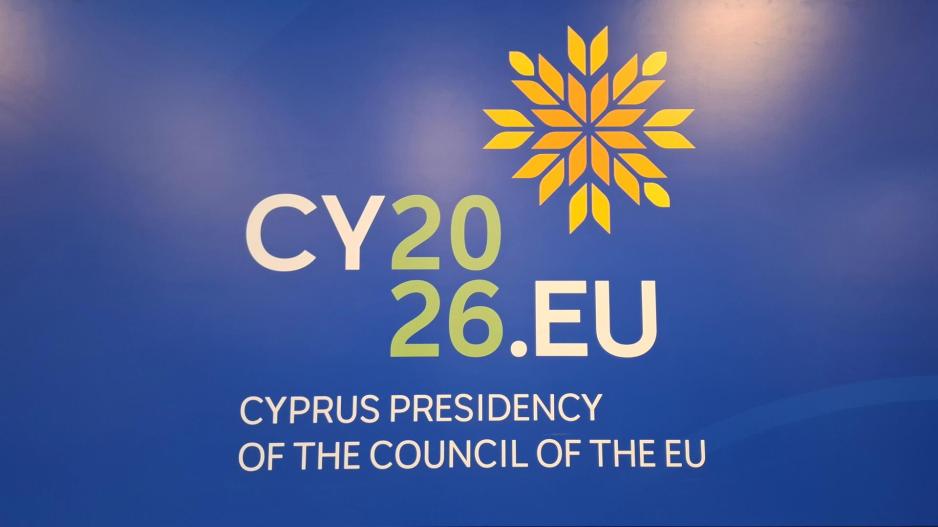
Nicosia unveiled the official logo of upcoming Cyprus’s Presidency. It symbolizes the strength that emerges from unity and is inspired by traditional Lefkara lace embroidery. The latter is an element of intangible cultural heritage recognized by UNESCO. According to official Presidency announcement, the logo reflects “the creativity, resilience, and timeless spirit of Cyprus.”
At the heart of the logo lies the idea of thread: fragile on its own, yet strong and cohesive when woven together. This shpould serve as a metaphor for the strength that stems from unity, from coming together as a single, harmonious and resilient whole: the European project itself.
An island divided
Cyprus became a full member of the EU in 2004 despite being a divided country—northern part of the island has been occupied by Turkey since 1974. The so-called Turkish Republic of Northern Cyprus (TRNC), covering some 35 per cent of the island’s territory, is an internationally unrecognized entity. In practical terms TRNC is administered from Turkey. The internationally recognized Cypriot government does not have any influence there. Only Turkey, which itself is an EU candidate state, recognizes TRNC.
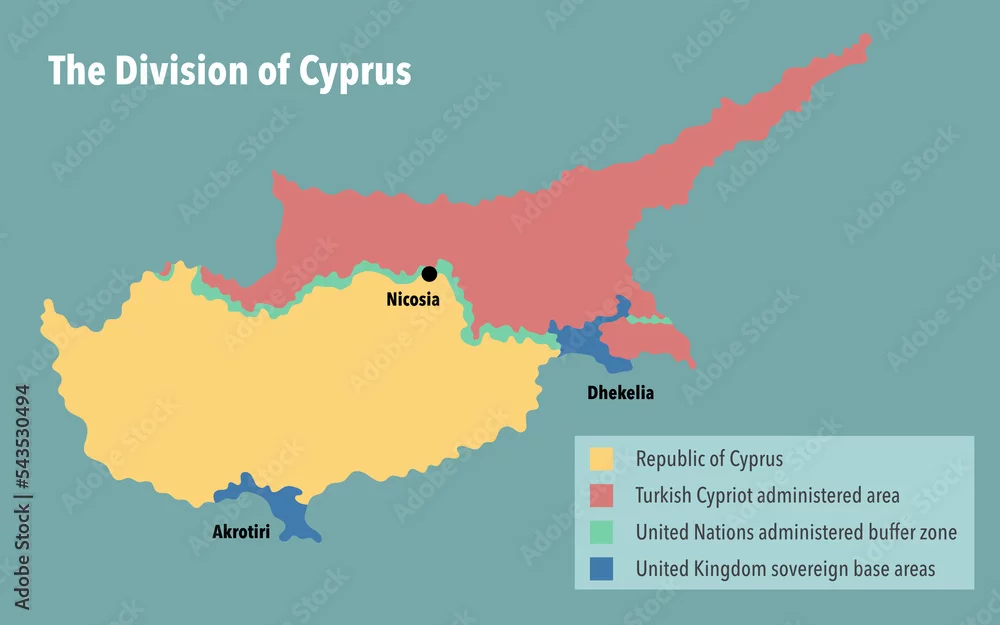
Though the Republic of Cyprus de facto controls only the southern part of the island, officially, the entire island is an EU territory. Turkish Cypriots are eligible for EU citizenship. However EU law is suspended in certain areas. Cyprus’ Treaty of Accession includes a protocol stating that “the application of the acquis shall be suspended in those areas of the Republic of Cyprus in which the Government of the Republic of Cyprus does not exercise effective control.”