
European Commission has recently unveiled Market Integration and Supervision Package intended to unify Europe’s financial markets. The reforms present a central pillar of the Savings and Investments Union Strategy which aims at creating a single financial system across all 27 member states. The package includes a substantial expansion of the powers of the European Securities and Markets Authority.
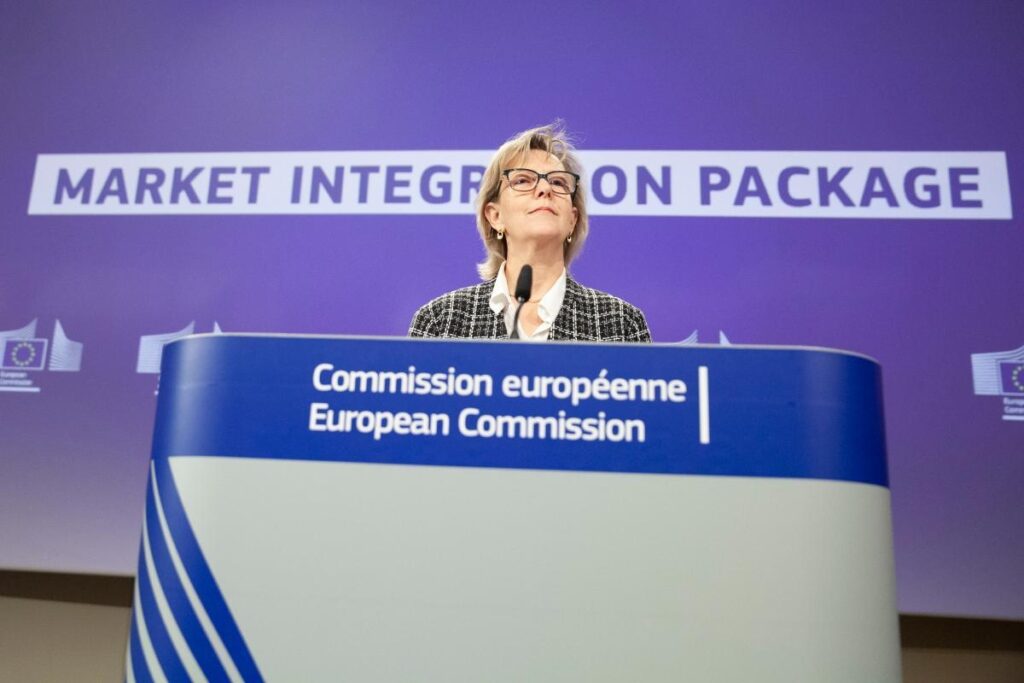
The move is responding to the European Parliament’s call for improved trading and post-trading systems and for enhancing cross-border cooperation. “Market integration is not a technical issue, it is a political necessity,” Maria Luís Albuquerque, Commissioner for Financial Services and the Savings and Investments Union said.
Get rid of fragmentation
The fragmentation of national markets, inconsistent regulations, and diverging supervisory practices have long hindered European competitiveness. The lack of harmonized rules is particularly visible in capital markets. EU stock markets currently amount to roughly 73 per cent of EU GDP, compared to 270 per cent in the United States.
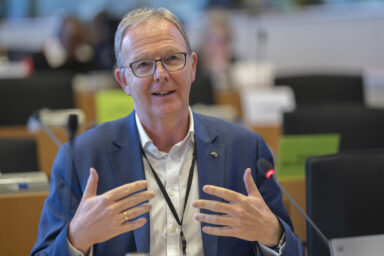
Fragmented trading venues, post-trading infrastructure, and asset-management rules prevent economies of scale from being realised, driving up costs for investors and businesses alike. “Compared to the United States, our capital markets are fragmented, small and illiquid—this harms growth, innovation and competitiveness in Europe every day,” European People’s Party’s spokesperson Markus Ferber said.
Easier access to capital markets lowers costs and makes them more attractive for companies and investors, big or small, across all member states. – Maria Luís Albuquerque, Commissioner for Financial Services and the Savings and Investments Union
The Commission’s package aims to change that by making it easier for firms to operate across the entire EU. Companies will be able to offer services and trade in multiple countries more seamlessly. At the same time, investment funds will be able to sell their products more easily across borders, helping them reach more investors and grow more efficiently. “Easier access to capital markets lowers costs and makes them more attractive for companies and investors, big or small, across all member states,” Commissioner Albuquerque said.
The European Banking Federation welcomed the move as “a decisive step toward delivering the objectives of the Savings and Investments Union Strategy” and “positive signal” to simplify and harmonize rules.
You might be interested

Centralised supervision…
A central part of the package is a substantial expansion of the powers of the European Securities and Markets Authority (ESMA), currently mainly a consultative body. The Commission now proposes to transfer oversight of the crypto market from national regulators to ESMA. Today, crypto providers often register in countries with the lightest rules—Malta or Cyprus in particular—and then offer services across the entire EU. Major players like OKX, Crypto.com, and eToro have taken advantage of this approach. Other member states have long criticized this practice, arguing that it is too easy for a crypto provider to obtain a license.
By moving supervision to ESMA, Commission aims to create a level playing field, reducing opportunities for firms to choose the most permissive regime. The additional authorities would make the position of ESMA similar to that of the U.S. Securities and Exchange Commission in overseeing U.S. markets.
…slower innovation?
ESMA welcomed the additional authority, saying the package represents “a major step towards deeper and more efficient EU capital markets and reflects many of the recommendations set out in ESMA’s 2024 Position Paper on building more effective and attractive capital markets in the EU.”
Dutch crypto association VBNL also welcomed the move, noting that it could actually make competition fairer across the EU.
However, critics warn that more centralised supervision could slow innovation. Claude Marx, Director-General of the Luxembourg’s Commission de Surveillance du Secteur Financier and member of ESMA’s Board of Supervisors, earlier this year called the idea of a single EU financial regulator a potential ’monster’. He expressed concern that a large bureaucracy could increase application processing times and overlook local market conditions.
The proposals now face negotiation and approval by the European Parliament and Council. Some member states, including Luxembourg and Germany, have expressed caution over transferring regulatory control to ESMA, concerned about preserving local market strengths.