
School lights, maternity wards and dissident shelters depend on Brussels bean-counters. As MEPs and CONCORD, an association of aid NGOs, pored over the EU’s next €200bn Global Europe pot, aid groups fear that looser budget rules will let cash swing to shiny projects that please voters at home while clinics abroad go dark.
A year ago the development committee of the European Parliament warned that aid budgets were fraying. On December 2nd its members heard just how ragged the weave has become. The public hearing—an annual stock-take with CONCORD, the confederation of European NGOs—focused on the next seven-year budget for “Global Europe”, a €200bn instrument meant to fund everything from schools in Niger to wind farms in Namibia.
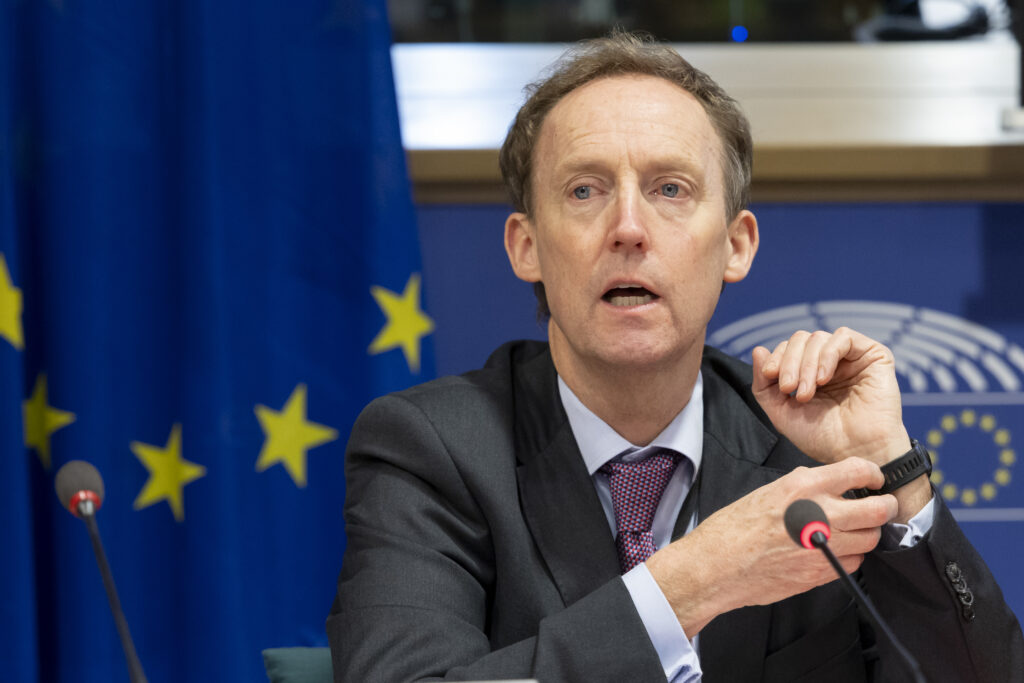
“This is an annual engagement with CONCORD to have an opportunity to hear their views,” MEP Barry Andrews (Renew/IRL), chair of the DEVE committee reminded colleagues. Cuts by other donors, he added, had turned the EU into “the last man standing” of largesse.
Money is not the only worry. “We are now faced with massive challenges from a funding point of view, which is impacting your members and obviously your beneficiaries,” Mr Andrews said. Reports from The Lancet on health setbacks, and from the field on education shortfalls, show that each euro lost costs lives. The committee will spend two years shaping the Multi-annual Financial Framework (MFF). With many of the 27 capitals keen to trim Brussels’s sails, every line will be fought over.
You might be interested

Shoring up the purpose
Worry framed the conversation. Tanya Cox, CONCORD’s director, reminded MEPs that the EU helped build “the so-called rules-based order”. Yet “the rules are overturned or ignored” as the world turns multipolar. Drawing a budget “at this very chaotic time”, she argued, demands that Europe stay “an actor for good”.
Ms Cox welcomed the Commission’s ambition—€200bn is large by any standard—but urged MEPs to guard against dilution. If the instrument is driven by commercial gain, partner countries will balk. “One of the key things that we must make sure of in the next MFF is that partner countries don’t feel that they’re being exploited,” she warned. Stability, she said, flows from tackling fragility, preventing disasters and “supporting democracy around the world”.
Flexibility for the EU is reduced predictability for the EU’s partner countries. — Ruth Faber, CONCORD
Flexibility looks sensible when crises erupt weekly, yet Ms Cox called it a hidden trap. “Flexibility for the EU is reduced predictability for the EU’s partner countries,” she noted. Money can be shuffled without parliamentary approval; little is ring-fenced even for countries. Oversight, therefore, must be written into law. She also asked for a lifeline to watchdogs. “We would therefore want 15 per cent of the budget ring-fenced for CSOs,” she said, because civil society “is one of the key ingredients in a functioning democracy”.
Cushions with strings
Ms Ruth Faber of CONCORD drilled into the legal text. “At present, the only binding safeguard in the Global Europe instrument is a requirement that 90 per cent of the instrument qualify as ODA, which is actually down from the 93 per cent in the current regulation,” she told MEPs. (ODA stands for Official Development Assistance, government-funded grants or concessional loans that meet the OECD’s criteria for supporting the economic development and welfare of partner—mostly low- and middle-income—countries.) Worse, Article 6 lets the Commission adjust that share by delegated act. CONCORD wants the clause scrapped and poverty reduction restored as an explicit goal.
Merging dozens of budget lines into one pot may streamline Brussels but blurs mandates. Ms Faber fears neighbourhood spending could crowd out long-term development. She proposed that 70 per cent of the geographic and global pillars be locked into multi-annual programmes, leaving 30 per cent for crises and peace-building. Scrapping thematic spending targets, she added, “weakens the EU’s ability to meet its commitments under the sustainable development goals, the Paris Agreement and the global biodiversity framework”.
Education at home matters too. Losing a dedicated strand for global-citizenship teaching, she warned, “risks weakening public understanding of global challenges at the very moment where it is most needed”.
Fragile middles
Questions flowed. With civic space shrinking, asked MEP Lukas Mandl (EPP/AUT), what help do NGOs need? How should Europe balance humanitarian aid, development and climate finance? Which non-aid policies undermine development most? MEP Robert Biedroń (S&D/POL) pressed for examples of how new funding rules might hurt both local goals and “the strategic interests of European Union”.
Ms Cox answered that abandoning thematic funds would sap support for activists. Geographic envelopes, she said, pour 70 per cent of cash into a “black box” of pillar-assessed entities, making flows hard to trace. She warned of “green colonisation”: minerals mined for Europe’s transition under “abhorrent conditions”, hydrogen produced abroad leaving locals short of water. “Partner countries aren’t completely against the global gateway. That’s not what I’m saying at all,” she stressed, yet investments must feel like genuine win-wins, not extraction.
Even under Global Gateway, we have seen that the share, the overall share… is pretty stable. — Marlene Halsner, DG INPA
Ms Faber highlighted a gap between life-saving relief and profit-seeking infrastructure. “One area which is tricky is this area of fragility and how we respond in this space,” she said. Humanitarians lack funds; investors seek bankable deals. A 30 per cent crisis cushion and 70 per cent programmed aid, she argued, would bridge the divide.
Values versus interests
The committee probed the politics. Right-wing parties, often guided by Christian rhetoric, grumble at aid. Could NGOs build coalitions with them? Mr Andrews mused. The reply was diplomatic but pointed: talking about mutual interests makes sense—but only if communities see the benefits.
Commission officials mounted a defence. Marlene Halsner of DG INPA, who oversees civil-society funds, insisted that poverty reduction “will still be there”. She disputed CONCORD’s maths: “Even under Global Gateway, we have seen that the share, the overall share… is pretty stable.” Her data show civil society receiving 13-15 per cent of spending, close to its historic level. Methodology differences, she implied, explained the gap.
When civil society can no longer speak truth to power, then we know we’re in trouble. — Tanya Cox, director of CONCORD
Vincent Grimaud, who steers the EU’s external financing, turned to governance. Decision-making on the reserve—the so-called cushion—will shift, he noted. “What the Commission proposes is that the Parliament and the Council will decide following Commission proposals,” a change from the current set-up where the executive alone calls the shots. Targets, he said, need not be numerous to be meaningful: climate and environment already claim 30 per cent, and “90 per cent of 200 billion euros is much more than 93 per cent of 80 billion euros.”
Counting the cost
Differences of fact mask a deeper contest of ideas. The NGOs want predictable grants, thematic safeguards and explicit poverty metrics. The Commission wants a nimble pot it can redirect when wars or quakes erupt. Both sides claim to champion democracy, stability and the poor. Neither underestimates the squeeze. Defence, migration and energy all jostle for taxpayers’ cash.
The debate on December 2nd offered no final numbers, but it sharpened lines ahead of the legislative slog. MEPs must decide whether flexibility or foreseeability best serves Europe’s interests—and its values. As Ms Cox reminded them, “When civil society can no longer speak truth to power, then we know we’re in trouble.”