
The European Parliament is preparing to vote on a regulation responding to the pressure caused by global overcapacity in the steel sector. Lawmakers and industry are divided over whether the fast-tracked proposal will protect Europe’s steelmakers or disrupt industrial value chains.
Parliament is discussing a Commission proposal presented on 7 October, under which tariff-free import volumes would be capped at 18.3m tonnes a year — compared to the current limit of 30.5m tonnes per year. Any steel imports exceeding that volume would be subject to a 50 per cent tariff — doubling the current 25 per cent rate.
The initiative follows the safeguards introduced by Brussels after the first Trump administration imposed tariffs on European steel. The United States has since expanded its own measures, with more than 400 European products containing steel and aluminium now facing a 50 per cent tariff. Current EU safeguard measures are set to expire in June 2026.
According to Commission President Ursula von der Leyen, the measures are needed to protect Europe’s competitiveness: “A strong, decarbonised steel sector is vital for the European Union’s competitiveness, economic security and strategic autonomy. Global overcapacity is damaging our industry. We need to act now — I urge the Council and Parliament to move ahead quickly. The Commission will continue working with industry to protect and create good jobs, and with member states and global partners — including at the WTO level — to find long-term solutions to shared challenges.”
You might be interested
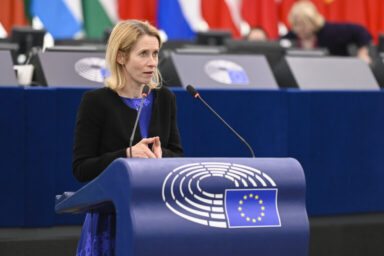
Parliament supports urgency
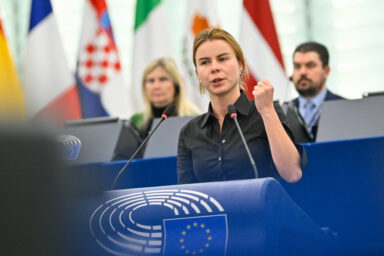
The response of the Committee on International Trade is spearheaded by rapporteur Karin Karlsbro (Renew/SWE), who underlines that the main aim is to protect Europe’s industry, defence and green transition. The committee also wants annual monitoring to ensure the regulation continues to meet its objectives. Ms Karlsbro stressed that the EU must be careful not to erect broader global trade barriers. Safeguard measures under World Trade Organisation rules are permitted when needed to remedy serious injury and facilitate adjustment.
A strong, decarbonised steel sector is vital for the European Union’s competitiveness, economic security and strategic autonomy. – Urusula von der Leyen, EC President
Last month, the Committee on Industry, Research and Energy also discussed the proposal, with MEP Sofie Eriksson (S&D/SWE) as rapporteur. Both committees called on their delegates to move forward swiftly, given the urgency. Although global overcapacity is not a new issue, the EU now risks legislating under “extreme time pressure”, Eriksson said.
Shutdowns and layoffs are “already unfolding” in several regions, MEP Marina Mesure (Left/FR) warned. “Communities are suffering now,” she said.
Sealing Russian and Belarusian backdoors
An important part of the proposal is to close remaining channels for steel imports from Belarus and Russia, which Karlsbro says continue to fund “Russia’s war machine.” In the first half of 2025, the EU imported iron and and steel from Russia amounting to approximately €1.3bn. “It’s our duty to close every loophole,” the rapporteur said.
The same concern was echoed by Ms Eriksson. She backed stronger import controls and the introduction of the melt-and-pour rule, which defines a steel product’s origin by where the metal was first melted and cast — not where it is later rolled or finished. The rule is key to closing the loophole that still allows Russian steel slabs to enter the EU market, as they continue to arrive at prices around 26 per cent below those of other suppliers. Currently, slabs melted in Russia can be further processed within the EU and are then treated as EU products, effectively bypassing sanctions.
Parliamentary concerns
Despite broad consensus that the steel sector is under severe pressure, several MEPs criticised the accelerated legislative process. Kris Van Dijck (ECR/BE) cautioned that focusing only on raw materials could push the problem downstream, with processed steel products entering the EU in rising volumes. “If we only look at raw materials, processed goods will flood the market instead,” he said.
Sophie Wilmès (Renew/BEL) criticised the lack of reciprocity mechanisms, arguing that the EU should re-evaluate quotas for countries that restrict EU market access, whilst allowing more lenience for countries that provide more open access to EU steel products.
Industry divided
The European Steel Association, EUROFER, welcomed the Commission’s proposal, urging lawmakers to move swiftly so new measures can take effect before the current regime expires in 2026. “European steelmakers cannot yet see the end of the tunnel. The new EU steel trade measure proposed in October needs to be adopted as a matter of urgency and enter into force at the beginning of 2026 — well before the expiry of the current safeguard in June 2026 — otherwise ongoing stockpiling of cheap imports will continue and nullify the effectiveness of the measure for the entire year,” the association said in a press release.
Downstream manufacturers are instead wary of unintended consequences. Orgalim, representing Europe’s technology industries, warned that stricter controls could raise costs for producers and consumers alike, potentially undermining competitiveness, and described the safeguards as a “devastating threat.”
“Europe’s technology industries are experiencing their third consecutive year of economic downturn, with a 5.6 per cent contraction in annual turnover, a 1.2 per cent decline in employment and a 3.2 per cent decline in investments in 2024. These figures are a clear warning sign. As outlined in the Draghi report, Europe’s innovation and competitiveness depend on industrial value chains. It is vitally important to keep European steel production viable and competitive. The EU steel safeguards, due to expire on 30 June 2026, are a clear example of EU policies that negatively affect the competitiveness of our industries,” the organisation said.
It also called for the restoration of carry-over mechanisms, the exclusion of UK and Swiss steel from additional origin-related requirements and more flexible documentation rules for smaller importers.
It is vitally important to keep European steel production viable and competitive. – EUROFER
Additional MEPs weigh in
MEP Susana Solís Pérez (EPP/ESP) shared concerns about the impact on SMEs, stressing that while rapid action is essential, smaller firms reliant on imported inputs must not be overlooked. She warned that the credibility and functioning of the system would depend on stronger and more efficient border checks.
MEP Benedetta Scuderi (Greens/ITA) emphasised that steel is a strategic sector for Europe’s decarbonisation goals and argued that crisis measures should not undermine investment in low-emission technologies. MEP Ondřej Knotek (PfE/CZE) instead urged colleagues to set such concerns aside, insisting the regulation must focus strictly on addressing immediate trade distortions.
The rapporteur has urged MEPs to table only very targeted amendments, stressing the need to move swiftly to a vote and the subsequent trilogues with the Commission and Council.