
Finance ministers of EU countries using the euro elected their peer from Greece as president. Should he succeed in the job, the new Eurogroup chair, Kyriakos Pierrakakis will need timing, tact, and luck in equal measure.
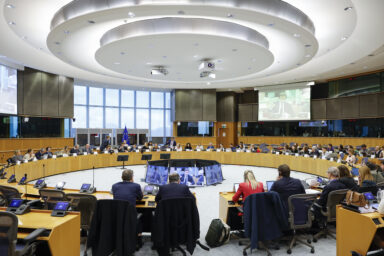
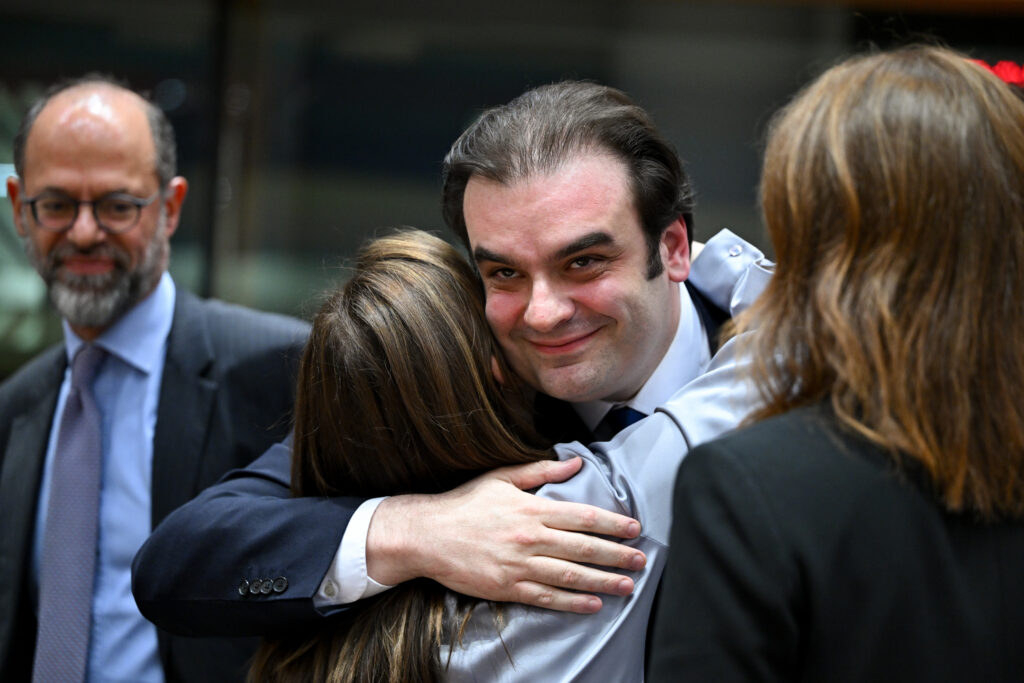
Kyriakos Pierrakakis stepped into the Eurogroup press room on 11 December wearing a smile — but here went a man about to inherit a headache. Ministers of the 20-strong currency club had just elected the MIT-educated Greek economy and finance minister as their new president, handing him a two-and-a-half-year mandate that begins on 12 December. His first formal test will come on 19 January, when he chairs a meeting that could define how the euro area pays for war on its doorstep while minding its own books.
The job matters because the Eurogroup is a clearing house for compromise. It shepherds fiscal coordination, prepares Euro-Summit gatherings and keeps watch over shared risks. Mr Pierrakakis replaces Paschal Donohoe, who served two terms. He joins a short line of predecessors that began in 1998 with Jean-Claude Juncker. Each president needed soft skills to herd ministers who prize sovereignty as fiercely as they prize sound money.
Mr Pierrakakis receives an inbox crowded with unfinished business. Defence budgets rise, inflation recedes but not yet vanishes and the banking union remains half-built. Above all looms the cost of supporting Ukraine without splintering the fragile accord on fiscal prudence.
You might be interested

Steady but fragile
Ministers gave him their first dossier within the hour—a review of the draft budgetary plans for 2026. The Commission’s autumn forecast shows growth beating expectations in 2025, fuelled by the Recovery and Resilience Facility and robust consumption. Officials expect expansion to cool yet continue next year thanks to tight labour markets and still-favourable financing. Inflation should settle near the two per cent target, soothing nerves at the European Central Bank.
Deficits tell a less rosy story. The aggregate shortfall will inch up from 3.2 per cent of GDP in 2025 to 3.3 per cent in 2026 as defence spending balloons. Public debt creeps towards 89.8 per cent of GDP. Even so, the Eurogroup judged a broadly neutral fiscal stance appropriate. It urged governments to restrain current spending and to funnel EU funds into investment that lifts potential growth.
Compliance looks mixed. Austria, Italy, Slovakia and France—each in an excessive-deficit procedure—filed plans judged in line with the rules, as did Cyprus, Estonia, Finland, Germany, Greece, Ireland, Latvia, Luxembourg and Portugal. Croatia, Lithuania and Slovenia sit at risk of non-compliance. The Netherlands and Malta stand at risk of material non-compliance, despite debt levels below the 60 per cent ceiling. Spain and Belgium have not yet bothered to submit anything.
Escape hatches
Twelve countries have already activated national escape clauses that let them spend more on defence until 2028. The clauses buy time but not carte blanche. Ministers warned that the derogations end in three years and that high-debt members must curb day-to-day spending now. They also pledged closer scrutiny of the “quality” of budgets—code for cutting waste, not investment.
Such vigilance will test Mr Pierrakakis’s diplomatic mettle. He must coax surplus countries to tolerate military outlays in the south while prodding deficit hawks to trim fat elsewhere. The credibility of the new economic-governance framework, revised only this year, depends on that balance. Markets still remember past debt scares; so do treasuries.
We will also continue tackling the long-term structural challenges in view of ensuring competitiveness of the euro area economy. — Eurogroup statement
Yet the biggest fiscal question comes from outside the Union’s borders. How does Europe finance Ukraine without breaching its own rules? The answer, for now, lies in immobilised Russian assets worth tens of billions of euros. Ministers want to channel the windfall interest to Kyiv. Legal tremors rumble already.
Brussels defends its weapon
The argument burst into view at a press conference that followed the Eurogroup meeting. Belgium had voiced doubts about invoking Article 122 of the EU treaty, claiming the clause applies only during an internal emergency. Valdis Dombrovskis, Executive Vice-President of the Commission, fielded the challenge with studied brevity.
“We cannot comment on how member states position at this stage, and also the corporate meeting was concluding in parallel with Eurogroup meeting, so I therefore cannot provide any deeper insights of those discussions,” he said. “What can I say is that from Commission side, we have been obviously assessing this proposal very carefully from a legal perspective.”
“And as I was mentioning, considering the very significant direct and indirect economic damage that Russia had inflicted on the Union through its war of aggression, we consider this kind of measure appropriate. We are confident that the justification on economic damages to trigger this provision of the treaty has been met above and beyond what is required in light of considered economic costs to the Union linked to Russia’s war of aggression related to higher energy prices, missed potential growth, hybrid threats, and so on.”
The president’s balancing act
The Commission insists it can proceed by qualified majority even if Belgium abstains. It plans to use only the income, not the principal, from frozen assets—a compromise meant to limit litigation. Critics fear legal blowback and reputational harm. Supporters reply that Kyiv’s needs are urgent, America’s chequebook is stalled and Europe must lead.
Considering the very significant direct and indirect economic damage that Russia had inflicted on the Union through its war of aggression, we consider this kind of measure appropriate. — Valdis Dombrovskis, European Commission Vice-President
Mr Pierrakakis was to inherit this dispute hours after taking office. He must keep sceptics like Belgium engaged while maintaining momentum behind aid. Simultaneously, he must shepherd budget plans through the new fiscal regime and ensure that escape clauses close on schedule. Failure on either front would erode trust in the Eurogroup and, by extension, in the euro itself.
For now he can draw comfort from a modest economic upswing and an inflation path that no longer terrifies bond markets. Yet geopolitics intrudes, budgets tighten and legal arguments pile high. The new president’s tenure begins with three intertwined challenges: funding a war, policing deficits and holding the club together. History suggests the Eurogroup rewards quiet deal-making over grandstanding. If Mr Pierrakakis manages that art, ministers may soon forget how fraught his first day looked.