
European lawmakers have reached a provisional agreement on a comprehensive package of reforms for the EU wine sector, aiming to provide producers with more flexibility, access to funding, and tools to manage changing market and environmental conditions. On 4 December 2025, negotiators from the European Parliament and Council announced they had struck a deal, which officials describe as a step towards strengthening the resilience and sustainability of European wine production.
The package introduces clearer rules for de-alcoholised wines. Wines containing 0.05 % alcohol or less by volume could, in the future, be labelled “alcohol free (0.0 %)”, while wines at or above 0.5 % alcohol with a reduction of at least 30 % from the original strength could be labelled “alcohol reduced.” The rules are designed to harmonise labelling across the EU and provide clarity for producers and consumers alike.
Support for production and international promotion
The agreement also addresses measures to support production in challenging circumstances. Winegrowers affected by severe natural disasters, disease outbreaks, or vine-pest pressures will receive an additional year to plant or replant grapevines. EU funds may also be used for vine removal, commonly known as “grubbing up”, to manage supply in alignment with market demand. The maximum national payment for crisis measures such as distillation and green harvesting is capped at 25 per cent of the total funds available per member state.
We are providing the sector with tools to tackle the profound crisis it is experiencing. – MEP Esther Herranz García (EPP/ESP)
Support for the promotion of European wines abroad is another key element of the package. Producer organisations under protected designations of origin (PDOs) or protected geographical indications (PGIs) could access EU funding for marketing and promotional campaigns in third countries, with co-financing rates of up to 60 per cent for eligible activities. According to official EU documentation, these measures are intended to help producers take advantage of international markets and strengthen the visibility of European wines worldwide.
Revamped toolbox for the sector
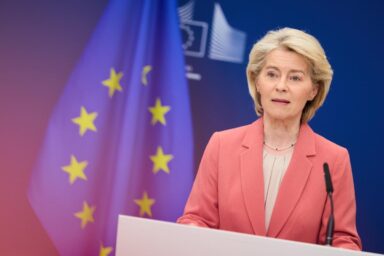
Rapporteur Esther Herranz García (EPP/ESP) highlighted the positive significance of the reforms:
“We are providing the sector with tools to tackle the profound crisis it is experiencing. These include measures to regulate supply in line with demand, higher co-financing rates for measures for adapting to climate change, improved conditions for promotion outside the EU, and enhanced opportunities for diversification that wine tourism offers.”
The provisional agreement builds on a long-standing regulatory framework. The EU has regulated wine production and markets under the Common Organisation of the Market in Wine (Wine OCM) for decades. The framework combines measures for market stabilisation, support for producers, and sector-specific interventions, including labelling and quality rules. Previous iterations, such as Council Regulation (EC) No 1493/1999 and its successors, have been amended over the years to adapt to changing market conditions, but the 2025 package introduces more targeted support for modern challenges.
You might be interested

Changing playing field
The European Commission’s recent involvement followed analyses of structural challenges in the sector. Consumption patterns have shifted, with declining wine consumption in parts of Europe, while vineyards face climate-related risks including droughts, extreme weather events, and pest pressures. In addition, global competition has intensified, leading to oversupply in some regions and pressure on prices. The reforms aim to provide concrete, actionable tools within the existing regulatory framework to support producers under these circumstances.
Final approval from both the European Parliament and the Council is still required before the rules formally enter into force.