
Europe’s auto policy is about to enter its surrealist phase. In a bid to help the continent’s carmakers navigate a difficult market, Brussels is preparing to offer reserved parking spaces and regulatory perks to a category of electric cars that does not technically exist yet. The European Commission will lay out the plan on 16 December, part of a larger attempt to bolster the industry as Chinese EVs flood the market and domestic demand stays stubbornly weak.
The idea — arguably parts industrial strategy and part urban planning experiment — is to create a new class of lightweight, Europe-built EVs that receive special treatment for an entire decade.. These future city runabouts would enjoy access to protected parking bays, priority charging points, and exemptions from cost-inflating rules such as upcoming safety standards and Euro 7 requirements. As the Financial Times noted, the hope is to “ease pressure on Europe’s car industry,” which has struggled to produce genuinely affordable EVs.
Lobbying for the little guys
European automakers have been lobbying for something like this for years, arguing that the continent risks losing its traditional stronghold in the compact-car segment. Companies like Renault, Stellantis, and Volkswagen insist that without regulatory breathing room, small EVs simply can’t be built profitably in Europe — at least not at prices that can stand up to the latest wave of Chinese imports. They also hope the new category might stretch far enough to benefit models already on the drawing board.
Yet the proposal’s debut is not happening in isolation. The small-car initiative lands just as Brussels is finalising a politically fraught review of the EU’s 2035 ban on new combustion-engine sales, a pillar of the bloc’s climate rules that has become a lightning rod for industry complaints and political pushback. The December package will cover everything from potential extensions for plug-in hybrids to debates over e-fuels and emissions loopholes, as EU officials move quickly through internal negotiations.
At its core, the EU’s small-car proposal is about survival — for both European automakers and the city streets themselves. The bloc faces a delicate balancing act: encouraging electric vehicle adoption to meet climate goals, while keeping European brands competitive in a global market increasingly dominated by Chinese EVs. By setting up a regulatory framework for lightweight EVs built in Europe, Brussels is aiming to encourage both innovation and affordability — even before these cars reach production.
You might be interested

Micro vs. small cars
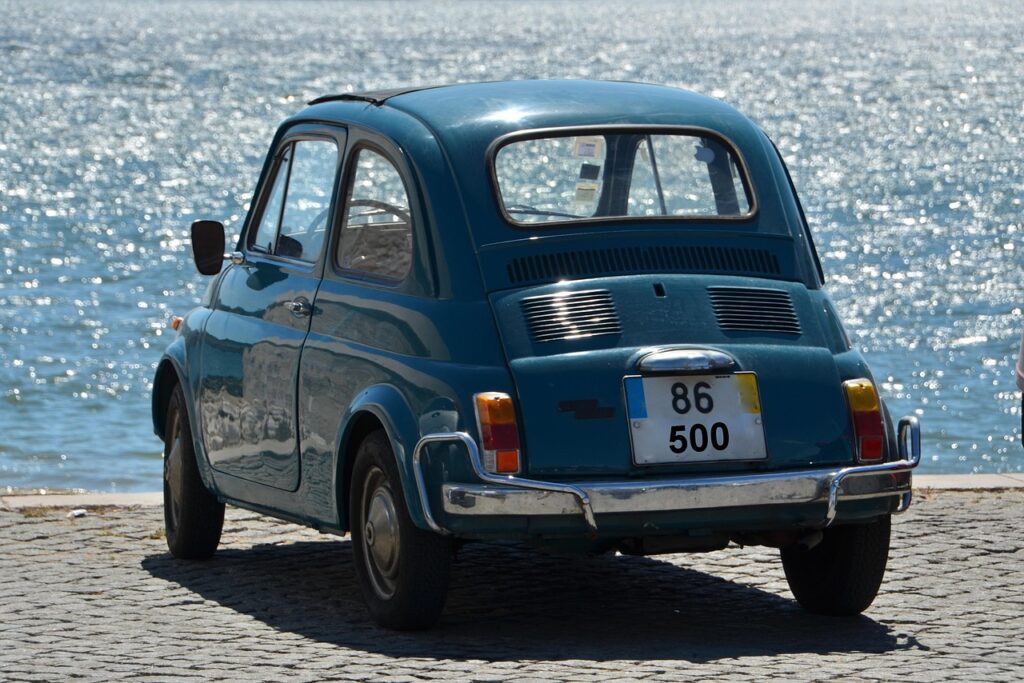
Europe’s new small-car category will likely blur the line between micro cars and slightly larger small cars. Micro cars — the city-friendly runabouts like the Fiat 500, Citroën 2CV, or Renault Twingo — are tiny, lightweight, and designed for urban streets and easy parking. Small cars, like the VW Golf or Citroën C3, are slightly larger, heavier, and more practical for families or longer trips. The EU proposal, aiming at vehicles under roughly 1.5 tonnes, could cover some of both segments, giving regulatory and financial incentives to cars that are light, efficient, and affordable. By clarifying this distinction, Brussels hopes to protect Europe’s historic micro-car expertise while also supporting small EVs that appeal to a broader audience.
The idea of incentivizing tiny cars is not new. Europe has a long tradition of compact, city-friendly vehicles — from the postwar Fiat 500 to the Citroën 2CV — that made urban driving affordable and practical, and have captured the public imagination for generations. There is a playful example of this enduring affection in Prague, Czechia, where a popular restaurant, named after Fiat’s most famous micro model, feautures the real car (stripped of its engine no doubt) hanging above the bar.
Expert analysis
In October, shortly after EU Commission President Ursula von der Leyen highlighted the concept of an affordable European car in her State of the Union, EU Perspectives spoke to Petr Knap, EY’s automotive expert for Central & Eastern Europe, who agreed that a new micro car category could be valuable, though not without certain risks:
“I still believe that there are consumers in many cities and countries who value small or micro vehicles. There’s also a question of the target price—something just under €15,000—that would make the segment very attractive,” Knap said, not long after the first details were revealed.
Japan’s Kei cars, a likely inspiration for the EU proposal, have thrived for decades under similarly protective regulations, offering generous tax breaks, parking privileges, and limited-size requirements. European automakers now face a crossroads: can they reinvent the continent’s compact-car legacy for the electric age, or will global competition and ever-stricter rules push the small-car niche out of existence?
Parking spots for the imagination
Whatever shape the final December package takes, the stakes are high. For Brussels, it’s a test of whether regulatory creativity can safeguard both the climate agenda and a key segment of European manufacturing. For carmakers, it’s a chance to secure the future of affordable city EVs and protect the continent’s historic expertise in compact cars. And for drivers, it could mean a very literal new kind of parking spot: one reserved for a car that, for now, exists only on paper — and in policy ambitions. All eyes will be on Brussels on 16 December, when the Commission is expected to reveal the full details of the plan.