
The Defence of Democracy package is a European Commission initiative aimed at strengthening EU democracies and protecting democratic institutions from foreign interference when it comes to decision-making processes, fair and free elections, and disinformation.
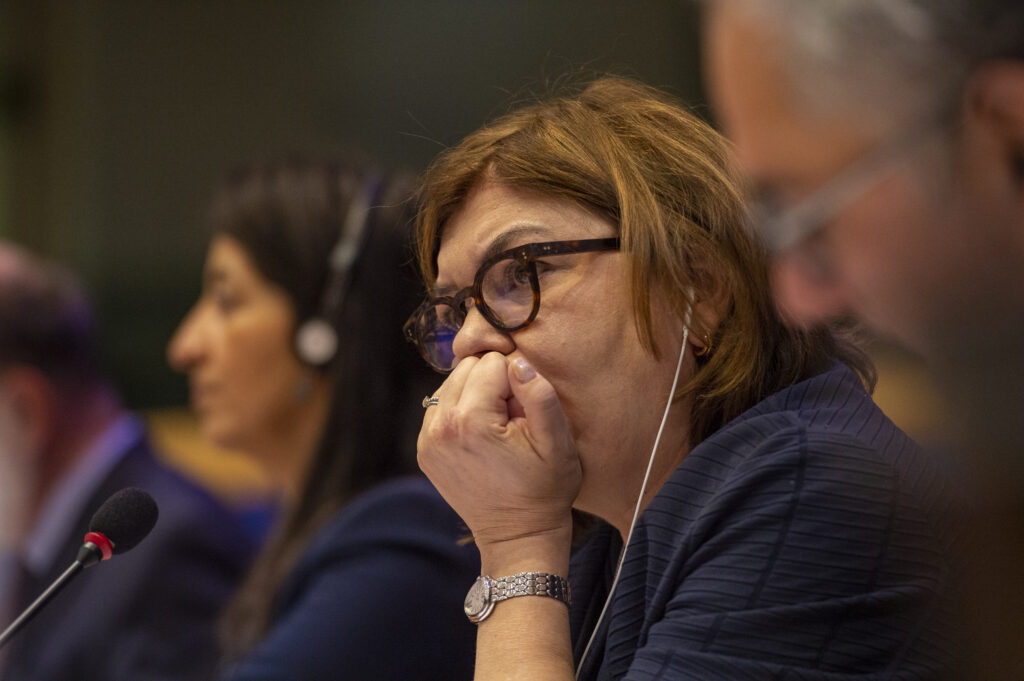
The European Parliament adopted the directive at the end of November 2025 with 392 votes in favour, 88 against, and 133 abstentions. According to MEP Adina Vălean, rapporteur of the file, the directive brings more clarity to decision making processes.
“The adoption of the package represents a significant achievement. What is particularly remarkable is that we began this process at a moment when almost every political group was sceptical—many openly rejecting the idea of such a directive. Over time, through dialogue, evidence, and a shared sense of responsibility, we managed to build a broad consensus across the political spectrum,” MEP Adina Vălean (PPE/ROU), rapporteur for the file told EU Perspectives.
As part of the package, Commission has proposed a Directive on Transparency of Interest Representation on Behalf of Third Countries. “This proposal seeks to contribute to setting standards on how to address foreign influence in a streamlined and proportionate way, fully respecting fundamental rights”, Ms Vălean said.
You might be interested

Why is this directive relevant nowadays?
The EU is a complex political decision-making system, and such complexity can at times make processes less visible—a challenge that exists even in the most established democracies. This lack of clarity can create vulnerabilities. That is why we must understand transparency as a shared political value: not an issue of ’right or left’ but a matter of institutional necessity. Any responsible policymaker should be able to know, when meeting an individual or an organisation, whose interests they represent.
Just the first step
I have always said that this directive is only a first step, a foundation on which a more ambitious framework could emerge in the future. But today’s geopolitical context makes clear that this initial step is not only relevant, but urgently needed.
At what point is the introduction of minimum transparency standards? Why are they important and how will they develop?
Across the EU today, the situation is in disarray. Some member states have transparency registers, some have voluntary systems, some have none, and others are considering rules that move in very different directions. This means, for organisations acting across borders, inconsistent obligations and duplicated work. For citizens, it means that understanding who is acting on behalf of whom depends entirely on the country. For politicians, it creates guesswork in meetings: who is this actor, and who is behind their position.
The directive removes fragmentation and replaces it with a single EU-level standard. — MEP Adina Vălean (PPE/ROU)
The Directive removes this fragmentation and replaces it with a single EU-level standard. Same activity, same transparency, anywhere in the Union. The agreed text rests on minimum harmonisation. We set common EU standards without impacting member states that already have robust systems. We create a genuine level playing field, while respecting national choices. For example, my own country, Romania, has no general register and no rules for actors providing services on behalf of third countries. On the other hand, countries such as France have a very detailed framework. They also have a dedicated body overseeing all lobbying-related activities.
In an internal market, it makes sense that a company registered in Romania but operating in Germany, let’s say, should meet common minimum standards—namely, the obligation to register and ensure basic transparency regarding its activities. Moreover, France or Germany still may request additional information from those entities registered in other countries. So we don’t penalise the achievers, and in doing so, we push most of the countries to a minimum standard.
Transparency as a democratic obligation
How could the Parliament regulate the presence of the lobbyists inside the house?
The purpose of this directive is not to regulate the presence of the lobbyists inside the European institutions. But it represents a mere transparency exercise—so that both citizens and policymakers understand whose interests organizations that are trying to influence public policies are representing. The circulation of ideas is part of democracy; the essential question is simply who represents which interest.
The essential question is simply who represents which interest. — MEP Adina Vălean (PPE/ROU)
This outcome shows that transparency is not a matter of ideological identity but a democratic obligation we owe to our citizens. I am genuinely happy about the result. It demonstrates that, even in a fragmented political landscape, it is possible to come together around principles that strengthen the integrity of our institutions.
The draft of the directive addresses potential foreign influence in European democratic processes: How?
The proposal is to work as follows: any individual, company, association or other entity that receives money from a third country for lobbying activities will have to register with a transparency register in the country of establishment or where they carry out interest representation. Member states will maintain registers administered by an independent authority, whether already existing or newly created. Entities carrying out lobbying activities must register before starting contractual work and must declare a whole set of information. That includes identification data, the third country they represent, the identity and details of their organisation. It also includes the annual amount invested, the member states where activities will take place. They also must present a description of the interest representation work, and an estimated duration.
Public campaigns in the spotlight
If interest representation involves public campaigns, they must also list the publications or platforms where those campaigns will run. After registration, these entities will receive a unique number, which must be declared when meeting with officials. In most cases, contracts with a third country involve organisations or companies owned or controlled by that state. Some countries act through foundations. Others rely on commercial and investment entities. Some have state-owned companies in gas, oil or telecommunications, or finance NGOs to distribute funds for various purposes. A contractual relationship with such a sponsor, when linked to a specific country and aimed at influencing public policy, falls under the scope of this directive.
Not every contract with a third country must be declared, only those intended to influence policies. This can take the form of meetings with policymakers, events and conferences, contributions to consultations or parliamentary hearings. It also applies to communication campaigns, policy documents, legislative amendment proposals, surveys, or open letters. The registers will be public, and we aim to have a single interface where this information can be searched.