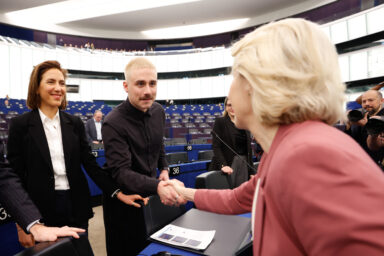

The European Parliament voted on Tuesday to approve a safeguard clause for the EU-Mercosur trade agreement, aimed at protecting European farmers from potential negative impacts of imports from Mercosur countries. The measure was adopted with 431 votes in favour, 161 against, and 70 abstentions. Negotiations with the Council on the final text are scheduled for 17 December.
The new clause allows the EU to temporarily suspend tariff preferences on certain sensitive agricultural products — including poultry and beef — from Argentina, Brazil, Paraguay, and Uruguay if imports harm EU producers. Parliament lowered the threshold for launching investigations, calling for action when imports rise by an average of 5 per cent over three years, rather than the 10 per cent per year proposed by the European Commission. Investigators will complete reviews more quickly, cutting general reviews from six to three months and sensitive-product reviews from four to two months.
This week the European Council will be adopting the worst trade deal ever signed: the EU-Mercosur Agreement. – Manon Aubrey, MEP
The amendment also introduces a reciprocity mechanism, requiring the Commission to take action if imported products benefiting from tariff preferences fail to meet EU-equivalent environmental, animal welfare, health, food safety, or labour standards.
Rapporteurs express support
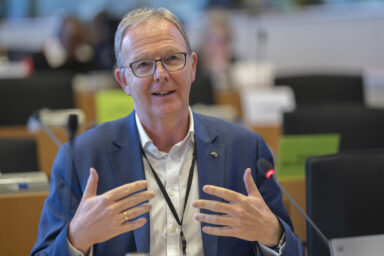
Gabriel Mato (EPP/ESP), the rapporteur for Mercosur, said the safeguards provided stronger protection for European farmers and a more reliable framework for implementation.
“The compromises also reflect the key priorities raised by our colleagues in the Agriculture Committee, which was essential for building broad confidence across the House. I will do everything necessary to defend these improvements in the negotiations to come, as they are not only effective, but also fair and indispensable for achieving a credible outcome,” he said.
Bernd Lange (S&D/DEU), the chair of the International Trade Committee, said the decision reflected practical considerations as well as geopolitics.
You might be interested
“Common sense has prevailed,” he stressed, outlining that even members sceptical about the EU-Mercosur trade agreement realised that it was “in everyone’s interest to have an additional safety net”. He framed the deal as the only sensible reply to global trade developments. “Doing otherwise would be geopolitically irresponsible and economically counterproductive. The finish line is now in sight, and we should cross it,” he promised.
Opposition concerns
That does not mean there wasn’t opposition in the run-up. Some MEPs charged that pursuing Mercosur even with safeguards was a mistake.
Saskia Brikmont (Greens/BEL) charged that it was two years that European farmers had been waiting for fair market conditions and decent pay, saying they “rightly” saw the agreement would be a “steamroller that rolled over them”. She cast doubt on the safeguard clause ahead of the vote and expressed scepticism it would protect anyone protect farmers against unfair competition or consumers from pesticides.
Manon Aubrey (The Left/FRA) took a similar tack but cast it against the upcoming holidays, showing little holiday cheer towards Mercosur as a deal:
”Colleagues, I know it will be Christmas soon but I am too old these days to believe in Père Noël. That is what you are trying to do: to make us believe in Father Christmas. This week the European Council will be adopting the worst trade deal ever signed: the EU-Mercosur Agreement. And you are trying to tell us fairy tales about safeguards that you are conjuring out of thin air like a Christmas fairy to save our farmers.”
Opposition was not insignificant but still low compared to the comfortable result for the pro-Mercosur side.
I will do everything necessary to defend these improvements in the negotiations to come. – Gabriel Mato, rappoerteur and MEP
Outcome
The safeguard clauses will form part of both the EU-Mercosur Partnership Agreement and the interim Trade Agreement. Both agreements still require ratification by the European Parliament after their expected signature later this month.
The EU is Mercosur’s second-largest trading partner in goods, exporting €57bn in 2024, and accounts for a quarter of Mercosur’s trade in services, with EU exports to the region totalling €29bn in 2023.