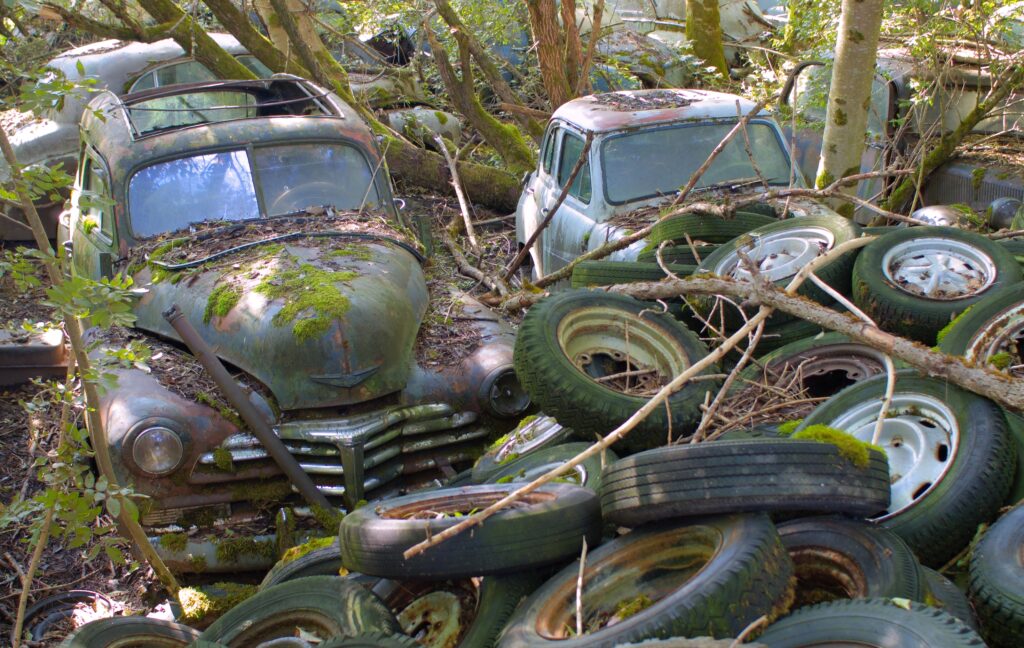

As the EU increasingly grapples with so-called missing vehicles—cars that effectively disappear after being classified as no longer road-worthy—new rules aimed at ensuring proper recycling are taking shape. On Friday, 12 December, the European Parliament and the Council reached a provisional agreement on new EU circular-economy rules covering the entire vehicle life cycle. The deal includes binding targets for the use of recycled materials in new cars, and improved vehicle design to make it easier to remove materials for reuse and recycling.
Under the agreed draft, all vehicles that reach the end-of-life stage (ELVs) would have to be handed over to an authorised treatment facility. In addition, the text introduces a requirement to provide documentation certifying that a vehicle is not an ELV whenever ownership changes. While an exemption applies to transfers between private individuals, it does not cover transactions concluded online.
The new rules would also require vehicles to be designed in a way that facilitates the removal of as many parts and components as possible by authorised treatment facilities. Parliament and the Council further agreed that plastics used in each new vehicle type must contain at least 15 per cent recycled material within six years of the regulation’s entry into force, rising to 25 per cent within ten years.
The co-legislators also agreed that Commission should introduce targets for recycled steel and aluminium, following the completion of feasibility studies. The feasibility to introduce additional targets, for recycled critical raw materials, would also be evaluated.
You might be interested

Mandatory removal of components, liquids
Three years after the entry into force of the new rules, manufacturers will have to bear extended responsibility. That means producers will have to cover the cost of the collection and treatment of vehicles that have reached their end-of-life stage.
Specific requirements would apply to the mandatory removal of certain parts and components, as well as of liquids, fluids and hazardous substances, before shredding or compacting. National authorities would be required to establish inspection strategies aimed at detecting illegal activities during the collection, treatment and export of ELVs.
We are taking important steps to boost the automotive sector’s transition to a circular economy. – co-rapporteurs Jens Gieseke (EPP, DEU) and Paulius Saudargas (EPP, LTU)
“We are taking important steps to boost the automotive sector’s transition to a circular economy,” co-rapporteurs Jens Gieseke (EPP, DEU), of the Environment committee, and Paulius Saudargas (EPP, LTU) of the Internal Market committee, commented.
Detailed criteria of end-of-life vehicles
To prevent the illegal treatment and export of ELVs and to address the issue of so-called ’missing vehicles’, negotiators agreed on an export ban for non-roadworthy vehicles (applicable five years after the entry into force of the regulation).
The deal clarifies the criteria determining when a used vehicle qualifies as an ELV. That includes cases when a vehicle has been cut into pieces or some components of the vehicle (like airbags or seat fixings) are not technically reparable or replaceable.
Next steps
The deal builds on Commission’s proposal of July 2023 on circularity requirements for vehicle design and improved management of ELVs. The provisional agreement needs to be approved by both Parliament and Council before the new rules can enter into force.