
The Council focused on defence issues has once again demonstrated that the EU is not united in its support for Ukraine. Kaja Kallas, High Representative for Foreign Affairs, urged all partners to share the financial burden ’equally’. Member states have also expressed their support for Belgium regarding potential legal difficulties with the use of frozen Russian assets.
The Foreign Affairs Council (Defence), held on Monday, 1 December, was scheduled to discuss the peace plan for Ukraine. Andrius Kubilius, Commissioner for Defence and Space, attracted attention with his statement that “all 19 member states have submitted their national defence investment plans for SAFE,” but only “fifteen have included support for Ukraine.”
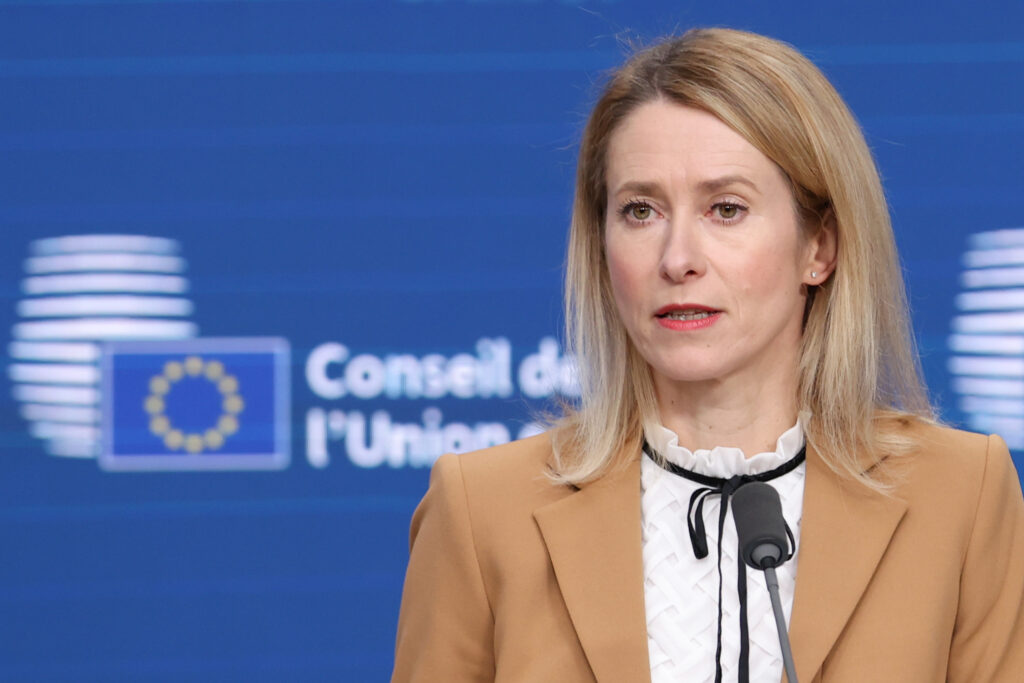
I see a lot of pressure on the victim, Ukraine, but no sacrifices are being asked of Russia. – Kaja Kallas, High Representative of the EU for Foreign Affairs and Security Policy
The Defence Council concluded by noting that currently there is a lot of international pressure on Kiev—but not on the aggressor, i. e. Moscow. “I see a lot of pressure on the victim, Ukraine, but no sacrifices are being asked of Russia, as far as what we know,” emphasized Kaja Kallas, High Representative of the EU for Foreign Affairs and Security Policy.
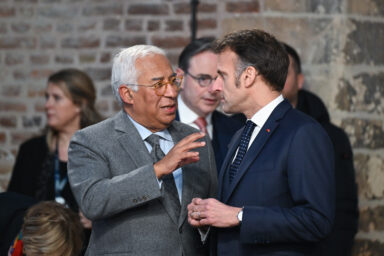
Meanwhile, European leaders (Denmark, Finland, Germany, Italy, the Netherlands, Norway, Poland, and the United Kingdom), along with Council President Antonio Costa, Commission President Ursula von der Leyen, and NATO Secretary General Mark Rutte, participated in the video call organized by Emmanuel Macron and Volodymyr Zelensky. In a sense, there appears to be a power vacuum in Brussels: peace talks are effectively taking place in Paris and Florida rather than in Brussels.
A crucial week for Ukraine: Kallas
This week promises to be ’crucial’ for Ukraine, European Union foreign policy chief Kaja Kallas said today, reporting that “discussions on the peace plan in America were difficult but fruitful”. The United States’ view, however, seems to be different. In Florida, Washington and Kiev failed to reach an agreement on the final text of the peace plan for Ukraine. At the end of the meeting, US Secretary of State Marco Rubio stated that the negotiations had been constructive, but that much work remains to be done.
From a European perspective, the turning point should be the decision taken at the European Council scheduled for December 18. Monday’s debates among European defence ministers yielded no concrete results.
You might be interested
Helping Ukraine now is much cheaper than continuing the war. If we all put a real pressure on Russia, the sooner this war ends, the sooner the costs will stop. – Kaja Kallas, High Representative of the EU for Foreign Affairs and Security Policy
Regarding overall support for Ukraine, to date, “the burden is not equally shared” among EU member states, Ms Kallas emphasized. “The member states that are doing more have asked those that are not doing as much to do more. Helping Ukraine now is much cheaper than continuing the war. Therefore, if we all focus on a collective effort to help Ukraine, to put pressure on Russia, the sooner this war ends, the sooner the costs will stop,” she concluded.
“Belgium has legitimate concerns”
That said, Ms Kallas still wanted to reassure Belgium today about the risks of using Russian assets and the ongoing discussion surrounding them. “Belgium has legitimate concerns about the risks, but all other member states have expressed their willingness to share them. We are therefore discussing these aspects. As it has been said, we will not leave the Council in December without a result on Ukraine’s financing.”
Upon their arrival at the Defence Council, the Netherlands and Sweden—despite not being among the member states that will use the SAFE financial instrument—reiterated their support and intention to use frozen Russian assets to finance Kiev. The Netherlands also insisted on sanctions and EU membership. Sweden emphasized Ukraine’s discretion in deciding how to use any reparation loans. “This is absolutely crucial. No one knows Ukraine’s needs better than the Ukrainians themselves,” said Swedish Defence Minister Pal Jonson.
Germany—also a non-participant in the SAFE initiative—has expressed a more protective stance on aid to Kiev, calling on the EU Commission to resolve the issues surrounding Russian assets and consider all possible solutions. The discussions on how to use the frozen Russian assets will be going on until 18 December.