
Calling for an EU-wide minimum age of 16 to access social media, lawmakers argue that curbing addictive design features and limiting children’s exposure to harmful content. Child-rights experts, however, have told EU Perspectives that it risks shifting responsibility away from the platforms that design and profit from the problems they create.
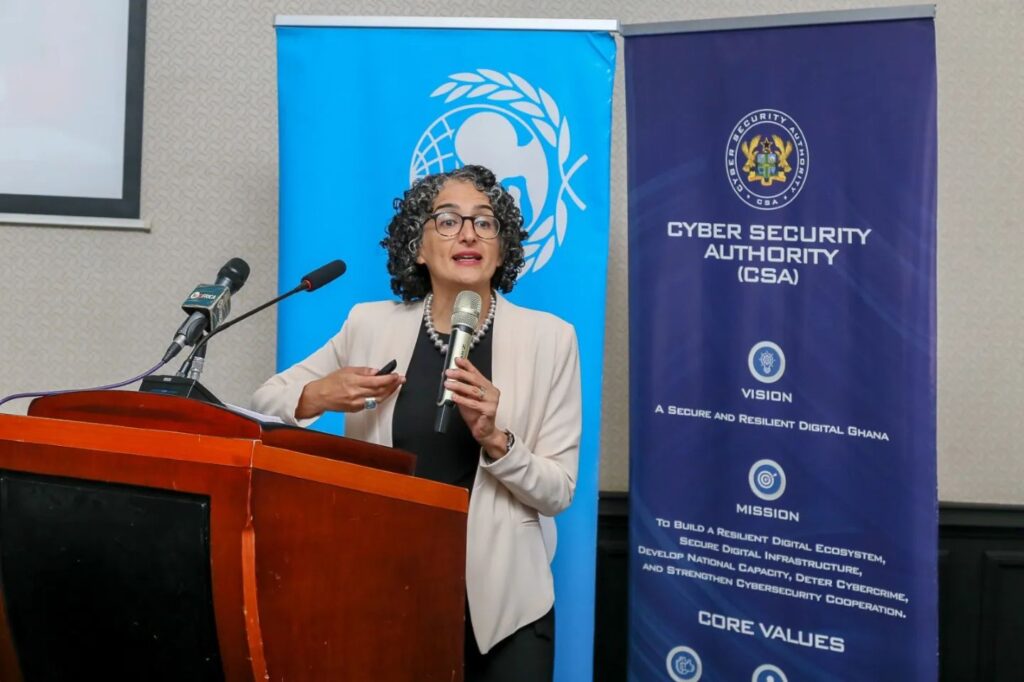
From the perspective of UNICEF, the world’s leading agency for children, setting an online age of majority does not protect children from online risks. “There is no universal right age for online participation,” says Afrooz Kaviani Johnson, a child protection specialist with the institution. “Evidence shows that risks and opportunities are shaped by factors such as digital literacy, parental support, and platform design — not age alone,” she told EU Perspectives.
In November, the Parliament adopted a non-binding report urging the European Commission to introduce a minimum age of 16 for access to social media, video-sharing platforms and AI companionship tools, with parental consent required for 13 to 16-year-olds.
The vote builds on growing political concern in Brussels. Earlier this year, during the State of the Union speech, Commission President Ursula von der Leyen publicly praised Australia’s under-16 social media ban. She suggested it could offer a model for Europe as the EU weighs tougher rules to protect children online.
You might be interested
False sense of protection
UNICEF research shows that older adolescents often face greater exposure to harmful content and exploitation than younger children, and that children’s evolving capacities “vary widely even within the same age group”. As a result, Ms Johnson warns that age limits risk, creating a false sense of protection. “Rather than focusing solely on age thresholds, we need safer digital environments for all children,” she says, pointing to stronger platform safeguards, digital literacy programmes and greater accountability from tech companies.
Political debate has largely focused on social media, as evidence shows that these platforms remain the primary setting for the most serious harm. The latest research by UNICEF and INTERPOL finds that social media platforms “remain a primary setting that facilitates online sexual abuse, by a significant margin, compared to other platforms”.
Evidence shows that risks and opportunities are shaped by factors such as digital literacy, parental support, and platform design, not age alone. — Afrooz Kaviani Johnson, UNICEF
At the same time, emerging technologies are expanding the risk landscape. AI companions, generative chatbots and nudify apps raise new concerns around privacy, manipulation and exploitation, often beyond the scope of existing rules.
Mental health risks
Parliament’s push is driven in part by concerns over children’s mental health. UNICEF data confirms that harmful online experiences can have serious psychological consequences, but also highlights why blanket restrictions may miss the mark.
The UNICEF report analysed data from 21 countries and found that children who experience online sexual abuse or online bullying show “significantly higher levels of anxiety, more suicidal thoughts and behaviours, and are more likely to self-harm”. Exposure to harmful content and repeated negative online experiences also has a measurable negative impact on children’s well-being.
At the same time, UNICEF stresses that social media is not uniformly harmful. “For many children, social media provides support and connection,” Ms Johnson says. “For those who are isolated or marginalised, social media isn’t a luxury — it’s a lifeline.”
Taking responsibility away?
Experts also warn that age restrictions risk shifting responsibility from platforms to families and authorities, without tackling the design choices that drive harm. “Restricting children’s access to parts of the online world may sound like a straightforward solution”, Ms Johnson says. “But it comes with real risks, including shifting responsibility away from digital platforms for investing in child safety.”
For UNICEF, expecting parents to fill that gap is unrealistic. Instead, the organisation calls for governments and companies “to meet their responsibilities: redesigning platforms and policies around children’s rights and safety, and deploying rights-respecting age-assurance tools”.
For those who are isolated or marginalised, social media isn’t a luxury, it’s a lifeline. — Afrooz Kaviani Johnson
Similar concerns are echoed by the ECLAG (European Child Sexual Abuse Legislation Advocacy Group), which focuses on preventing child sexual exploitation and abuse. “Any discussions about children and digital spaces must centre on the rights of the child”, ECLAG says to EU Perspectives. This includes “the rights to safety, participation, inclusion, access to information, and privacy.”
Australia: early lessons
From the coalition’s perspective, bans risk undermining those rights “conflating protection with restriction,” ECLAG warns. They argued that regulation should focus on platform practices, not children’s behaviour. “We should be looking at regulation that looks at online platforms as opposed to regulating children’s behaviour,” the group says. “Social media alone is not the internet, and we encourage tech-neutral legislation that covers every place children may be.”
Australia’s under-16 ban has shaped Europe’s debate on social media age limits. But UNICEF cautions against drawing early conclusions from the country experience. However, Ms Johnson shared that “anecdotally, we are hearing that some teens have adapted by using alternative apps or workarounds, including bypassing age checks.” The example, she says, “underscores the need for safer platform design and continued digital literacy”.
Currently, UNICEF Australia is monitoring the impact closely. For some young people, reduced exposure to harmful content may benefit mental health. For others, abrupt disconnection can cause stress and feelings of isolation. “Europe can draw from Australia’s experience that age-based rules should form just one part of a much broader, rights-respecting strategy,” Ms Johnson says.