
Brussels is rewriting the rules of trade to stop Europe running out of whatever it needs to keep phones, cars and missiles running. The new plan pours cash into mines and factories, speeds up permits and forces firms to widen suppliers, so everyday gadgets and defences keep working when politics turns nasty.
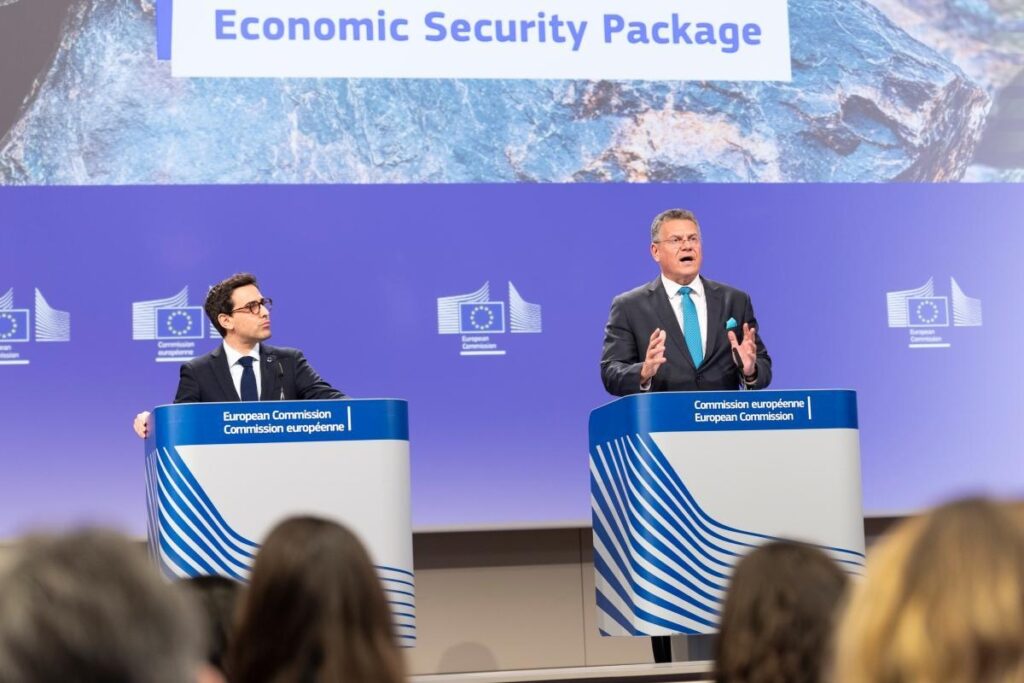
Brussels has long prided itself on open markets and free trade. On December 3rd, however, the European Commission unveiled a new Economic Security Package that marks a clear pivot. The policy sets out a more assertive approach to safeguarding Europe’s industrial base, critical infrastructure and access to essential goods.
The EU will now use its existing tools more proactively, coordinate more closely with member states and businesses, and develop new instruments to reduce vulnerabilities. The message is unambiguous: openness must not become a liability.
Every possible scenario
The strategy builds on the 2023 Economic Security Strategy, but it goes further. The Commission will now deploy its full toolkit—trade, investment screening, funding, and regulatory powers—not just reactively, but in anticipation of risks. The focus is on six priority areas: reducing strategic dependencies, attracting safe investment, supporting the defence and space industries, securing leadership in critical technologies, protecting sensitive information, and shielding critical infrastructure.
The Commission will also enhance its risk assessment and intelligence-sharing capabilities, ensuring that decisions are based on timely and accurate information. Stéphane Séjourné, Executive Vice-President for Prosperity and Industrial Strategy, said: “In a more volatile and unpredictable world, Europe must update its strategic reflexes and prepare for every possible scenario. Our ability to safeguard the resilience of our economy cannot depend on any single geopolitical configuration.“
You might be interested
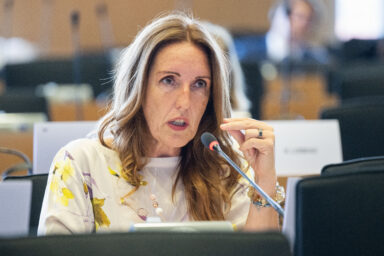
With the launch of the ResourceEU programme, this new doctrine is not just a vision for the future, Mr Séjourné said at the following press conference. “It is already operational. We are equipping the Union with the tools it needs to remain strong, adaptable, and sovereign in the face of global uncertainty.”
A new doctrine for a new era
The Commission’s approach is no longer piecemeal. It will now coordinate its actions across all relevant policy areas, ensuring that trade, investment, and industrial policies work in tandem. The Commission will also work more closely with member states and businesses, sharing intelligence and best practices. The goal is to intervene early and decisively, before vulnerabilities become crises.
Trade Commissioner Maroš Šefčovič said: “Much as Europe loves open trade and global investment, (we have to realize that) openness without security becomes vulnerability. To stay resilient in a shifting geopolitical and geoeconomic landscape, we must use our tools more strategically and assertively, while developing new ones to reinforce our economic security. And we must strengthen our capacity to gather and share economic intelligence, because true security is only possible when Europe acts as one – with Member States and industry moving in sync.”
One thing is certain, this tension on raw materials is there to last. This is why we need a systemic response. — Stéphane Séjourné, Commission Executive Vice-President for Prosperity and Industrial Strategy
Kaja Kallas, Europe’s top diplomat, added: “Economic security is fundamental to Europe’s security. When access to the critical raw materials we need for our defence is cut off, over-dependencies become physically dangerous. Today we adopt a new strategy to reduce these dependencies by diversifying our supply chains while remaining open to trade with partners. Effectively using the EU’s full trade arsenal to respond to economic threats is a core element of this strategy. And smarter choices, from a more strategic use of EU funding to increased intelligence sharing, can help make the Union more secure.”
The first step
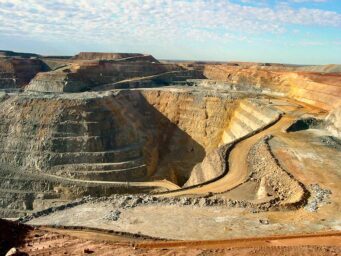
The Commission’s new ResourceEU programme is the first concrete manifestation of the new strategy. It aims to tackle Europe’s overdependence on overseas suppliers of critical raw materials and semiconductors. The programme will establish a new European centre to steer the supply of critical raw materials, with three main missions: monitoring, supporting projects, and facilitating international partnerships. The Commission will also provide additional financing—€3 billion over the next 12 months—to speed up projects in priority areas such as batteries and permanent magnets.
Mr Séjourné said: “Resources EU is, in a way, the armed arm, the first tangible element of this doctrine. With Resources EU, Europe acts, in a way, its independence on critical primary matters. It is a necessity, while the situation remains alarming today. Export licenses are granted to the Congout and to the price of information that often relates to the industrial secret. One thing is certain, this tension on raw materials is there to last. This is why we need a systemic response. And this systemic response is this plan that was presented today at the Commissariat College.”
The programme will also amend legislation to require European companies to diversify their sources of supply. If companies fail to do so, the Commission will have the power to impose mandatory diversification through a delegated act. The Commission will also set up a matching platform to bring together European buyers and suppliers, encouraging companies to look beyond China for critical raw materials.
A team effort
The Commission is clear that economic security is not just a Brussels project. Member states will be expected to appoint national economic security advisors, and the Commission will create a trusted advisory group of EU business representatives. The Commission will also work more closely with industry, sharing intelligence and best practices. The goal is to create a “Team Europe” approach, where all actors—member states, businesses, and the Commission—work together to reduce vulnerabilities.
The trade commissioner said: “Going forward, it is clear that economic security will only work if Europe acts as a team with member states and industry moving in sync. And to support this, we propose a new economic security information hub with real-time monitoring of market shifts and supply diversifications, mapping of high-risk entities, and helping check eligibility for EU funding.“
When access to the critical raw materials we need for our defence is cut off, over-dependencies become physically dangerous. — Kaja Kallas, High Representative for Foreign Affairs and Security Policy/Vice-President of the European Commission
Mr Šefčovič also suggested that each member state appoint a national economic security advisor, and that “we create a trusted advisory group of EU business representatives. Industry must also factor in a price premium for medium-term security. Policy action alone is not enough, and business must therefore play their part, too.”
Looking ahead
The Commission will also develop new tools to address gaps in the EU’s economic security. These include the SAFE Regulation, the Industrial Accelerator Act, the Cloud and AI Development Act, CHIPS 2.0 Act, the Net Zero Industry Act, the Critical Raw Materials Act, the Start-up and Scale-up Strategy, and the EU Space Programmes. The Commission will also step up cooperation with trusted partners, promote common economic security standards, and take joint action to address key challenges.
The Commission’s new economic security strategy is a response to a changing world. The weaponisation of supply chains, the rise of state-backed overcapacity, and the concentration of critical technologies in a few hands have made it clear that Europe cannot rely on the status quo.
Mr Séjourné said: “ResourceEU isn’t just a document, It’s a way of steering and coordinating supply of critical raw materials in Europe. These critical raw materials are of vital importance for our business. And the cost of independence is lower than the cost of dependence in this area. So given the tense geopolitical situation that we are in, we need to make progress in this area, and this document will enable us to do this.”
ResourceEU reframed
Mr Séjourné’s cabinet clarified during the day brief that rare earths are but one out of seventeen critical raw materials covered by the initiative, selected because of their acute dependency and defence applications. The cabinet also reframed ResourceEU as an acceleration rather than a policy reversal—the 2030 targets for extraction, processing, recycling, and single-country dependency limits already existed under the Critical Raw Materials Act; today’s announcement simply provides the operational tools and financing to meet them.
We propose a new economic security information hub with real-time monitoring of market shifts (…), mapping of high-risk entities, and helping check eligibility for EU funding. — Maroš Šefčovič, EU Commissioner for Trade and Economic Security
Crucially, the brief clarifies the rationale for public intervention: because industry has not diversified adequately on its own, the Commission argues that public authorities must step in to anticipate risks and pool European demand, preventing a race to the bottom where member states act unilaterally. The Commission reserves the right to impose mandatory diversification requirements on companies if voluntary measures fail over time.
The new strategy is not about protectionism, but about resilience, the Commission said. It is about ensuring that Europe can withstand shocks, reduce vulnerabilities, and remain open to trade and investment. The Commission will continue to engage with member states, third countries, and stakeholders to implement the new strategy.