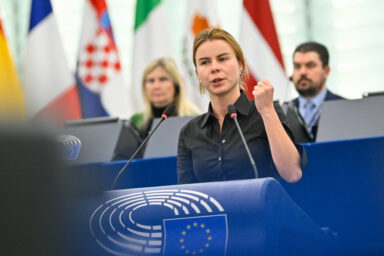

The informal European Council of EU leaders in Brussels concluded after a nearly five-hour meeting on transatlantic relations late Thuesday. EC President Ursula von der Leyen stated that all member states’ solidarity with Greenland and Denmark is “unequivocal”. The EU, while “concerned” by US actions, declared itself ready to “defend its interests and will defend itself, its member states, its citizens, and its companies from any form of coercion,” said European Council President Antonio Costa at the ensuing press conference.
Arctic security will become a focus for the EU in its cooperative dialogue with the US and a new geopolitical necessity. “We believe we should use the increase in our defense spending to equip ourselves with Arctic-ready equipment, such as a European icebreaker, and that we should strengthen our security and defense agreements with partners in the region, such as the United Kingdom, Canada, Norway, Iceland, and others,” Ms von der Leyen said. So far, the European Commission is preparing an investment package for Greenland that should strengthen ties and support development.
Between a rock and a soft place? The US and the EU
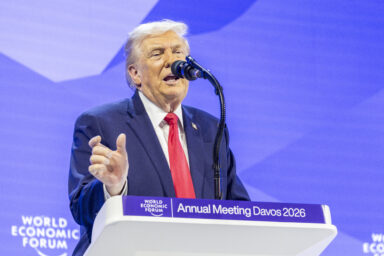
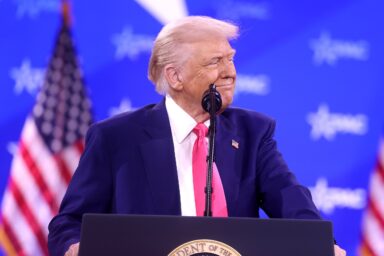
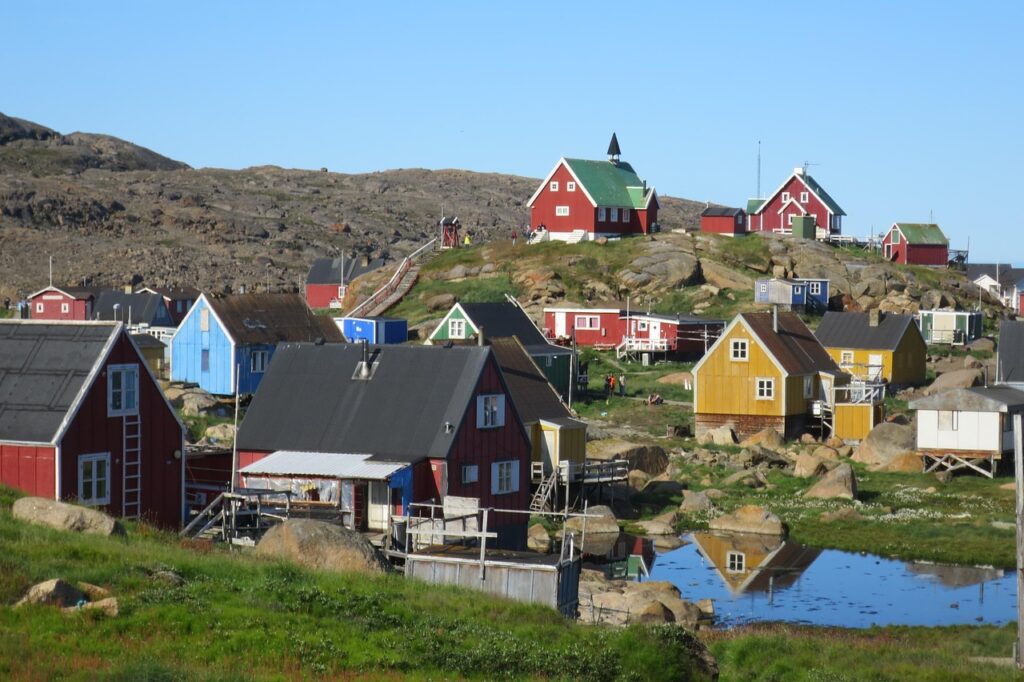
Leaders announced the informal Council a few days ago after Mr Trump repeatedly demanded to acquire what he jokingly called “a piece of ice” — Greenland — and threatened new tariffs on member states that travelled to Nuuk to defend Danish territory. Council President Antonio Costa was quick to express his discontent and call for respect for the privileged relationship that the European Union and the United States have long built. “We believe that relations between partners and allies must be managed in a cordial and respectful manner.”
That is, this is not the way to engage in dialogue or conduct foreign policy. However, he offered a glimmer of hope in his speech to Trump although not without risk. “Europe and the United States share a common interest in the security of the Arctic region and, particularly through NATO and the European Union, will also play a stronger role in this region.”
Direct and on point
A dissenting voice – as he is across the board on domestic policy – was that of Spanish Prime Minister Pedro Sánchez, who spared unneeded rhetoric and went straight to the point. “The reality is that the United States government is not respecting international law and is straining transatlantic relations between the United States and the European Union like never before.” The EU does not want to return “to a past in which territorial sovereignty was treated like a game of Monopoly, in which a price was placed on the fate of thousands and thousands of citizens,” he reiterated.
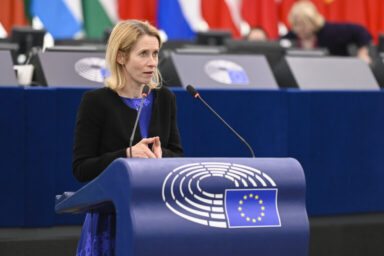
European Commission President Ursula von der Leyen stressed that the EU has trade countermeasures and anti-tariff tools ready if tariffs are imposed. Donald Trump might change his mind again. “Regarding Greenland, we are clearly in a better position than we were 24 hours ago, and tonight we have learned from our collective strategy,” she added.
You might be interested
Gaza and Ukraine
Thursday’s informal Council, less focused on transatlantic relations than on how to interpret, understand, and analyze US foreign policy.
Regarding Gaza, “we have serious doubts about several elements of the Board of Peace’s statute, particularly regarding its scope, its governance, and its compatibility with the UN Charter,” Mr Costa warned. In this regard, the EU has declared itself ready to play a role within the Statute, but “to carry out its mission as a transitional administration in accordance with United Nations Security Council Resolution 2803.”
Prosperity plan
Regarding the “prosperity plan” for the reconstruction of Ukraine, Ms von der Leyen stated that “we are close to an agreement with the United States and Ukraine.” The plan proposes a response structured around five different pillars. The first pillar concerns increasing productivity through business-friendly reforms and increased market competition. The second pillar concerns accelerating Ukraine’s integration into the European single market through reforms in key economic sectors. The third pillar concerns a significant increase in investment.
“Here, the Ukraine Investment Framework, part of our Ukraine Facility, is already operational, so we can use structures that we have already built since the beginning of the war. So far, it has been the main investment vehicle. “This is the EU’s commitment to the country, and it is clearly producing results,” Ms von der Leyen explained. “The fourth pillar concerns strengthening donor coordination, because we need not only public funds, but also private investment. Here too, we have a solid and proven structure already in place through the Ukraine Donor Platform. This platform brings together the G7 countries, the European Commission, Ukraine, and other partners. Finally, to complement all of this for Ukraine’s prosperity, the fifth pillar concerns fundamental reforms.
The condition remains necessary: it means strengthening the rule of law, intensifying anti-corruption efforts, and modernizing public administration, because this is how we can build trust, and the trust of our partners and investors is fundamental,” she concluded, warning about the enlargement process.
Next steps
With the conclusion of this Council, preparations are underway for the next informal meeting, scheduled for February 12. Costa announced that the focus will be on the Single Market in the new geoeconomic context. “The European Union is committed to implementing an ambitious program for our citizens: defense, competitiveness, and building a more strategically autonomous Europe.”