
This year’s first Eurogroup meeting discussed in detail the process of adopting the single European currency in Bulgaria, which has been using the euro as legal tender from 1 January, 2026. Eurozone finance ministers nominated Croatia’s Boris Vujcic to succeed Spaniard Luis de Guindos as European Central Bank vice-president.
The Eurogroup meeting, held on Monday 19 January, marked the occasion of Bulgaria’s euro accession. Temenuzhka Petkova, the Bulgarian Finance Minister, updated other ministers on the state of play on the changeover to the euro. “Transition is going smoothly, we did not experience any major problems,” Minister Petkova said.
The Eurogroup agreed to endorse Boris Vujic, Governor of the Croatian National Bank, for the forthcoming ECB vice-president vacancy. His nomination still needs to be approved by the Council and Parliament, Mr Vujic should take the office in May.
Commission’s recommendations supported
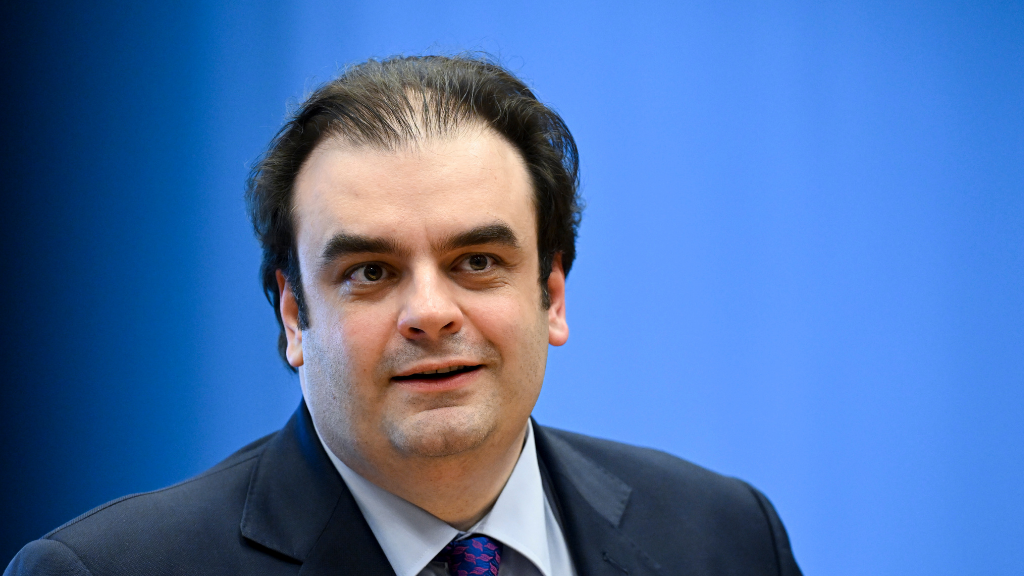
Kyriakos Pierrakakis, who has been elected Eurogroup President only in December 2025, in his speech labelled euro as “pillar of economic stability”. Mr Pierrakakis also said at press conference that the 2026 Euro Area Recommendations (EAR) set by the Commission “received a very strong support” from the finance ministers.
The latest EAR focus on ensuring fiscal sustainability while creating space for key investments, including on defence and competitiveness, alongside improving the efficiency of public finances and completing Recovery and Resilience Plans.
You might be interested
EAR also promote the creation of a European Savings and Investment Union and underline the need to advance the digital euro project, reinforce the international role of the euro, and monitor macro-financial risks.
Let us rely on ourselves: Dombrovskis
Valdis Dombrovskis, Commissioner for Economy and Productivity, in his speech underlined the fact that given the uncertain geopolitical framework, Europe must rely on itself. “This meeting offered a timely opportunity to focus our attention on the policy priorities for the period ahead (…). The increasingly challenging external environment means that we should look for domestic drivers of growth,” Mr Dombrovskis stressed.
The increasingly challenging external environment means that we should look for domestic drivers of growth. – Valdis Dombrovskis, Commissioner for Economy and Productivity
Commissioner Dombrovskis also said that now it is especially important to make progress. “The geopolitical landscape that Europe must navigate has never been that complex,” Mr Dombrovskis said at a press conference.
A club of twenty one members
The Eurogroup is the recognised collective term for the informal meetings of the finance ministers of the eurozone, i. e. those EU member states which have adopted the euro as their official currency. The group currently has 21 members including Bulgaria that joined on 1 January 2026. It exercises political control over the currency and related aspects of the Economic and Monetary Union such as the Stability and Growth Pact.
The Eurogroup was established at the request of France as a policy co-ordination and consultation forum on eurozone matters. Its first meeting was held in June 1998 in Luxembourg.