
The European Parliament voted on Tuesday, 20 January to take a more interventionist approach to securing medicine supplies than the European Commission first proposed. MEPs approved a negotiating mandate for the Critical Medicines Act (CMA) that goes further on procurement rules, industrial policy and stockpile coordination.
The proposal passed with 503 votes in favour, 57 against and 108 abstentions. It aims to reduce Europe’s dependence on third countries and strengthen pharmaceutical manufacturing inside the EU. The scope includes antibiotics, insulin, vaccines and treatments for chronic diseases. Parliament also notes that more than 50 per cent of reported medicine shortages stem from manufacturing problems, including shortages of active substances.
Parliament will now start negotiations with EU governments on the final shape of the law. Several elements of its mandate may meet resistance. These include procurement rules, redistribution of stockpiles and future EU funding.
Risks of new dependencies
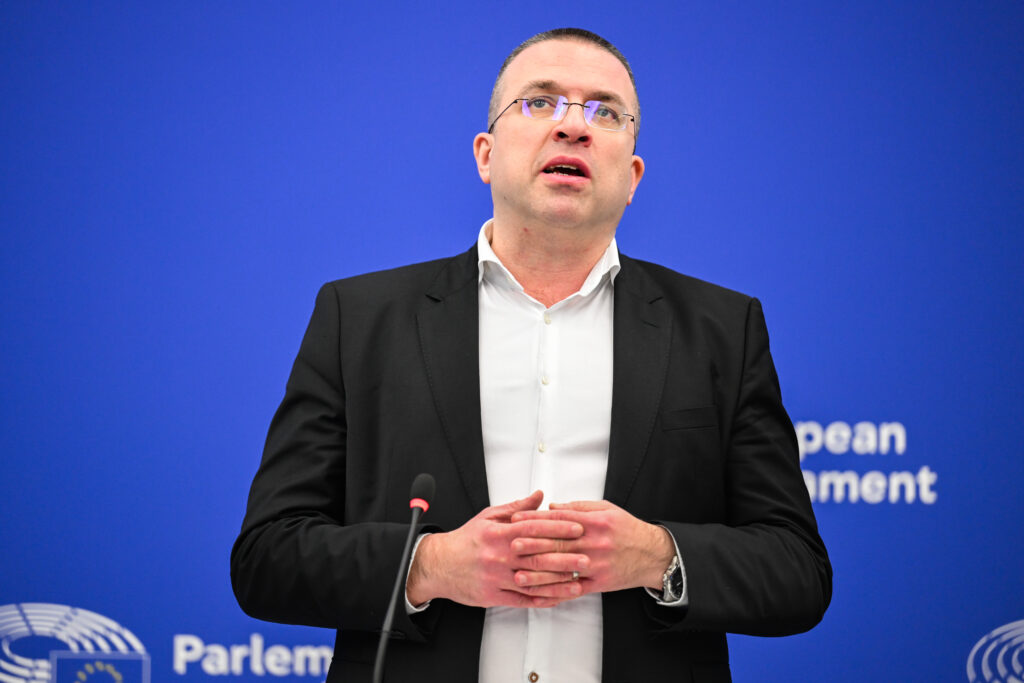
Speaking to the press after the vote, rapporteur MEP Tomislav Sokol (EPP/HRV) said Parliament had chosen to go further than both the Commission and what many governments may accept. He said Europe has failed to treat pharmaceuticals as a strategic industry, even though it is “the strongest European exporting industry with the highest GDP”.
He warned that the United States now reshapes global investment in pharmaceuticals. Washington pushes companies to reshore production and sign “tens of billions of dollars” in new investment contracts. It also seeks to change pricing rules by referencing European prices.
You might be interested

Mr Sokol said Europe already depends heavily on imports of generic medicines from India and China. He warned that Europe now risks dependence on innovative medicines from the US as well. “You are currently to a large extent dependent on importing generic medicines from India and China, and if you add on top of that a new dependency on innovative medicines from the U.S. in five or ten years’ time, this is a big problem,” he said.
Strength and equality
The rapporteur framed Parliament’s approach around two goals. First, the EU must keep and expand pharmaceutical production inside Europe. The aim is to reduce reliance on imports and support long-term manufacturing investment.
Second, Parliament wants to narrow access gaps between member states. Mr Sokol said patients in smaller and eastern countries often wait longer for new medicines. “Currently, unfortunately, it takes several years more for patients from small countries in Eastern Europe to get medicines as compared to the big countries in the West,” he said. Companies must produce at least 50 per cent of active pharmaceutical ingredients or final products in Europe.
This is one of the strongest tools Europe has used so far to counter foreign industrial strategies. — MEP Tomislav Sokol (EPP/HRV)
Parliament’s mandate turns procurement into a core industrial policy tool. Companies must produce at least 50% of active pharmaceutical ingredients or final products in Europe to qualify for preferential treatment in public tenders. Sokol said Parliament defined “significant proportion of production” for the first time.
Procurement as industrial policy
“Essentially this means that you are putting pressure on the pharma industry to invest in Europe. When they invest, they get preference in procurement,” the Croatian member said. He called this one of the strongest tools Europe has used so far to counter foreign industrial strategies.
Parliament also lowered the threshold for voluntary joint procurement from nine countries to five. This change should help smaller member states improve their negotiating position. “For patients from small member states, this is extremely important to strengthen their negotiating position towards the pharma industry,” Mr Sokol said.
Parliament also added mandatory multi-vendor tenders, especially for generics and antibiotics. The aim is to reduce dependence on single suppliers. Mr Sokol said current systems often award contracts to only one company. Any disruption then leads to shortages.
Multi-vendor tenders
“For many medicines we are dependent on only one supplier. If there’s any problem in the production or distribution chain, then we have shortages,” he said. Multi-vendor tenders would spread risk and support European generic producers.
Parliament’s most controversial proposal allows redistribution of medicines from national stockpiles when shortages hit, but only as a last resort. Mr Sokol said stockpiling by larger countries can worsen shortages elsewhere. “National stockpiling in some member states, especially the big ones, directly contributes to shortages in smaller member states. This is something that is completely unacceptable for us,” he said.
Under Parliament’s plan, redistribution would only apply in crisis situations. Member States would make decisions by high voting thresholds. The Commission would not act alone. “This will be more like a Council decision in the end than a Commission decision,” Mr Sokol said. He also said this issue would prove the most controversial in talks with governments.
Environmental rules emerge as main internal fault line
The plenary debate revealed a clear division inside Parliament. MEPs disagreed over the role of environmental and chemical rules in medicine shortages. Several speakers rejected claims that EU environmental law drives shortages. They called such arguments ideological and unsupported by evidence. Others warned that rising compliance costs weaken competitiveness and deter investment.
MEP Sokol acknowledged the disagreement and linked it to the coming negotiations. “Not everybody will agree, but this is why negotiations are important,” he said. He added that Parliament’s strong majority gives it “a strong negotiating position”.
EU action must focus on where the need is greatest and the impact highest, namely the critical medicines on the Union list. – Costas Kadis, EU Commissioner for fisheries and oceans
The European Commission welcomed Parliament’s ambition but drew firm lines during Monday’s plenary debate. Its position reflects concerns some member states also raise. Costas Kadis, Commisisoner for fisheries and oceans said must “focus on where the need is greatest and the impact highest, namely the critical medicines on the Union list”.
Commission: shared goals, strict boundaries
The commissioner said EU-level procurement must remain targeted. It should only apply when “justified and supported by a significant number of member states”. On stockpiles, he stressed limits to EU powers. “EU-level stockpiles are normally last-resort solutions,” he said. They must work “in coordination with national stockpiling measures to avoid exacerbation of shortages”. He also warned that forcing redistribution of national reserves “would lead to legal challenges as this is a national competence”.
The Commission also resisted rigid procurement and industrial rules. It said contracting authorities must keep flexibility, including for any EU preference approach. On funding, the Commission said any new mechanisms beyond 2027 can only follow talks on the next multiannual EU budget.
Finally, it warned against adding heavy administrative burdens. Policymakers must seek “cost-efficient solutions” and continue to simplify rules for industry, member states, the EMA and the Commission. The Commission said medicine shortages now pose a “structural challenge for Europe”. Still, he stressed that the CMA must work alongside pharmaceutical law reform, which “will not be enough by itself”.
Where ambition meets reality
Parliament now moves into negotiations with EU governments. The hardest issues will likely be redistribution powers, procurement obligations and financing. Mr Sokol said Parliament will push for a fast process. He said talks on other health files have moved quickly when political will existed. Still, he acknowledged that compromise will prove necessary.
The outcome will show whether Europe treats medicines as strategic infrastructure or limits the CMA to targeted supply-chain tools.