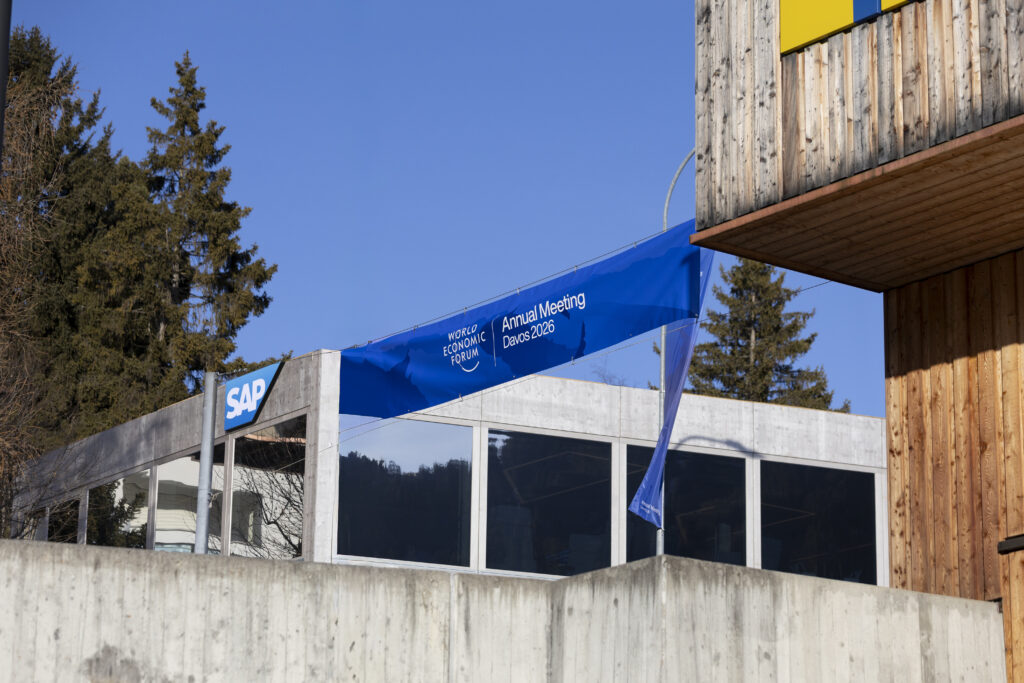

“We are in the midst of a rupture, not a transition.” Canadian Prime Minister Mark Carney’s warning became the unofficial theme of this year’s World Economic Forum in Davos. Looking back at last week, European lawmakers echo the message and agree: the American-led international order is over, and Europe must now reckon with what comes next.
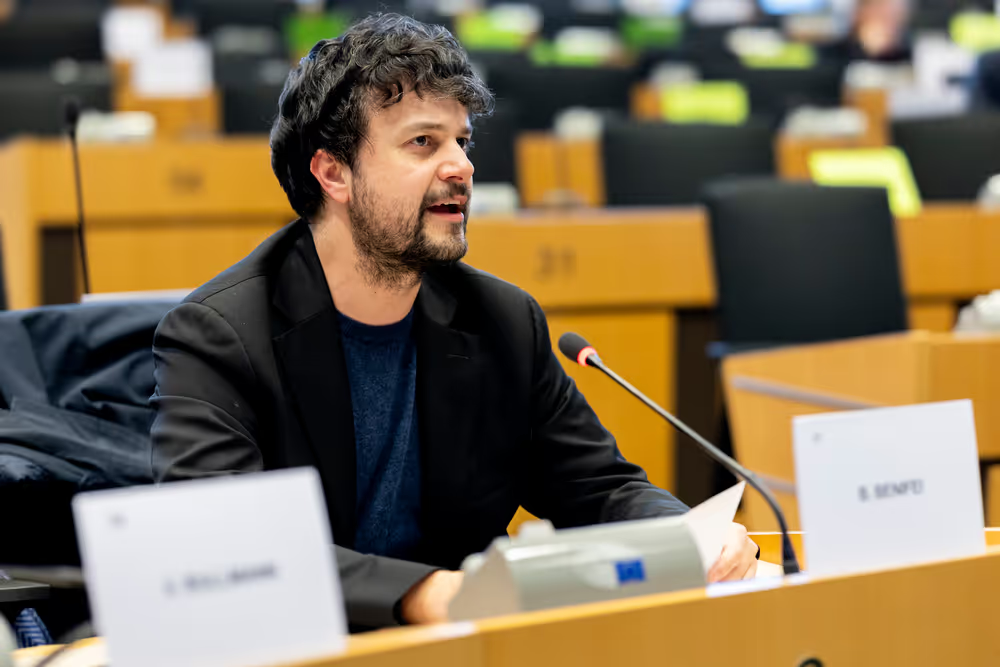
“We were back to the normal instability and unpredictability—the chaos we knew, not the situation that escalated on Greenland,” said MEP Brando Benifei (S&D/Italy), chair of the Delegation for relations with the United States, about the feeling at Davos after the chaotic week in which Trump eventually backed down on his threats of force to take Greenland.
Mr Benifei described the closure of Davos as an acceptance of the new world order: “The attitude of everyone was: we need to be ready to accept that this is what we will see from now on always. A situation of instability that needs to be managed knowing that there is no certainty.”
MEP Lukas Sieper (NI/Germany) put it in more stark terms: “Right now for me it’s more like a toxic relationship, and I think I can quite confidently say that we are not the toxic part.”
Carney’s American hegemony “is not coming back”
Canadian Prime Minister Mark Carney’s speech was “a sign of hope,” said MEP Nela Riehl (Greens/Germany). Carney argued the fiction of the old American hegemonic order “is not coming back,” and middle powers must come together.
“I think he managed to find the words that European leaders didn’t,” MEP Riehl continued.
You might be interested
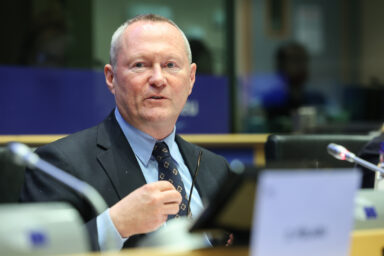
MEP Sieper described a feeling of middle powers emboldened by the speech: “In a multipolar order, they [middle powers] have a better game, so to say, because all the big players are weakened.”
The need for unity among middle powers was echoed by MEP Benifei. “We need Italy, France, Germany, Poland, Spain, and the Netherlands to be aligned,” he said. “To coordinate between middle powers—yes, we should do that too.” MEP Riehl emphasised the search for new allies should also extend to Canada, India, and the Mercosur states.
US family drama on the global stage
Those at Davos described the week as a family in disarray—infighting, insults thrown between members of the administration and California Governor Gavin Newsom, and all led by Trump, who in an hour-long speech ridiculed Europe.
“It seems like the US administration takes every opportunity to use every major international stage to tell us that we are idiots and that the globalised world order is dead, which is a little bit ridiculous given the fact that the US built this world order,” said MEP Sieper.
The first half of Davos at the height of Trump’s threats to take Greenland “reached a new low” in relations according to MEP Benifei. “The threat to territorial sovereignty is really another world compared to not giving the visa to Breton or asking for the Digital Services Act to be dismantled.”
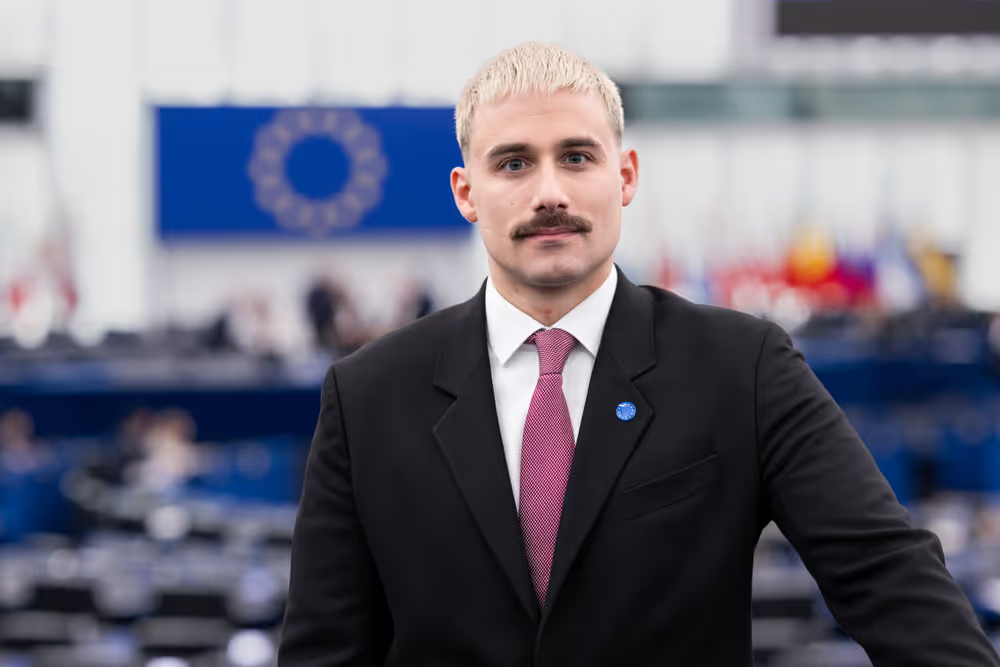
The week marked a stark conclusion. “In the end, Trump does what he says,” said MEP Benifei. “If people until now haven’t figured it out, they should at least take this week of Davos to be reconsidering and to be like, okay, now we need to step up our game,” said MEP Riehl.
All of the MEPs EU Perspectives spoke to expressed varying degrees of frustration and caution about reassuring words from Americans on Trump. “It [the transatlantic relationship] will never be the same again…We had Trump the first time. Then we had the Democrats who said things will be normal again and it’s all gonna be fine. And now we have Trump again and it’s even worse,” said MEP Sieper.
Europe’s representation at Davos
Davos had three main European voices: German Chancellor Merz, French President Macron, and Commission President Ursula von der Leyen. All stressed the need for a more competitive and secure Europe, but on different terms.
“I feel there is still a lot of disunity and I think we still need to see a clear path forward,” said MEP Benifei. “For now we look like an erratic bunch and they [Americans] make fun of us.”
There is a growing call for the EU to ‘speak with one voice.’ This was reflected in the events of the week, when EPP leader Manfred Weber put out a call to merge the presidency of the Council with the presidency of the Commission so that Europe can speak with one voice.
MEP Riehl from Volt, a pan-European political party, frames this feeling in the need for a more federalised EU: “I felt like the time for the United States of Europe was yesterday, because that is—if we had this discussion, I don’t know, five years ago, four years ago, and not been caught in the weeds, then I don’t think we would be where we are right now.”
She, like many observing this year’s Davos meeting, described the diverging perspectives coming from European leaders as both accurate, but in need of coming together: “Merz is lacking a vision—the one I was talking about before [for a more federalised Europe]. But he sees the need for allies… Whereas Macron does have a vision… but he doesn’t really see the need for allies. This needs to come together.”
These diverging but both important perspectives are what MEP Sieper believes actually makes the EU stronger. “That’s a perfect example of why Europe’s strength is actually its diversity. Because none of those messages alone is sufficient… Europe has values and an economy. It’s a single market but also a value-based treaty organisation,” he said.
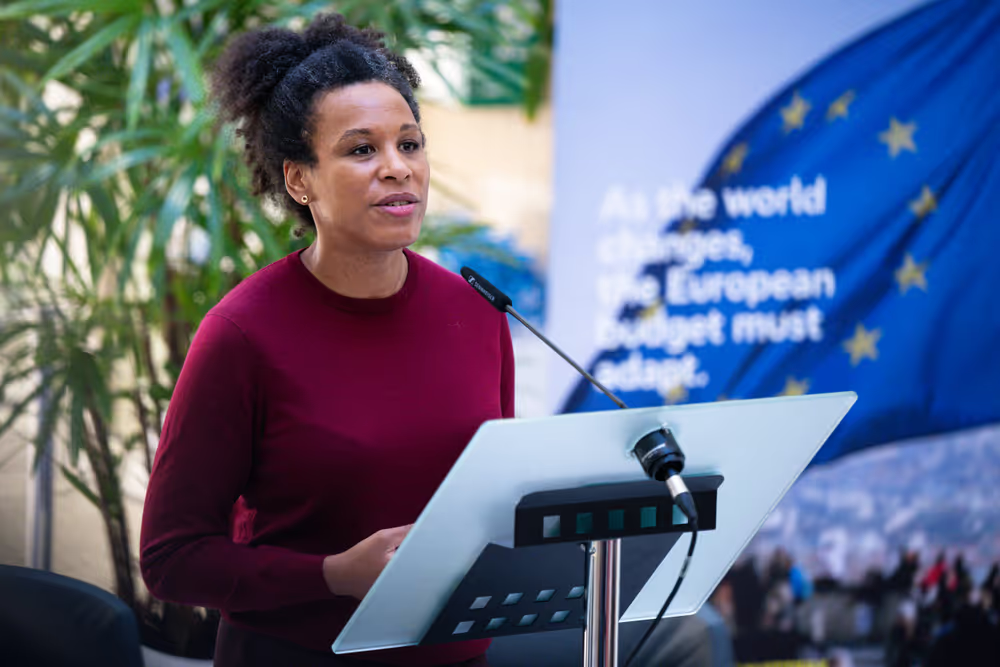
While it may be a strength in developing coherent policy, MEP Benifei warned this disunity has consequences for how Europe is perceived abroad: “Every time I talk with Americans that are members of this administration… they tell me, ‘we believe that you will never retaliate or counteract on anything.'” He continued: “The strong belief in many sectors of the American elite in government is that we are saying things and we never do anything.”
What he suggests moving forward: “I don’t think we should be accepting a form of blackmailing based on the principle that ‘okay I’m not invading you, now you have to do this and this and this,” he said.
Zelenskyy’s frustration over European infighting
“This was a wake-up call for us,” said MEP Riehl on Zelenskyy’s speech, which was harshly criticised by many for focusing on his frustration over the inaction and infighting on EU support for Ukraine.
MEP Benifei thought that too much attention was being drawn to his moments of criticism, and that most of the speech was actually focused on the real problems facing Ukraine and Europe. Though he did believe Zelenskyy was a bit excessive at times, which in the end was “not useful to the cause.”
MEP Sieper took a different view, believing it is what Europe needed to hear given Zelenskyy hadn’t done it in a while and that Europe is experiencing growing war fatigue.
A new sense of urgency
Davos 2026 brought forward a new awareness of the need for Europe to chart its own path.
“We need to be the one shaping this new world order and we cannot let the US do that for us,” said MEP Riehl. And while many were fearful of the speed at which Europe can make this strategic change, MEP Sieper is confident that when it happens, it will bring Europe onto a steadfast and powerful course.
“Everyone says we are weak and still we are the place in the world that has the strongest single market, the best living quality, and is the freest overall. So in the end, I think our very passionate discussion culture is a positive and not a negative.”
And this discussion culture, he added, contributes to the slow but steadfast support Europe has developed for Ukraine: “The European Union is like a tanker—it takes very long to change course, but if you change course, it’s unstoppable.”