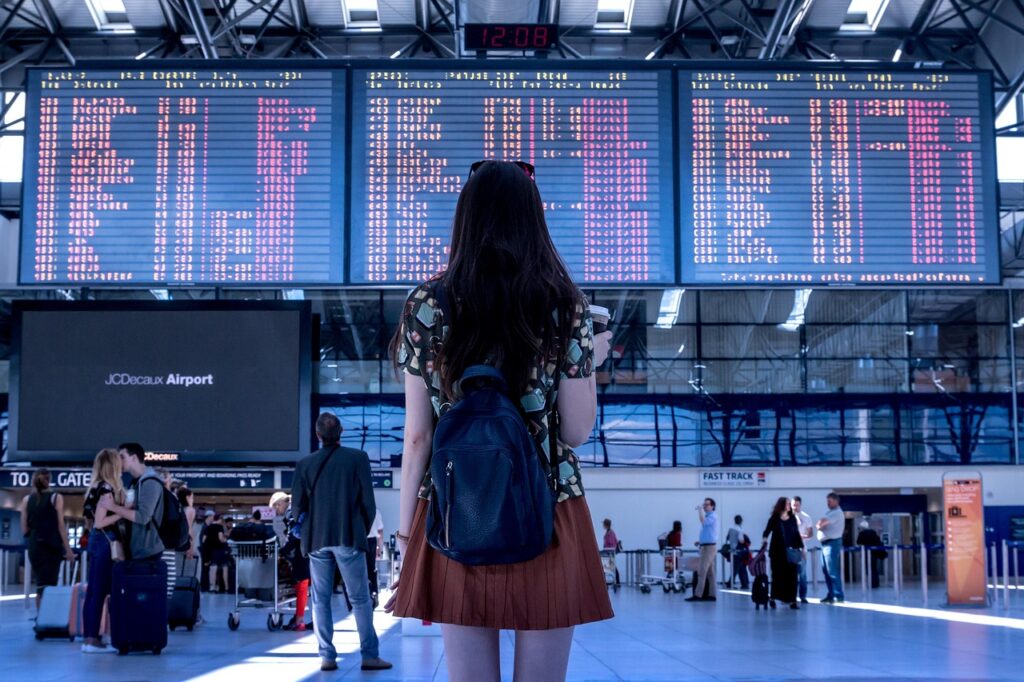

Brussels has entered yet another round of brinkmanship over the European Union’s most famous piece of consumer law. MEPs insist the three-hour delay threshold, fixed payouts of up to €600 and generous care obligations must remain intact in the regulation on airline passengers‘ rights — despite pushback from the Council.
On 12 January the European Parliament’s transport committee voted, by 36 to none with two abstentions, to throw out the Council’s June 2025 deal on revising Regulation 261/2004, the regime that compensates air passengers for cancellations, long delays and denied boarding.
EU governments want the clock to start at four or even six hours and to shave compensation by up to €100. MEP reject the notion wholeheartedly.
The clash matters. Regulation 261 has shielded more than 15 billion travellers since 2005, but airlines say it now saddles them with open-ended liabilities, especially when volcanic ash clouds, pandemics or wayward baggage handlers ground fleets. Attempts to update the law began in 2013 yet stalled for eleven years as capitals bickered. Last June ministers finally united behind a general approach, only for inter-institutional talks to collapse in October. Parliament has now fired the next salvo with its second-reading text.
You might be interested
A familiar stalemate
MEP Andrey Novakov (EPP/BLG), rapporteur for the file, offered no compromise. “We will not step back from existing passengers’ rights,” he told colleagues. “The three-hour threshold, the compensation levels and real, enforceable safeguards are our red lines.”
The committee’s draft preserves the right to €300-600 in cash when arrival is delayed by at least three hours, mirroring the original 2004 scheme and subsequent rulings by the European Court of Justice. Ministers would trim those figures and require four-hour delays on short hops, five on medium distances and six on long-haul before money flows. Airlines trumpet “proportionality”; MEPs retort that most travellers have neither time nor lawyers to wring redress from carriers.
Parliament also refuses to dilute the duty of care. Stranded passengers must still receive refreshments every two hours, a meal after three and, where necessary, hotel rooms, though for no more than three nights in extraordinary circumstances. That is a new cap designed to spare carriers unlimited bills.
What does ‘extraordinary’ mean?
Governments accept the three-night limit but want wider leeway to invoke force majeure. MEPs counter with an exhaustive list—natural disasters, war, extreme weather or unforeseen labour disputes—that the Commission would keep updated. Anything not listed, they say, stays squarely within an airline’s control.
Consumer baubles sweeten the package. Every traveller would be entitled, free of charge, to carry one personal item and a small bag of up to seven kilograms. Fees for correcting misspelt names and for printed boarding passes would vanish. Parents flying with children under 14 or escorts assisting disabled passengers could choose adjacent seats at no extra cost.
The committee devotes unusual attention to people with reduced mobility. If an airport’s tardy assistance causes them to miss a flight, they would secure the same compensation and rerouting rights as those denied boarding.
Vulnerable travellers first
Pregnant women, infants and passengers in wheelchairs would board first; their companions would sit beside them without paying the sort of “proximity surcharge” that has sprouted on budget airlines. Parliament also wants pre-filled claim forms emailed within 48 hours of any cancellation or long delay so that passengers and carriers can bypass the rambunctious market for “no-win, no-fee” claim agencies.
We will not step back from existing passengers’ rights. — MEP Andrey Novakov (EPP/BLG)
Mr Novakov frames these tweaks as realism, not generosity. “These are practical rights that must work in real life,” he argued. Airline lobbyists snort. AIRE, which groups medium-sized carriers, says the law already outstrips global norms and should cap payouts at the ticket price, exclude assignments to claims firms and impose a two-month deadline for complaints. During the pandemic, when governments banned flights and cash dried up, many airlines ignored refund rules. The European Court of Auditors scolded regulators for lax enforcement; carriers blamed force majeure.
Legal guerrilla warfare has made matters murkier. In 2008 the ECJ ruled that routine technical faults did not count as “extraordinary circumstances”. The Sturgeon judgment a year later equated long delays with cancellations, cementing the three-hour standard. Each verdict fortified consumer rights but infuriated airlines, which warn that a single mechanical glitch on a hub-and-spoke network can cascade into continental liabilities.
Politics not turbulence
Why, then, does compromise prove elusive? Partly because governments answer to flag-carriers and airports as well as voters. France and the Netherlands fret over Air France-KLM’s debts; Spain shields Iberia, and Germany’s finance ministry still owns 16 per cent of Lufthansa. Ministers therefore cheered when Council lawyers inserted a rolling scale of delay thresholds and pared compensation to €300-500. The text even dropped pre-filled claim forms for delays, retaining them only for outright cancellations.
MEPs saw a rollback. Their swift rejection now sends the file to the Strasbourg plenary later this month, where approval seems certain: social-democrats, greens and most liberals back Mr Novakov. Should the chamber adopt his stance, the Council must decide whether to yield ground or let the file lapse. Brussels insiders recall that the 2013 proposal died the same way: exhaustion outweighed urgency.
Yet time squeezes policymakers. Post-Brexit Britain has cloned the rules into UK261 (shorthand for the British version of the EU air-passenger-rights regime, the Regulation 261/2004 copied wholesale into UK law). American regulators weigh similar flat-rate compensation. If the EU flinches now, it risks ceding moral leadership on consumer protection and fuelling claims that the single market bows to corporate pressure.
Grounded, not defeated
Airlines still hold cards. They could threaten to raise fares, cut marginal routes or sue over what they deem economic disproportionality. Parliament’s proposed three-night hotel cap would tame the wildest liabilities but leaves many grievances intact.
These are practical rights that must work in real life. — Andrey Novakov
Even Mr Novakov concedes that clearer force-majeure criteria and faster reimbursement would aid both sides. He vows to negotiate “predictable rules for airlines and a stronger aviation sector, but never at the expense of passengers”.
For the moment, the legislative jet is circling. Parliament insists on keeping the engines of Regulation 261 humming; the Council would throttle back. Unless one side relents, Europe’s hard-won passenger-rights regime risks flying into another holding pattern. In EU law-making, turbulence often starts on the ground.