
The European Central Bank (ECB) entered the new year with a rare sense of calm as interest rate are to remain unchanged for the foreseeable future. But a leading board member warned that substantial reforms are needed for the bloc’s economy to pick up.
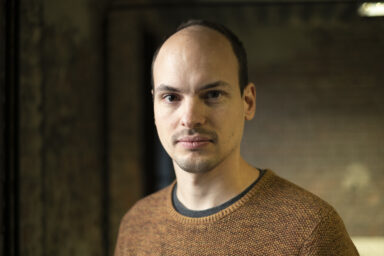
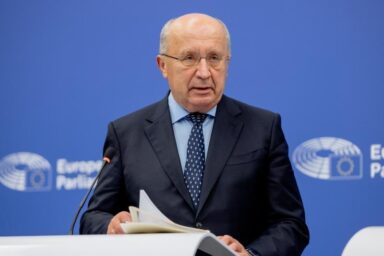
On 8 January Álvaro Santos Pereira, a governing-council member and governor of the Bank of Portugal, told Portuguese television RTP that inflation “remains close to its two-per-cent target” and that the ECB therefore “has no reason to adjust monetary policy at this stage”. The message was plain: after two frenetic years of rate cuts, Frankfurt plans to keep its powder dry.
Mr Pereira insisted the baton now passes to politicians. Monetary policy, he said, “has done what it needed to do, which was to support the economy when it was necessary.” With price stability restored, Europe’s “anemic” growth demands structural change, not cheaper money.
Responsibility, he argued, now sits squarely with Brussels and national capitals. “At this stage, responsibility lies with governments and the European Commission,” Mr Pereira declared. “If Europe wants to make the most of a consumer base of 450 million people, those reforms must be carried out, especially within the single market.”
You might be interested
Reform, not rates
His remarks echo the ECB’s unanimous decision on 18 December to hold the deposit rate at two per cent for a fourth consecutive meeting. Analysts had expected no move; they also received no hint about future steps. Policymakers repeated that actions would follow “one meeting at a time” and only “based on incoming data”.
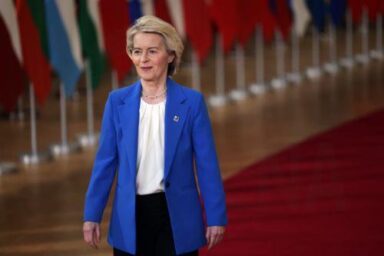
Christine Lagarde, the ECB’s president, underlined that stance. “We reconfirmed that we are in a good place, which does not mean that we are static,” she told reporters in Frankfurt. The governing council agreed unanimously “that all optionalities should remain on the table.”
New staff forecasts released that day showed inflation undershooting the target until 2028 even as growth edges higher. Other central banks moved south. The Bank of England cut rates hours before the ECB’s hold, following a similar trim by the Federal Reserve. Yet Mr Pereira’s colleagues see no reason to follow suit.
Sturdier, if still slow
Economic data support their patience. The euro zone outperformed gloomier forecasts in the third quarter of 2025 and has kept expanding. Surveys from S&P Global suggest steady momentum into the winter, helped by fiscal loosening in Germany.
Ms Lagarde expects domestic demand to do the heavy lifting. “Business investment and substantial government spending on infrastructure and defence should increasingly underpin the economy,” she said after the December meeting, though she warned that “the challenging environment for global trade is likely to remain a drag.”
The ECB has no reason to adjust monetary policy at this stage. — Álvaro Santos Pereira, member of ECB’s executive board
Inflation, meanwhile, looks subdued. Ms Lagarde predicted it “should decline in the near term … should then return to target in 2028, amid a strong rise in energy inflation.” Isabel Schnabel, an executive-board member, has signalled tolerance for a temporary undershoot “as long as such deviations are small.”
Hawks on the perch
Markets have nonetheless begun to price in a first rate rise in 2026, betting that the next move, whenever it comes, will be up. One analyst quipped that higher inflation forecasts will “allow the hawks to remain in control and continue to resist any more rate reductions”.
Gediminas Simkus, Lithuania’s central-bank chief and once a champion of further easing, now sees “no need to ease further”. A prolonged pause would freeze the loosening cycle at eight cuts. Ms Schnabel has hinted that the next shift “will probably be a hike”.
For now, though, the ECB’s job looks done. Rates sit at two per cent; the euro trades around $1.17; ten-year Bunds hover near 2.9 per cet. The spotlight turns to Paris, Rome and Brussels. If they fail to deepen the single market, Mr Pereira’s warning will ring loud and clear. Monetary medicine cannot cure Europe’s structural ills.