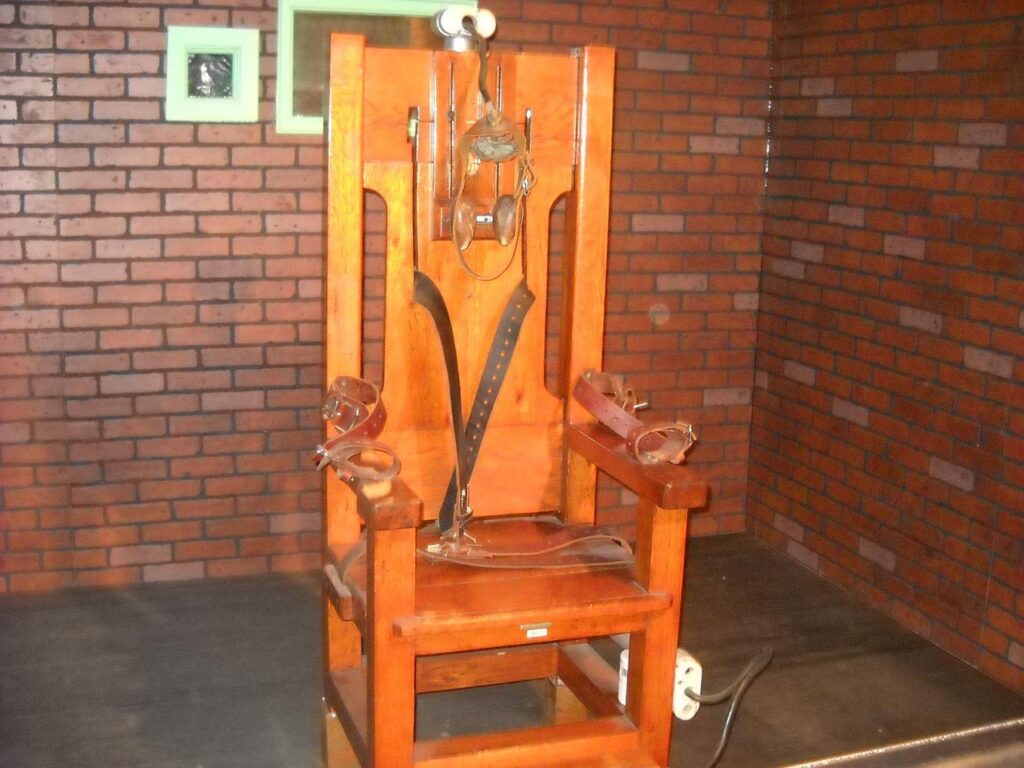

The European Parliament turned its attention to the death penalty on Thursday in a debate that underscored the EU’s enduring commitment to human rights. Lawmakers spoke together in a joint statement of principle, stressing the importance of promoting, at every opportunity, the abolition of capital punishment worldwide. The session raised concerns about executions in numerous countries, including Iran, where political activists and individuals tried under questionable legal procedures remain at terrible risk.
While the EU is often divided on many issues, the death penalty is hardly one of them. It remains an important point of unity. A moral question, opposing capital punishment is also a diplomatic tool, signalling Europe’s insistence that human dignity and the rule of law are non-negotiable.
The death penalty is not only about the crime committed. It is also about social inequality. — MEP Marc Angel (S&D/LUX)
While the last formal death penalty laws in the EU were abolished only in 2012—Latvia eliminated wartime executions when it ratified Protocol No. 13 to the European Convention on Human Rights—the 27-member bloc is long committed to abolition and upholding human rights. The continent is also free of legal capital punishment with one glaring exception: Belarus, under the grip of the Lukashenka regime.
Iran takes the grim lead
The debate opened with an address from Commission Vice-President Roxana Mînzatu, setting the tone for a parliament concerned with the rising number of executions last year — a jump of 32 per cent. According to the vice-president, the rise was largely attributable to Iran, Iraq and Saudi Arabia, with Iran accounting for more than 64 per cent of that group. One caveat: thousands executed by China each year go unreported, as they are also in North Korea and Vietnam.
In 2024, she noted, 40 per cent were for drug-related offences, a clear violation of international law, and the situation, she emphasised, was worsening in 2025.
“I want to stress that it is not only of concern that the number of executions is further rising but also that capital punishment is being increasingly applied to offences that do not meet the threshold of serious crimes under international law, understood as crimes of extreme gravity such as intentional killing.”
You might be interested

An insidious tool to silence opposition
Ms Mînzatu also highlighted that executions were often discriminatory with a “disproportionate impact on racial, ethnic, linguistic, and religious minorities, foreign nationals and the LGBTIQ community”. Unfair trials or trials with trumped-up charges remain a major concern in many authoritarian regimes along with torture. Capital punishment, she added, can be manipulated as a tool of oppression, to instil fear and silence political or other opponents.
“Honourable members, the death penalty has no place in the 21st century. Our fight against it should continue.” She stressed that the EU continued and would continue to follow its own guidelines on capital punishment, raising the issue with “all states that still retain capital punishment in law or practice” through diplomacy and civil society support.
Agreeable debate
The debate then turned to members themselves, with MEPs underlining the European Parliament’s unified stance against the death penalty. S&D led with MEP Marc Angel (LUX): “In the European Union, the death penalty seems like an anachronism, a thing of the past. But let us remember that the last member state to completely abolish the death penalty did so in 2012, not even 15 years ago. The path towards the abolition of the death penalty and scrapping it from our legal system was not obvious.”
He highlighted the courage it took to fight for abolition across Europe, paying tribute to historic figures such as Robert Kreeves of Luxembourg and Astrid Bergeren of Sweden. Even in long-standing democracies, the battle against capital punishment required perseverance and principle.
Echoing this human-rights perspective, he warned that executions often target the most vulnerable: “The death penalty is not only about the crime committed. It is also about social inequality. Across countries that still apply death penalty, one factor is constant. Those sentenced to death are overwhelmingly the poorest, the most marginalised, those without access to competent legal defence. No money means no good legal defence. No legal defence means harsher judgments, fewer appeals, and more death sentences.”
MEP Rody Tolassy (PfE/FRA) stressed the wider dangers of arbitrary executions, particularly under authoritarian regimes: “There are other states where this is done in secret, such as China and North Korea, and this is where the magnitude of the barbarism is actually hidden. And there have been hundreds of executions carried out in these countries, often after show trials. Women and minorities, whether they’re guilty or not of crimes, are executed. But then – and it’s an instrument of fear, not justice. It’s about controlling people. It’s about exercising the state’s power.”
Arbitrary and deadly
MEP Thomas Waitz (Greens/AUT) put a striking focus on the human cost and irreversibility of capital punishment: “There’s more than 28,000 people currently waiting on a death row. So this is not just a few single cases, and this is just the ones we know about. Is a death penalty a punishment? No, it’s pure revenge.
The Austrian member went on: “How shall I explain to my children and grandchildren that physical violence is never a solution, and killing a fellow human being is unacceptable for everyone, whoever, whether this is a private person, an institution, a state, or a judge? Killing a human being is an absolute no-go, and it’s unfortunate that we still need to say this in the 21st century.”
Finally, João Oliviera (Left/PRT) emphasised international cooperation and the EU’s role in promoting abolition worldwide: “We do not agree with the idea of a death penalty in modern criminal law systems. Moreover, in 1887, our country abolished the death penalty. This harks back to the humanistic concept which we all share. It’s vital that we work together to bring an end to capital punishment. And we should do this via decisions and, of course, international procedures, international bodies such as the United Nations.”
Moral truth
Together, these statements made clear that opposition to capital punishment is both a moral imperative and a consistent point of EU diplomacy. Lawmakers stressed the need for multilateral engagement, civil society support, and vigilance in protecting human dignity wherever executions are still carried out.
Honourable members, the death penalty has no place in the 21st century. — Roxana Mînzatu, European Commission Vice-President
The debate closed with a reminder that, despite alarming trends in some countries, the European Union remains steadfast in its opposition to capital punishment. Commission Vice-President Roxana Mînzatu summed it up: “Significant progress has been made in abolition: two-thirds of countries have eliminated the death penalty in law or practice, and UN resolutions promoting a moratorium on executions have gained broad support. The upcoming World Congress Against the Death Penalty in Paris will provide a key opportunity for engagement with civil society and governments, further advancing global abolition efforts.”