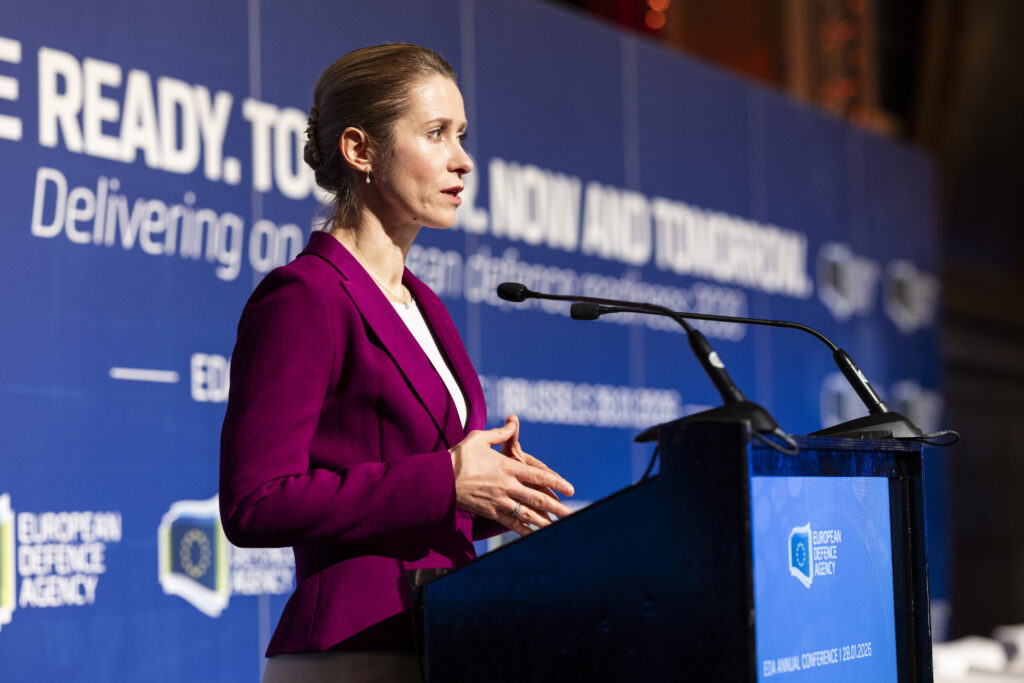

The reorientation of the United States under President Trump has shaken the transatlantic relationship to its foundations, therefore Europe must strengthen itself in defence and take on a more assertive role within NATO. With these words, EU High Representative for Foreign Affairs and Security Policy Kaja Kallas announced a geopolitical and strategic shift during her speech at the annual conference of the European Defence Agency.
“Europe is no longer Washington’s main center of gravity. This change has been underway for a long time, it is structural, not temporary,” stressed Ms Kallas in her speech. High Representative added that “no great power in history has outsourced its own survival and survived.”
Synchronizing efforts with NATO
According to Ms Kallas, the EU needs more strategic political discussions. For the Union, one priority is to make political and military decision-making processes more fit for purpose, more responsive to the urgent situation EU is facing. However, unanimity cannot mean that the veto of a single country defines policy for all others. “We are also considering the gradual extension of qualified majority voting in the Common Foreign and Security Policy”, she said.
We are considering the gradual extension of qualified majority voting in the Common Foreign and Security Policy. – Kaja Kallas, EU High Representative for Foreign Affairs and Security Policy
Moreover, according to Ms Kallas, it is necessary “to synchronize our efforts with NATO in order to complement each other and demonstrate how a distinct European pillar of defence adds value through greater burden-sharing and military strength on our continent.” Responding to remarks made by NATO Secretary General Rutte during a hearing in the European Parliament, she also highlighted that EU bilateral agreements—such as the latest one signed earlier this week with India—are an increasingly valuable tool. “That applies not only to security and defence, but also in the sense of broader foreign policy issues,” High Representative said.
Russian threat and the ‘sleeping giant’
With regard to the serious security threats that the EU must manage, “it has become painfully clear that Russia will remain one in the long term,” Ms Kallas said.
Faced with this threat, which is seen as increasingly worrying, Europeans have increased their military spending by 19 per cent in one year, from 2023 to 2024, reaching €343bn, according to the European Defence Agency (EDA). In 2025, spending is expected to reach €381bn.
Nevertheless, when it comes to defence, Europe still remains a ’sleeping giant’, lamented European Commissioner for Defence Andrius Kubilius. “We must build our defence independence very quickly: without delays and without excuses,” Mr Kubilius said.
You might be interested
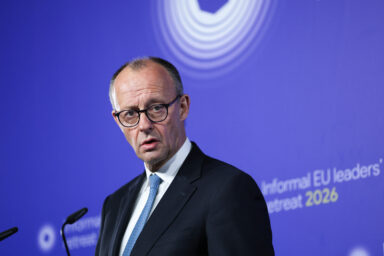
We must build our defence independence very quickly: without delays and without excuses. – Andrius Kubilius, European Commissioner for Defence
The defence industry, reluctant to make major investments without long-term prospects, is calling for long-term contracts. “Please, deliver, invest in production capacity to avoid delays,” Mr Kubilius urged several industry representatives. “Defence spending is increasing, and that is positive. But Europe lacks several strategic enablers, often too expensive or complex for a single member state to develop on its own,” Ms Kallas stressed, highlighting the need to “find the right balance between innovation and traditional systems.”
And while Europe is gradually beginning to strengthen its defence arsenal, it nevertheless remains heavily dependent on the United States. That applies in particular to logistics, long-range missiles, intelligence, and space capabilities, Kaja Kallas said.