
Everybody wants a treaty, urges full life-cycle rules, and believes EU’s current approach to plastics recyclation is too prescriptive. It pushes costs up and hands rivals an edge, a panel at the World Economic Forum in Davos heard.
Kelly Sims Gallagher, an American energy scholar from Tufts University, strode on stage in Davos on 22 January to chair the 22 January debate on the elusive global plastics treaty. She reminded the room why the search for such a treaty matters. “In August 2025, negotiations for a global plastics treaty stalled once again,” she said, noting that pollution keeps rising while diplomats bicker. Her panel—three executives, a European commissioner, a Timorese Nobel Prize laureate and a Spanish academic—shared that diagnosis. Agreement on the cure proved harder, especially once the conversation turned to Brussels.
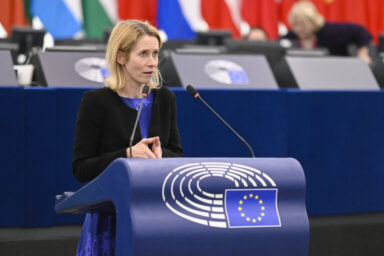
Jessika Roswall, EU Environment Commissioner opened with bruised optimism. “I was in Geneva and yes, I was disappointed that we didn’t get an agreement,” she confessed. “But I am still very hopeful.” Ms Roswall wants a pact that is “future-proof, that is to tackle the full life cycle of plastic”, yet she frets that the European Union’s own thicket of rules may scare away poorer signatories. Her refrain—ambition, yes, but not at the cost of practicality—set the tone.
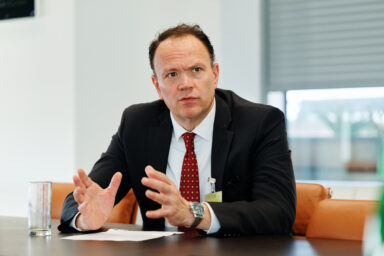
Alfred Stern, the Austrian boss of OMV’s plastics arm and a rare petro-executive who touts circularity, pounced. Europe, he argued, is trying to sprint before it can walk. “If we have too strict regulation from the beginning, it will not allow us to make those improvements going forward,” he warned. Mr Stern likes bottle-deposit schemes and recycling targets. What he detests is an ever-expanding list of caps, bans and reporting rules that threaten, in his words, “an innovator’s dilemma”—one where climate-minded start-ups are crushed by compliance costs long before they can displace old petrochemical plants.
You might be interested

Reluctant rule-takers
Frank Tang Kui, a Chinese private-equity investor who bankrolls sports-gear brands, chimed in from a consumer angle. His portfolio sells three billion pairs of trainers a year. “Consumers want this,” he said, gesturing at the sustainability slogans that festoon Davos. “If the price is not significantly at a premium, consumers all want to choose those products.” Yet the EU’s proposed fee-and-rebate systems for non-recyclable goods, he cautioned, could push costs so high that shoppers resume buying cheaper virgin plastic. “It’s just a hassle,” he sighed.
Mr Tang wants governments to nurture, not smother, innovation. He praised enzyme technologies that break down PET for reuse, but grumbled that lab-scale firms find it almost impossible to navigate the EU’s chemicals taxonomy, let alone raise capital when policy signals keep changing. “This area, I think the government can provide suitable incentives to encourage such innovation,” he said, hinting that tax credits would beat page-long “do not use” lists any day.
Inés María Manzano, a Spanish development scholar, offered a social lens. Poorer regions, she noted, lack the waste-collection grids that Europeans take for granted. Replicating Brussels’s standards wholesale could leave them footing impossible bills. The treaty, she argued, must allow “different speeds in different regions” and direct money to places where basic rubbish pick-up, not chemical recycling, is the first hurdle.
A market, not a dump
The sharpest words came from José Manuel Ramos Horta, Timor-Leste’s former president and a Nobel peace laureate. His island, he boasted, “has the richest biodiversity in the world”. But every tide now washes ashore packaging that locals never bought. “Plastic is not only what you go take the bags, the plastic back to the market, but everything that you consume,” he lamented. Mr Ramos Horta wants a treaty, but worries that Europe’s appetite for ever-higher green standards will mean offloading its own waste management overheads onto small states. “There has to be a treaty,” he insisted, so long as rich polluters pay.
I was in Geneva and yes, I was disappointed that we didn’t get an agreement. — Jessika Roswall, EU Commissioner for environment
Mr Stern backed the islander. “There is no government that has enough money or enough resources in order to create the waste collection infrastructure, the sorting infrastructure, the recycling infrastructure,” he said. Markets must do most of the heavy lifting, and that requires profits. Europe’s cascade of levies on packaging threatens to erase those. Better, he suggested, to treat used plastic as a tradable commodity. “Making plastic waste an interesting feedstock will create such incentives.”
Ms Roswall defended Brussels — up to a point. She reminded the room that the EU is already simplifying “what is the end of waste” criteria, drafting a customs code to keep sub-standard imports out and recognising chemical recycling in its single-use rules. Yet she acknowledged that “today, nobody wants to pay this premium price and not only consumers don’t want to pay it, but neither in business to business.” Without cheaper technologies, Europe’s targets risk collapsing under their own weight.
Who foots the bill?
A former oilman in the audience, Ben van Beurden, pressed the panel. Investment in processing capacity, he argued, will not flow unless regulators mandate recycled content or slap a border levy on virgin polymers—“a CBAM equivalent for plastics”. Mr Stern praised the idea in theory but worried aloud that Europe would move first, lose competitiveness and watch production shift to laxer shores. He prefers global alignment, yet admitted that could take years.
Ms Gallagher tried to square the circle. Could the treaty allow differentiated timetables, she asked, with tougher rules for Europe and gentler ones for Timor-Leste? Mr Ramos Horta liked the suggestion but stressed financing. His government dreams of making the island plastic-free, but “we need the solidarity, the support of those with know-how”. Ms Manzano nodded: climate funds already exist; channel them towards waste-management loans instead of simply tallying carbon offsets.
There is no government that has enough money or enough resources in order to create the waste collection infrastructure. — Alfred Stern, CEO of OMV
Private investors sounded equally pragmatic. Mr Tang argued that scanning QR codes and mailing worn-out shoes should earn shoppers modest cash bounties, funded by eco-modulated producer fees. Such schemes thrive in Scandinavia, he noted; copying them would do more good than the EU’s latest 500-page directive. Yet that approach, Ms Roswall replied, demands consistent labelling, certification and data sharing—again a regulatory task.
Beyond Brussels
After ninety minutes the contours of a bargain emerged. All want a treaty. All urge full life-cycle rules. But most of the panel—bar Ms Roswall—believe the EU’s current approach is too prescriptive, pushes costs up and hands rivals an edge. Mr Stern framed it crisply: Europe should “create the right framework” and then get out of the way.
Whether Brussels listens is uncertain. The Commission plans a circular-economy package this spring that could hard-wire high recycled-content quotas into product standards. Diplomats eyeing the next negotiating round in Busan worry that, if the EU arrives brandishing those numbers, China, India and the oil-exporting Gulf states will simply walk. Ms Gallagher closed by recalling the fate of many treaties scuppered by maximalist drafts.
“Will we have a plastics treaty?” she asked. Her own recap hinted at a cautious yes—“It is first necessary… it must be complemented by national regulation.” Yet unless Brussels relaxes its zeal for one-size-fits-all rules and shows how poorer signatories will be reimbursed for the privilege of compliance, sceptics like Mr Stern and Mr Tang will keep warning that noble intentions alone do not pay sorting bills. Europe wants to lead. Its partners prefer trade over tutelage. The months until the next round will show who bends.