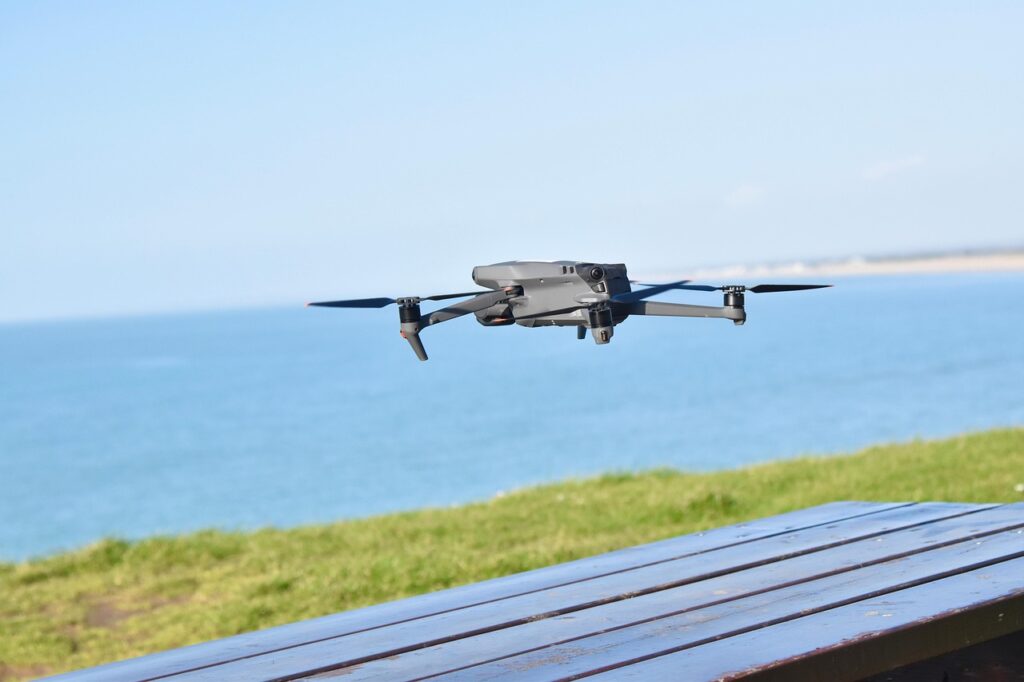

Thousands of Ukrainian-made quadcopters buzz above the trenches every day. Europe’s armies would like their own swarms. Brussels promises results, but not before 2030. The gap between that schedule and battlefield reality loomed large over the European Parliament’s defence committee 15 January hearing.
That number, slipped almost casually into a meeting of the European Parliament’s security and defence committee (SEDE) on 15 January, landed with a thud. “Twenty-eight prototype drones and counter-drones by the end of the decade,” a member of Sylvia Kainz-Huber’s team at DG DEFIS—in charge of the European Defence Fund (EDF) at the European Commission—said.
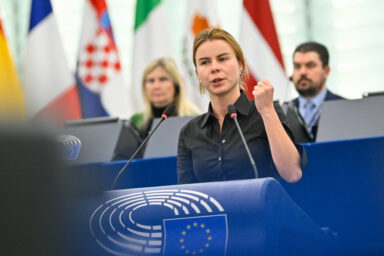
Ms Kainz-Huber had come to explain the Commission’s €1bn work-programme for 2026. Several MEPs judged the plan timid. One warned that Brussels risked delivering technology long after it was needed. Another pointed out that commercially available drones already cost a fraction of traditional battlefield kit. The official kept her poise but conceded that the EDF “was laid out to ensure a longer-term R&D effort” and that speeding things up would require new procedures agreed only weeks ago.
Hard choices ahead
The atmosphere set, the committee moved on to the fund itself. Created in 2021, the EDF pools European money for defence research and development. “Roughly, the EDF is about stimulating, supporting co-operation in the R&D phase of defence technologies and equipment with the idea to come out with very concrete results—prototyping that are at the end ready for production,” Ms Kainz-Huber reminded lawmakers. The scheme, she noted, now sits within a broader strategy cycle that also includes programmes for ramping up ammunition output and subsidising factories.
“The money is never enough,” she went on. Member states table projects worth three times the annual envelope; Brussels must therefore prioritise and “focus on demand driven by member states”. Such restraint matters because the 2026 menu lists 31 call topics, from endo-atmospheric missile interceptors to smart textiles.
You might be interested
Two flagships—a future main battle tank and a counter-hypersonic sensor chain—consume nearly a third of the cash. About €120m is earmarked for disruptive technologies under the EU Defence Innovation Scheme, chiefly hackathons and “spin-in” challenges that try to tempt civilian start-ups into military service.
That spread worried several deputies. MEP Christophe Gomart (EPP/FRA), a retired general, complained that “we spend a lot of money on many projects—I think it’s too much”. Space security, he said, deserved a dedicated flagship. MEP Angelika Niebler (EPP/DEU) echoed the plea and fretted that 31 topics “is a huge number, honestly, compared to the budget available”.
Probe and parry
MEP Sven Mikser (S&D/EST) probed the drone gap. War, he argued, compresses innovation cycles; Ukraine improvises payload drops within weeks, not years. “Do you think we have sufficient flexibility to address emerging threats?” he asked. He also pressed the official on Ukraine’s looming association to the fund and on whether the forthcoming “defence omnibus” regulation would shorten lead-times.
Ms Kainz-Huber stood her ground. “More than a billion of our overall EDF budget so far” had financed unmanned systems, she said—71 projects, eight prototypes in hand and twenty more due by 2030. The meagre showing in the 2026 plan reflected a surge of drone calls in 2025 “now ongoing”. She hinted that procuring off-the-shelf kits, rather than researching new ones, might be the wiser immediate course.
We spend a lot of money on many projects, I think (31 of them) is too much. — MEP Christophe Gomart (EPP/FRA)
On Ukraine she struck an upbeat note. “In theory, none” of the rules bar Ukrainian firms, though as a third country they face security vetting. Formal association, enabled by the mini-omnibus law, is being negotiated. Meanwhile Brussels has carved out €50m for ‘Brave Tech EU‘, a scheme that pairs Ukrainian coders and European primes to stress-test kit near the front.
Metrics and money mattered too. Some members wanted reassurance that Parliament would “get bang for the buck”. Ms Kainz-Huber pointed to interim evaluations: €6.4bn of the EDF’s €7.3 billion seven-year budget has been committed, spawning 224 collaborative projects with 1,600 beneficiaries. “Around 30 per cent of our EDF budget actually goes to SMEs,” she said, clarifying that the headline 6.5 per cent reserved for SME-only calls understated their real share.
Balancing act
Intellectual-property rights triggered the spikiest exchange. MEP Thijs Reuten (S&D/NLD) warned that open “access rights” demanded by Brussels might scare away companies. A Commission team member admitted the subject had been “very difficult” with both the Council and industry but argued that taxpayers deserved fair use of the results they fund.
Despite the gripes, Ms Kainz-Huber’s exposé won allies. MEP Petras Auštrevičius (Renew/LIT) praised the higher allocation to air-and-missile defence. Others welcomed the effort to pull SMEs into flagship consortia and the decision to test fast-track two-step calls for disruptive ideas.
Still, the central tension remained: the EDF was designed for slow-cooked collaboration, yet Europe’s security now depends on hot-war urgency. The 2026 programme steers half its cash into big, long-term platforms. Member states certainly need interceptors and a fresh tank, but those systems will not roll off production lines this decade. Drones, cheap sensors and electronic-warfare payloads do not fit easily into the EDF’s multi-year cycles, so Brussels must lean on other instruments for near-term kit.
Leaner? Still slow
The Commission says the mix is deliberate. By spreading calls across 31 topics, it keeps supply chains broad and politics balanced. And the new two-step procedure—application abstracts first, full bids only if shortlisted—should help start-ups sidestep bureaucracy. Yet even that “leaner process” will not deliver airframes in six months.
Parliament now has two months to scrutinise the work-programme; it cannot rewrite call sheets, but it may prod the Commission to shift cash during a promised spring amendment. The Defence Omnibus, still in trilogue, will codify the fast-track path and unlock STIP loans for dual-use factories. Ukraine’s association agreement could be signed by the summer, though full participation may wait for 2027 calls.
More than a billion of our overall EDF budget so far had financed unmanned systems. — Sylvia Kainz-Huber, deputy director general, DG DEFIS
Meanwhile the first nine topics—worth €11m—opened on January 10th; heavyweight tank and interceptor tenders will follow in February, with deadlines stretching into September. The Commission plans ‘info-days’ in March to coax SMEs and primes into matchmaking. Evaluations start in the autumn, grant agreements in early 2027, prototypes a year or two later.
Europe can hardly afford delay. America’s election looms, and some in Washington grumble about footing NATO’s bill. As geopolitical clouds darken, the continent will need more than drones scheduled for 2030. The EDF is a step towards self-reliance, but, as the SEDE session showed, it remains a small one. Brussels talks about strategic autonomy; the men and women in the trenches ask for quadcopters that work today.