
A Danish back-bench MEP suggests the EU put the long-awaited trade ageement with the US on hold because of Washington’s appetite for Greenland. Lithuania reorganises its tax regime to fund defence, and academics pore over just how ambitious Europe should be in the wake of the old world order’s demise. All in all, precious little.
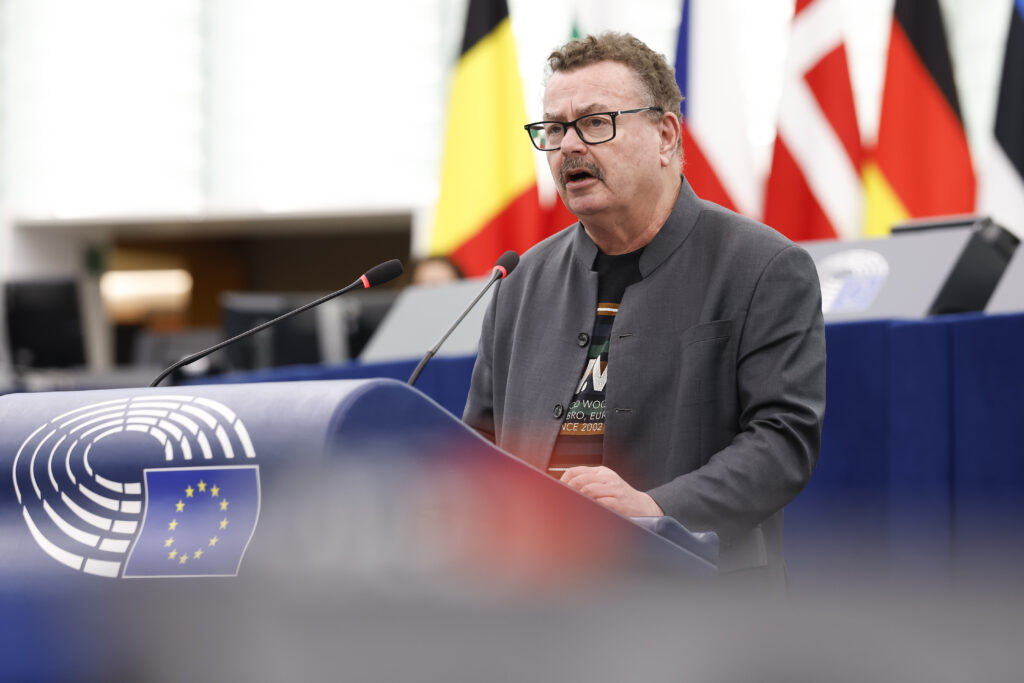
On 8 January Per Clausen, a Left alliance member of the European Parliament, told colleagues that Washington’s “renewed threats” to “take over” Greenland required a firm reply. The timing was delicate. The parliament is due next month to vote on a modest customs deal that the European Commission struck last summer with Donald Trump. If it approves the pact while the former president toys with territorial expansion, argues Mr Clausen, Europe will look supine.
Greenland, an autonomous part of the kingdom of Denmark, has attracted covetous glances from Washington before. In 2019 Mr Trump proposed buying the island outright, then cancelled a trip to Copenhagen after being rebuffed. Local leaders laughed off the notion. But the humour has faded. Greenland sits astride new Arctic shipping lanes and hosts America’s Thule air base. The idea that a second Trump administration might press harder no longer seems far-fetched.
Europe can do little to stop it. The EU’s treaties give Brussels no military muscle and scant influence over a security question that ultimately rests with Copenhagen and Washington. Danish officials trust alliance ties within NATO more than any gesture from Strasbourg. Yet Mr Clausen insists that silence would “surely only serve to further destabilise an already uncertain world”.
You might be interested
Storm in Strasbourg
The Danish MEP opened hostilities on X, the site formerly known as Twitter. He wrote:
“It is time for the EU to respond with more than words to the US threats against Greenland. I therefore propose that the EU suspend any further consideration of the customs agreement with the US until the US has clearly withdrawn its threats against Greenland. At the same time, I urge the EU to make it absolutely clear that it is prepared to take further action against the US if the US continues its aggressive behaviour towards Greenland.”
I urge the EU to make it absolutely clear that it is prepared to take further action against the US if the US continues its aggressive behaviour towards Greenland. — MEP Per Clausen (The Left/DNK)
Hours later he dispatched a letter to Roberta Metsola, the parliament’s president, and to the assembly’s Conference of Presidents. After recalling Mr Trump’s “stated intention to ‘take over’ Greenland”, the letter argued that waving through the tariff deal would look like “rewarding him and his actions”. It ended with three blunt demands:
– “To immediately freeze any treatment of the proposed agreement with the US, for as long as claims for Greenland and threats are made by the US administration.
– To clearly and calmly communicate, both to the Council, the Commission and the US, that we as an institution will not contemplate making agreements with someone who threatens our territorial integrity.
– To encourage the Commission to put any further negotiations with the US on hold, until such a time when no threats against the EU or any of its members are made.”
Power without force
The initiative has stirred grumbles in Brussels. Trade officials note that the customs accord is largely symbolic, covering a handful of lobsters and aluminium products. Freezing it would irritate Washington without shielding Greenland. Diplomats fret that the row could poison co-operation on Ukraine and climate policy.
Danish ministers have kept their distance. Copenhagen sees no immediate danger of American gunboats steaming into Nuuk. It also doubts that Mr Trump, campaigning for re-election, wants to alienate NATO allies. Still, officials prefer quiet reassurance in Washington to public grand-standing in Brussels.
Mr Clausen may struggle to rally support. The big centrist blocs in the European Parliament have little appetite for a trans-Atlantic brawl. Even so, his motion exposes an awkward truth. The EU likes to describe itself as a geopolitical power. Yet when a super-power eyes territory belonging to one of its members, the union’s response boils down to tariffs on shellfish.
World governed by strength
The need for just that has been exacerbated by tough talk from US officials. “We live in a world in which you can talk all you want about international niceties and everything else,” says Stephen Miller, deputy chief of staff to Donald Trump. “But we live in a world, in the real world…that is governed by strength, that is governed by force, that is governed by power.”
But such a world is obviously one heading towards destruction, argues Francesco Grillo of the Vision think-tank in an article for The Conversation. “In such a system, all countries would, legitimately, scramble to defend themselves militarily. For those countries not already equipped, the pursuit of nuclear weapons would be the only obvious route to invulnerability.“
But we live in a world, in the real world…that is governed by strength, that is governed by force, that is governed by power. — Stephen Miller, White House Deputy Chief of Staff
Mr Grillo recommends that Europe should turn crisis into opportunity by being ambitious. “This situation requires cooperation with the UK, Norway, and probably Canada and Switzerland,“ the Italian academic argues. “If necessary, it may require moving ahead without Hungary or whichever other EU countries are still doubtful about the need for an urgent, defence-based European integration.“
Lithuania’s tax U-turn
His words inadvertently highlight the scope of the challenge. Any defence-based European integration might feel overambitious to the business-as-usual mindset embedded in the EU procedure-based ecosystem. But not even the boldest ideas do not come close to keeping the US at bay, namely the Baffin Bay.
In other related news, Lithuiania scraped its flat 15 per cent tax rate for the wealthiest self-employed taxpayers. The move is “being watched from far beyond Vilnius“, says Karl Matikosen of Irish University College Dublin. “Security is now a direct fiscal driver. Lithuania, positioned on Nato’s eastern frontier, has tied parts of its tax package to defence funding. A new 10 per cent security contribution on insurance premiums (excluding life insurance) makes that link explicit,“ he writes in a commentary.
This again puts Europe’s helplessness in sharp relief. Lithuania, a country of 2.9 million which shares a border with both Belarus and Russia, is one of the nimblest EU member states on new defence arrangements. The interest that Vilnius‘ tax U-turn generates is a testimony to the inertia of other, mightier EU countries. But how much sleep will the likes of Stephen Miller lose over it?