
After more than 25 years of stop‑start negotiations, the European Union on Friday backed its biggest ever free trade agreement with South American partners. Time was tight, but the Commission’s last‑minute promises of extra safeguards and financial support for farmers helped Italy jump aboard, tipping the scales.
That did not stop a flurry of protests, particularly in France, long opposed to the deal, or gnashing of teeth among other opponents including Poland, Ireland, Austria and Hungary, all of which voted against while Belgium abstained. European ambassadors therefore gave a provisional go‑ahead to the signing, clearing the way for EU leaders to move forward.
Farmers on edge
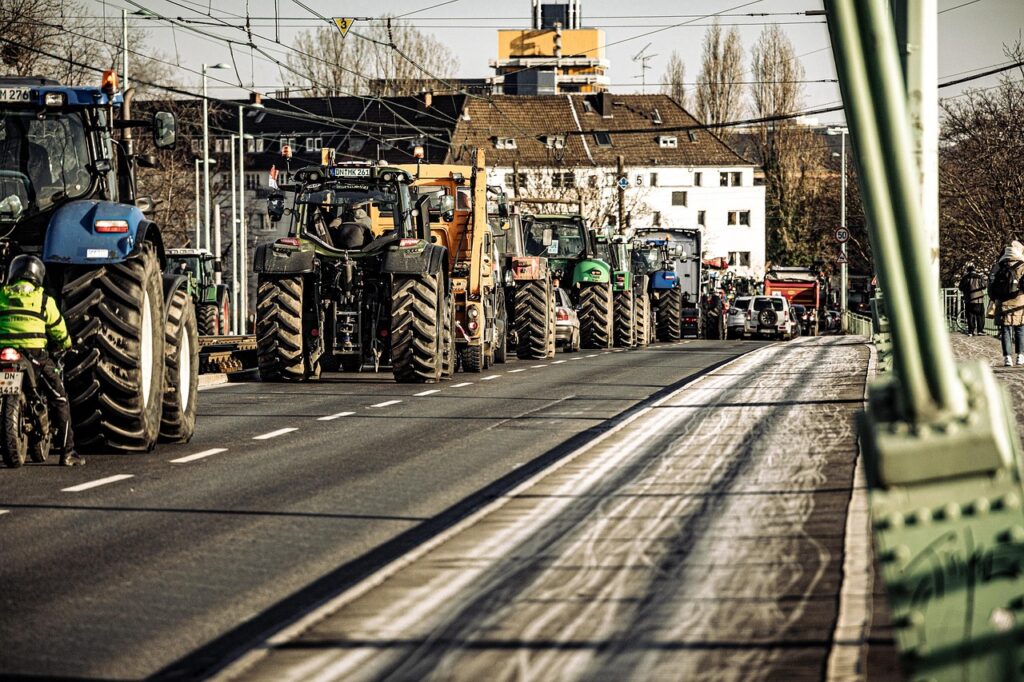
Farmers in France, Poland, Belgium and Greece staged protests, indeed they had already been underway in France for days, warning that cheaper imports could undercut local producers and threaten already fragile livelihoods. In France, opposition parties threatened they will file a no‑confidence motion to try and topple the government over its handling of the deal, despite the country voting against. Farmers and unions have blocked highways and protested through Paris, underscoring how deeply the issue has resonated beyond trade circles.
The agreement links the EU with the Mercosur bloc of Argentina, Brazil, Paraguay and Uruguay, together representing a market of around 780 million people. For Europe, the deal offers access to South American economies rich in agricultural land, energy resources and raw materials. Argentina and Brazil are major exporters of beef, soy and grains, while Brazil also supplies critical raw materials and biofuels. Uruguay and Paraguay, though smaller, provide agricultural exports and regional logistics advantages. EU trade statistics show Mercosur as the bloc’s tenth‑largest goods partner, with machinery, chemicals and transport equipment among EU exports and agricultural and mineral products among Mercosur’s exports.
And Europe?
European companies stand to benefit from reduced tariffs on cars, machinery, chemicals, pharmaceuticals, wine and high‑value foods, while Mercosur countries gain wider access for farm exports. It is a classic trade‑off: industrial exporters welcome diversification and opportunity, while farmers worry about competition from cheaper products made under looser standards.
Italy’s Giorgia Meloni, long seen as the pivotal swing vote, ultimately backed the agreement, allowing it to pass under qualified majority voting rules. In the run‑up, the Commission offered cuts to some fertiliser import duties and early access to billions in future agricultural funding to reassure hesitant capitals. The gamble paid off — Rome tipped the scales and secured the backing needed for provisional adoption.
You might be interested
Provisional enforcement and signing
The European Parliament must still approve the deal. However, the Commission can move to provisional application, allowing parts of the agreement to take effect ahead of full ratification by all member states and Mercosur countries. Ursula von der Leyen is reportedly planning to travel to Paraguay on Monday, 12 January, to formally sign the pact, reflecting the Commission’s determination to push ahead despite opposition in several member states.
Environmental groups remain deeply sceptical. Critics warn that increased South American agricultural exports could accelerate deforestation, particularly in the Amazon, and undermine efforts to address climate change and biodiversity loss. Campaigners have called the provisional approval “harmful” and argue that the deal encourages trade patterns that could weaken environmental protections, even though the agreement contains references to sustainability and climate commitments.
Looking ahead
Even as the ink dries on this historic deal, the real work begins. European farmers will be closely watching shipments from South America, governments will weigh how to enforce safeguards, and environmental groups will push for accountability, reminding Brussels that economic gains must balance climate and biodiversity commitments.
For Ursula von der Leyen and her Commission, however, the agreement is a much‑needed win, not least at a time when the global economy has been roiled by Trump tariffs and shifting geopolitical alliances that have heightened the urgency of forging new trade ties. While concerns remain, for the moment there must have been a huge sigh of relief among supporters that the long‑awaited milestone was reached.