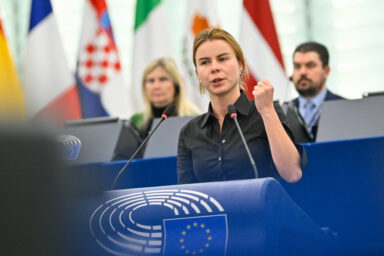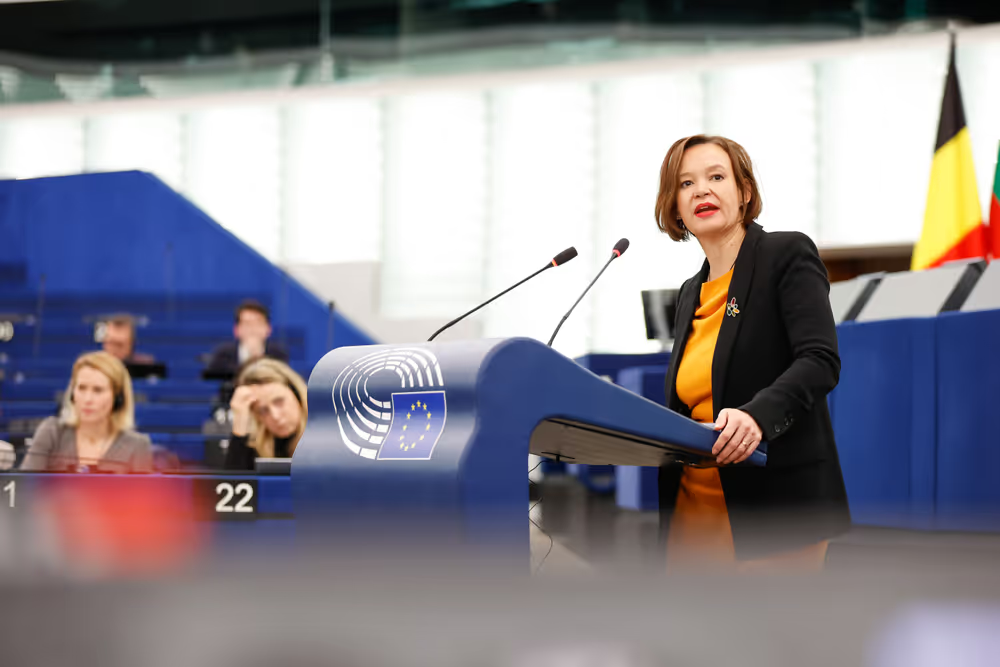

On Wednesday 21 January, the European Commission announced its initial €1.9bn humanitarian aid budget for 2026. At the same time, the European Parliament in Strasbourg backed a report urging the EU to step up its response to a growing number of simultaneous humanitarian crises worldwide. Prepared by Leire Pajín MEP (S&D/ESP), the text approved by MEPs underlines that protecting civilians and upholding international humanitarian and human rights law must remain central to EU external action.
MEP Leire Pajin spoke to EU Perspectives about the latest developments.
Worsening conditions
How are MEPs responding to the growing humanitarian crises worldwide, and what is the EU’s role in protecting civilians?
Generally, MEPs have warned of a sharp increase in serious violations of international humanitarian law, including attacks on civilians, children, humanitarian workers and medical facilities. They have called on the EU to consider sanctions against those deliberately obstructing aid and insist that humanitarian assistance must never be politicised: denying life-saving aid would amounts to collective punishment and a war crime. Strong concern is expressed over the situation in Gaza, with calls for unrestricted humanitarian access and the full reinstatement of funding and mandate for a reformed UNRWA (United Nations Relief and Works Agency for Palestine Refugees in the Near East).
Polycrisis is a term which may be new to some…
The term polycrisis was added to the title of the report, and its definition in the text, because it reflects the nature of the times we are living in. Essentially, a polycrisis refers to a set of crises that are usually interconnected and occurring simultaneously, which is what we are seeing now in the world. In previous years, [citizens] suffered and continue to bear the consequences of a global pandemic, a war on European soil, energy shortages, and the resurgence of conflicts worldwide, all of which are having tremendous humanitarian consequences.
Intensifying demands on the system
Why is the multilateral humanitarian system facing “unprecedented” challenges?
The humanitarian system is under severe pressure. First and foremost, needs are higher than ever, with an expected growing number of people worldwide requiring humanitarian assistance. Then, of course, there is the crumbling of the global humanitarian system, with the drastic reduction in funding that followed the dismantling of USAID. This situation is already being taken into account in the Global Humanitarian Overview, which reflects a reduced appeal for funding. And of course, we are seeing the increase in violations of international humanitarian law, which has become a growing threat to the millions around the world living in conflict areas.
Which EU member states have been more affected by the dismantling of USAID? And why?
We all lose with the dismantling of USAID. Vulnerable populations lose access to life-saving assistance, those working in humanitarian response lose critical support, the EU and its member states face increased instability, and, I would also say, the United States loses credibility as a global humanitarian actor. Humanitarian needs, which can come from many factors including conflict, but also rising mortality from preventable disease and the epidemic outbreaks generate instability, and the inability to respond to those needs due to a lack of funding makes this instability even more acute.
You might be interested
Who lost out?
Which projects suffered negative impacts? Could the EU replace those projects with its own funds?
In particular, we know that some countries and vulnerable populations that were more dependent on USAID for food assistance, such as Ethiopia, will face significant challenges. Of course, the EU must step up its efforts in humanitarian aid to fill the void that this US administration is leaving, but it will need a lot of political will and financial ambition to do so.
Regarding the current times (Ukraine but also Gaza), is international humanitarian law still a solid pillar for the EU?
International humanitarian law is increasingly being challenged around the world. This trend is underpinned, by a growing indifference towards human suffering. The EU was born as a project of peace, of solidarity, and of respect for international law and international humanitarian law after two deadly world wars. Because of this, we should be strong and principled when international humanitarian law, which is a core pillar for the EU, is breached, whether in Ukraine, Gaza, Sudan, or the DRC. That is why it is so saddening to see that some EU leaders are not as strong when blatant violations of international humanitarian law are committed in Gaza.
Should the EU be doing more?
In Gaza, in your opinion, did the EU do enough with regards to “humanitarian diplomacy”? How?
We would like to see a lot of more humanitarian diplomacy from the EU, for example in Gaza, to ensure access to aid in line with humanitarian principles. We have therefore called on HRVP Kaja Kallas to pursue this kind of diplomacy with more determination. From the S&D Group, we were very vocal in asking for clarity around this “understanding” that Kallas arrived at with Israel over the entry of humanitarian aid into the Strip, what outcomes it led to, and what the contents of this agreement were.
But humanitarian diplomacy must go beyond simply calling up leaders. We must adopt a more systematic, coordinated, and informed approach to humanitarian diplomacy: at a high political level, yes, but also driven by other actors and duly informed by the operational experience of humanitarian partners.