
Being low-income in Eastern Europe does not mean only hard work to stay alive. It also often means being a target of a focused Russian influence operation.
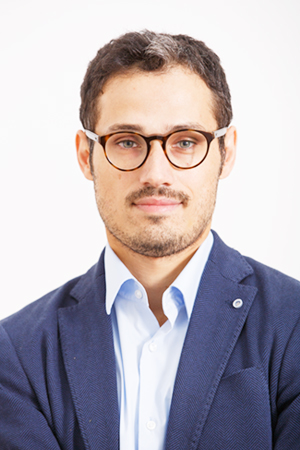
The e-Note 84 published by the Belgian Defence Institute, “Russian Interference Through Poverty Weaponisation in Moldovan Elections”, written by Denis Cenusa, Associate Expert at the Geopolitical Security Studies Centre (Lithuania), and Giulia Prelz Oltramont, frames that poverty not merely as a domestic policy challenge, but as a structural weakness that can be deliberately exploited to influence political behaviour, polarise societies, and undermine democratic processes, particularly in countries exposed to geopolitical pressure following Russia’s war against Ukraine.
Using Moldova as a case study, Mr. Cenusa told to EU Perspectives the developing interaction between poverty, disinformation, NGOs, and emerging technologies such as artificial intelligence within a broader context of cognitive warfare. The analysis also situates these dynamics within the EU enlargement debate, highlighting the implications for institutional resilience, electoral integrity, and the credibility of the EU accession pathway for candidate countries.
What is the weaponisation of poverty?
I believe that the weaponisation of poverty is a concept that has already been quite present in other fields. We can, for instance, think about political competition within a country, where poverty is usually a topic discussed among different political forces based on ideological differences. It has mostly been a conversation within societies, carried out by political parties trying to gain votes and mobilise voters in their favour.
When I decided to explore or extend this concept to hybrid or foreign interference, it was more about how this issue, which is already polarising societies, can be used by external actors interested in achieving certain strategic goals in a target country. That is why I came to the conclusion that, in my view, the concept of poverty weaponisation should also be examined through the lens of external malign interference, particularly in countries facing serious poverty issues.
You might be interested
Unfortunately, Eastern European countries are part of this group of states where poverty has become an alarming phenomenon. We have a war ongoing, and we also face the consequences of disruptions resulting from those war-sanctions, counter-sanctions, and countermeasures from the Russian side. Smaller countries, or countries at war such as Ukraine, are facing poverty as an existential issue. This obviously attracts strong interest from adversaries seeking to create additional conflicts within societies that are already struggling with socioeconomic problems due to war and broader geopolitical disruptions in the region.
When you say ‘poverty’, what do you mean exactly?
I mean conventional poverty, related to living standards that have been eroded by the war. But I would also say that it is not only frontline countries that are facing this issue. The war in Ukraine and the entire sanctions regime have left a deep mark on living standards across Europe as well.
So it is not only Moldova or Ukraine, or other post-Soviet countries, that are facing challenges related to how the state spends money whether it has enough resources for security and defense, as well as for socioeconomic needs. It is also about how societies themselves are prepared in terms of resilience. Until now, however, the concept of resilience has largely focused on technical aspects whether societies have enough cash, food, or basic resources to resist for a certain period. It has not sufficiently addressed structural issues, such as how the economy responds to attempts by an adversary or malign actor to use poverty for geopolitical purposes.
Regarding the case of the NGO Eurasia that you mentioned, what role has it played? How can NGOs like this be problematic, and how could Europe – or Moldova in this case – address these NGOs and their consequences?
I believe these are non-state actors that are used to facilitate the soft power influence Russia is currently trying to exert. This is part of cognitive warfare, because it is about promoting certain values and engaging new generations. You mentioned pupils, but it also concerns youth more broadly, as well as other social categories that are more likely to be pro-Russian or to share views similar to those promoted by Russia domestically and in its near abroad. This phenomenon is not limited to Moldova or candidate countries; it is also visible in Baltic states that are already in the EU and NATO. Although the Baltic states manage and counter this influence more effectively, Russia continues to pursue similar strategies there.
Although the EU has sanctioned Eurasia, this does not mean it cannot operate from Russia, which it has been doing quite successfully. The organization has invited various categories of people to Russia for trainings, which often resemble ideological indoctrination. It is also linked to funding mechanisms: organizations from Europe, including Moldova, can submit project proposals and receive funding from Eurasia.
In this sense, Eurasia is doing something similar to what the Soros Foundation has done for decades supporting projects aligned with a specific ideological approach globally. This reflects Russia’s attempt to replicate Western models of soft power, but according to its own logic, focused on so-called traditional values. For example, Eurasia has invited clergy, including priests from Moldova, to travel to Russia, and this likely occurs in other countries as well.
This is a more sophisticated battleground. It is part of cognitive warfare and a way to establish new non-state actors that project Russian soft power beyond its borders. Eurasia is a relatively recent phenomenon, and unfortunately, it was initiated by Moldovan politician Ilan Șor. Although initially designed as a tool targeting Moldova, it is now likely to be used in other regions, not only in Europe. I believe Eurasia will expand its activities to other continents, such as Latin America or Africa, where political actors are more receptive to Russian narratives about a multipolar world order. This is the direction in which such non-state actors are likely to move, engaging local NGOs, religious associations, and other civil society organizations.
How has AI been used in the Moldovan context, based on your research? More generally, how does AI affect Moldova and EU candidate countries?
AI offers many opportunities to produce disinformation cheaply and quickly. This is not only done by Russia; for example, China uses similar tactics against Taiwan. This will become increasingly widespread, especially because younger generations (future voters) are already being shaped in terms of political opinions, both domestically and internationally.
In Moldova, AI has been used for deepfakes involving the Moldovan president, with the clear intention of undermining her credibility and eroding support for her and her political party. More broadly, AI allows content produced in one language, such as Romanian, to be instantly translated into Russian, English, and many other languages, and then disseminated at a scale and speed that Moldovan institutions simply cannot counter. The scale is too large and the costs too high. This challenge is not unique to Moldova; larger EU countries face it as well. However, the EU should find ways not only to fine social media platforms like X, TikTok, or Facebook, but also to prevent the misuse of AI for disinformation. Supporting countries like Moldova in coping with this challenge is crucial, because no country – except perhaps very large ones like the United States – can fully prevent AI-driven interference from actors such as Russia, Iran, or China.
Regarding the decoupling from Ukraine due to Hungary’s veto, is Moldova still on a credible path toward EU accession?
This is the question many people are asking. I believe there are political and security reasons why the EU is not pursuing a full decoupling of Moldova and Ukraine. Chișinău also appears committed to maintaining alignment with Ukraine, given the risks that decoupling could pose to Ukrainian morale and social cohesion around EU accession, which is an important driver of resilience during the war. Another major issue that will soon become central to the debate is the recent statement by the Moldovan president regarding reunification with Romania. She stated that she would vote for reunification, which is a very sensitive and significant topic. It may have been made with consideration of Kyiv’s position. Ukraine has historically opposed this idea because it could raise questions about its own territorial integrity, particularly given claims by some Romanian sovereignist and Euroskeptic forces regarding historical territories in Ukraine.
This statement could make people in Kyiv nervous, as Russia has long exploited territorial integrity issues. For Moldova itself, this topic is also problematic because, according to national legislation on the status of the Gagauz autonomous region, if Moldova were to lose its independence, the region would have the right to seek external self-determination. Russia would likely support such claims. This adds another layer of complexity to an already fragile situation involving Transnistria, EU accession, and possible precedents such as Cyprus. On top of that, we now have the debate about Gagauzia in the context of potential reunification with Romania, which the president has suggested as a last-resort option for Moldova to join the EU and benefit from NATO security guarantees.
Why did the Moldovan President Sandu make this statement now?
This is highly sensitive, and to be honest, constitutionally problematic. According to the constitution she swore to uphold, the president is obligated to serve the Moldovan state, not to lead to its dissolution. From this perspective alone, the statement is troubling. As to why she made it now – at a moment when peace talks in Ukraine are being discussed and the West is mobilizing around security guarantees – it could be the result of very bad advice, or it could be part of a political strategy to rally domestic support. On the ground, the situation in Moldova is not very positive.
Despite optimistic EU assessments of reforms, socioeconomic issues and problems with sensitive reforms, such as justice reform, persist. There is significant dissatisfaction among pro-EU voters as well, not only among those with pro-Russian views. I believe the statement on reunification with Romania may be part of a new communication and political strategy aimed at consolidating domestic support, because while the president enjoys strong backing abroad, her support at home is considerably weaker.