
Foreign Minister of Cyprus, country that currently holds the EU Council Presidency, emphasizes support for Ukraine and measures against the influx of tourists from Russia. However, the controversial programme, which allows applicants to obtain so-called golden visa in exchange for an investment of at least €300,000, goes on.
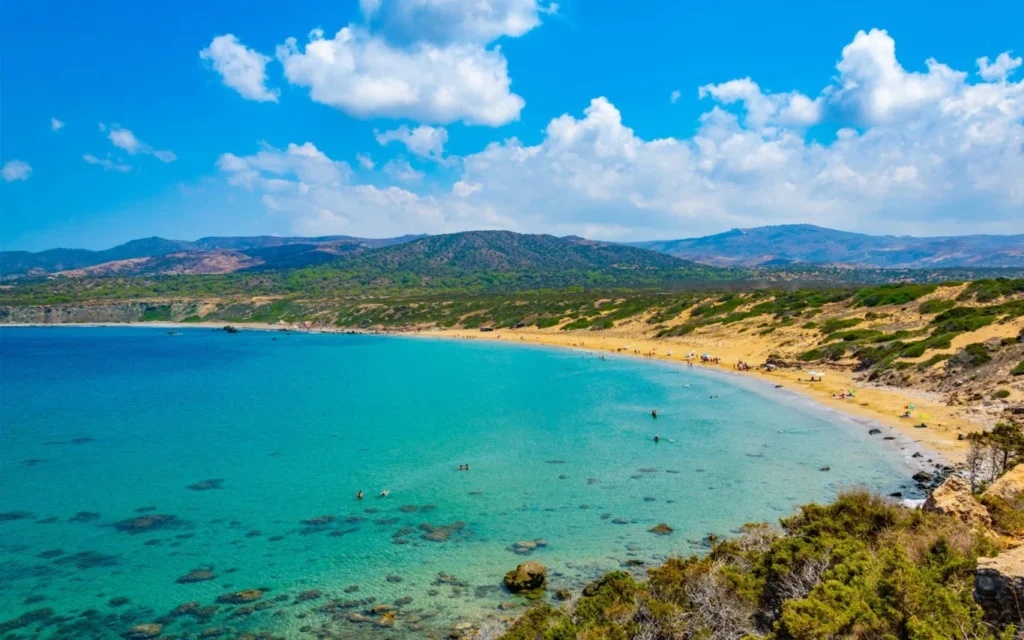
Anyone who has visited Cyprus in recent years must have noticed it. On beaches, in restaurants, and on the streets of Cypriot cities, Russian was often heard alongside Greek, which is the official language, and English. Until Russia’s military invasion of Ukraine, Russians were the second most frequent visitors to the island and, as solvent clients, were welcome guests.
Frozen assets worth €1.2 billion
However, with the ongoing war in Ukraine and the gradual introduction of EU sanctions against Moscow, the high presence of Russians in Cyprus has become a reputational problem. And now, just a few days after Cyprus took over the Presidency of the Council of the EU, the Cypriot authorities want to make it clear that the country is vigorously ridding itself of its “Russian legacy.”
As of January 2025, frozen assets amounted to €901m from investment companies, €307m from administrative service providers, and €90m from other entities. – Constantinos Kombos, Cypriot Foreign Minister
“As of January 2025, frozen assets amounted to €901m from investment companies, €307m from administrative service providers, and €90m from other entities,” Cypriot Foreign Minister Constantinos Kombos told reporters on Wednesday, January 14. Mr Kombos did not detail which nationalities the frozen assets are related to, but added that the value of Russian deposits in Cypriot banks fell by a record 87 percent between 2015 and 2024.
Russian tourists at ’zero level’
As far as tourism from Russia is concerned, the figures are even more convincing, according to Minister Kombos. Just a few years ago, Russians were the second largest group of visitors to the island (after the British), accounting for 20 percent of all tourists, but now, Minister says, almost no one is coming.
Mr Kombos also mentioned that the number of Russian citizens permanently residing in Cyprus has decreased significantly, from approximately 120,000 to about 40,000.
The situation for Russian tourists has been complicated by the fact that Cyprus has banned direct commercial flights from Russia to the territory it controls. The Cypriot government has also introduced a visa fee of €80 since December 2022. Another issue for Russian visitors is the cancellation of multiple-entry Schengen visas, which has been implemented at EU level since November 2025. Though Cyprus is still outside the Schengen area, the country is aligned with Schengen visa policy.
You might be interested

What Minister did not say
However, Minister Kombos did not mention to reporters the controversial Cyprus Golden Visa Programme, which allows individuals to obtain permanent residency on the island if they invest at least €300,000, for example in real estate. According to data from the Cypriot government, there are approximately 1,000 applications successfully processed annually.
The authorities do not disclose the nationality of applicants, but it can be assumed that Russians make up a significant proportion or even majority. The Cyprus Golden Visa Programme is open to all non-EU and non-EEA citizens. Russians are not excluded.
Apart from the minimum investment mentioned above, the Golden Visa Programme has no other strict conditions. Successful applicants do not have to live in Cyprus, but they should visit the island at least once every two years. They can benefit from EU residency, family inclusion, favorable tax incentives, and, after eight years, can apply for citizenship. As a result, the Russian presence in Cyprus remains probably significant, at least from an economic point of view.
Commission has strongly recommended phasing out so-called golden passport programmes and tightening corresponding rules. The body cites security, corruption, money laundering, and EU integrity risks. In April 2025, the European Court of Justice ruled that the ’golden passport scheme’ in Malta (which is similar to that in force in Cyprus) is illegal. Shortly before that, Spain had abolished its own golden visa scheme.