
In what was labelled ’historic’ meeting on Parliament’s premisses, four Commissioners outlined details of the huge Global Europe instrument which is chiefly intended to strengthen EU’s position in the world. The primary idea behind the new instrument’s design is increased flexibility driven by the need to respond to geopolitical threats.
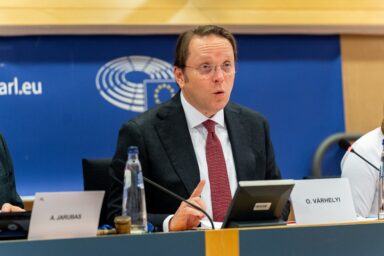
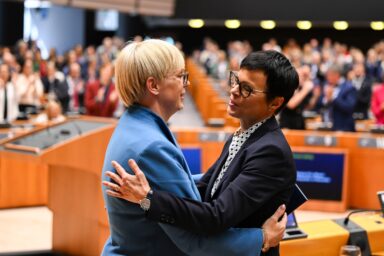
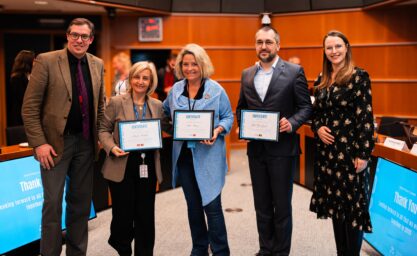
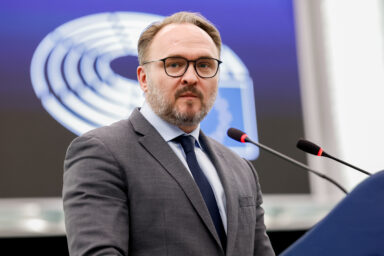
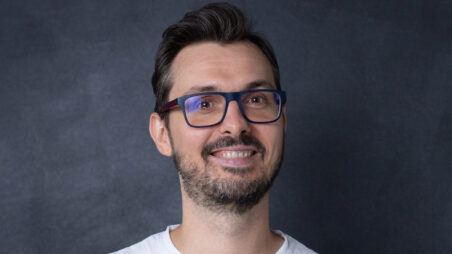
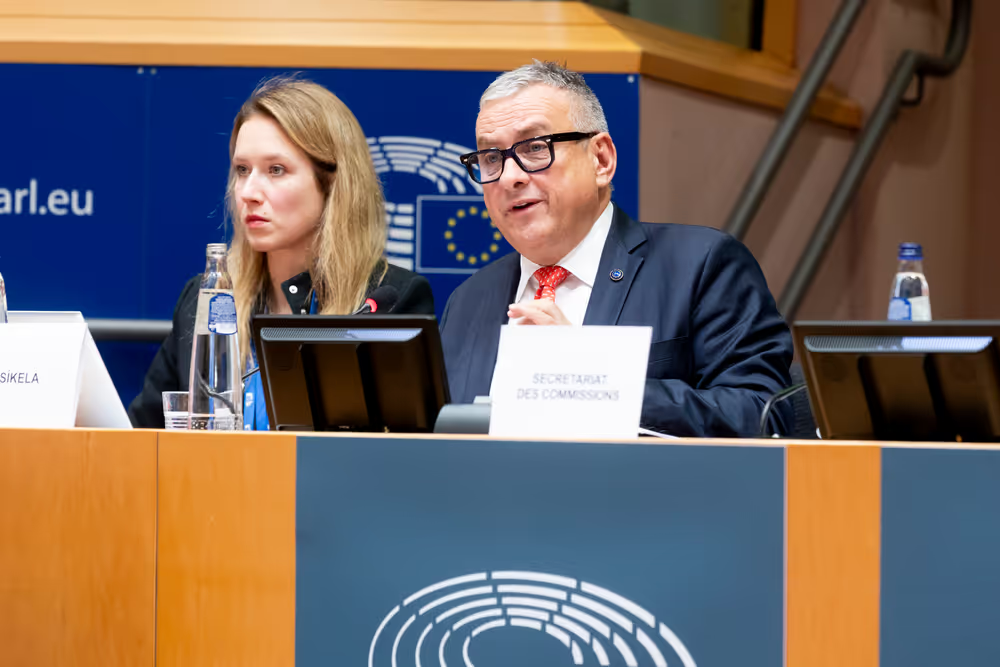
Marta Kos, Enlargement Commissioner. Hadja Lahbib, Commissioner for Equality. Jozef Síkela, Commissioner for International Partnerships. Dubravka Šuica, Commissioner for the Mediterranean. This is how the star lineup looked like at Wednesday’s joint meeting of the Committee on Foreign Affairs (AFET) and Committee on Development (DEVE). Commissioners were presenting details of the new €200.3bn instrument called Global Europe.
Four basic principles
In his opening address, Commissioner Síkela mentioned that he constantly hears from EU’s partners the call for ’more Europe’. “I hear it everywhere. Our partners are calling for more Europe, for more European presence. And now we are responding,” Mr Síkela said.
He outlined four basic principles on which Global Europe stands: simplification, coherence, balancing predictability with flexibility, and great impact. According to Mr Síkela, Global Europe should be implemented through five geographical pillars: Europe and Middle East, North Africa and the Gulf, Sub-Saharan Africa, Asia and the Pacific, and Americas and the Caribbean.
Support to human rights, democracy, and civil society organization remains our priority. – Jozef Síkela, Commissioner for International Partnerships
Commissioner Síkela stressed that all partnerships EU would conclude must be mutually beneficial. “Support to human rights, democracy, and civil society organization remains a priority and will be chanelled through all geographical pillars (…) Migration stands as a priority, too. We will be able to suspend payments in case of shortcomings in partner countries,” Commissioner Síkela said.
His stance was supported by MEP Tonino Picula (S&D, CRO) who said that long-term strategic partnerships are the core of EU’s external action. “Sustainability of these partnerships is essential….emergency funding must be transparent and accountable.” urged Mr Picula.
You might be interested

Enlargement negotiations to accelerate
According to Commissioner Kos, Global Europe is designed also to support EU’s enlargement as a geostrategical imperative. “The instrument will enable to accelerate enlargement negotiations, which is already happening,” Ms Kos said. She also stressed that the new instrument will allow to better design spending in candidate countries.
Global Europe will allow to better design spending in candidate countries. – Marta Kos, Enlargement Commissioner
Commissioner Kos also mentioned that simplifying the agenda and increasing funding is relevant as several candidate countries are likely to conclude their accession negotiations in the coming years.
Focus on EU’s geopolitical interests
The Global Europe instrument was first presented by the Commission in July 2025. It is intended to consolidate existing instruments into a single, more flexible architecture, with a greater focus on EU geopolitical and economic interests. It includes new support for European competitiveness and a hardening of migration conditionality.
The proposal aims for greater EU agility, notably by removing many binding spending targets, increasing non-programmable funding and expanding the financial toolbox. Critics, however, say that such changes raise significant concerns about predictability, oversight, the dilution of specific mandates and the politicisation of humanitarian aid.