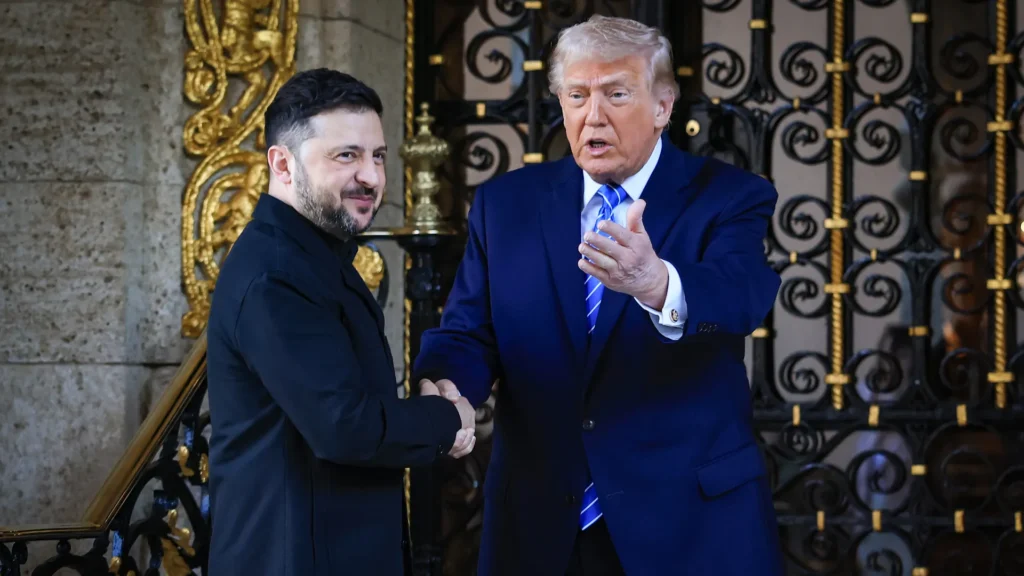

US President Donald Trump has once again blamed Ukrainian President Volodymyr Zelenskyy for stalled peace negotiations. Just weeks ago, Western officials and Kyiv were reportedly close to finalising a comprehensive framework, including long-term security guarantees and mechanisms to protect civilians and critical infrastructure. Yet Mr Trump singled out President Zelenskyy as once again the obstacle, while portraying Vladimir Putin as “ready to make a deal,” a claim that has left European allies baffled. After all, a ceasefire could begin immediately if the Kremlin gave the order.
EU foreign policy chief Kaja Kallas has repeatedly stressed the simple truth about the war in Ukraine: there is one aggressor and one clear victim in the conflict. Reflecting on the strain of global crises on Wednesday, she wryly told European Parliament leaders that given the state of the world now might be a “good moment” to start drinking, highlighting the extraordinary pressures on policymakers juggling diplomacy, military escalation, and humanitarian concerns.
The 20-point plan
And yet it is only weeks ago, that there was some glimmer of hope. The 20-point peace framework reached not long ago is ambitious, aiming to address security guarantees, territorial arrangements, economic reconstruction, human rights, and long-term diplomatic commitments. But despite progress, all along, Russia has not meaningfully engaged, rejecting provisions such as Western peacekeepers and demanding conditions incompatible with Ukrainian sovereignty and Western assurances. This lack of participation, combined with ongoing Russian escalation that is killing civilians every day, has left the framework largely aspirational.
Whenever cornered on the subject, Mr Putin or his cronies deflect and charge that any peace deal must first eliminate so-called ‘root causes’ of the conflict. That, analysts have been saying for months, is just another way of saying “capitulation”.
EU financial backing and coalition of the willing
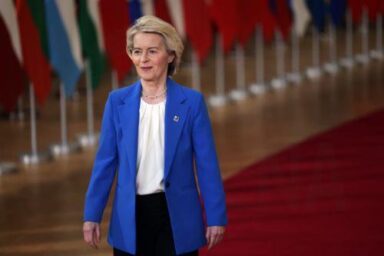
Meanwhile, the EU this week, led by Ursula von der Leyen, agreed on a €90 bn financial package which will be crucial for the next two years for Ukraine, and went out of its way to remind Russia its assets in Euroclear in Belgium were frozen, stating unequivocally that Russia would not recover a single cent before the end of the war or before reparations were being paid.
The so-called Coalition of the Willing, potentially coordinating British and French boots on the ground for stability operations but far from what would be the frozen conflict line, has also been discussed. All while Mr Putin or his team sit back and watch, noncommittally.
You might be interested

Upside down
These steps strengthen Ukraine’s negotiating position and signal solidarity, but analysts warn that Russia must genuinely buy in, or even the most carefully crafted agreements will fail to deliver peace.
Critics also argue that Mr Trump’s framing (and clear pro-Putin bias) obscures the central reality: Russia remains the aggressor, Ukraine the victim. But unless Mr Trump finally accepts that it is Moscow—and not Kyiv—that needs to fall in line, meaningful progress will remain out of reach.