
On paper, Ankara still wants to join the European Union. In reality its candidacy lies in a bureaucratic deep-freeze: no chapters of accession talks have opened since 2016, and none look likely to do so soon. But young people still care, EU Perspectives has learnt.
The reasons for Turkey’s stuck admission process are familiar—erosion of the rule of law, an ever-tighter political climate and rows over “geopolitical tensions” from Cyprus to Syria. “President Recep Tayyip Erdoğan and Turkish officials continue to affirm full EU membership as a strategic goal, but in practice it appears deprioritized,” says Özge Genç, a visiting fellow at the Middle East Council on Global Affairs, tells EU Perspectives.
Yet a yawning gap separates the torpor in Brussels from sentiment on the Bosporus. A new report by the Core Research Institute, published this week by the Centre for Applied Studies Turkey, finds that 56.6 per cent of Turks aged 18-30 support EU membership, with only 15% opposed; among the wider electorate the share of enthusiasts falls to 32%. Young voters, the study notes, view Europe less as a civilisational choice and more as a tool: an external referee able to “put Turkey in order” by enforcing rules, curbing favouritism and widening opportunities for study or work abroad.
A hedged affection
That pragmatism marks a generational rift. Turkey’s political class frames Brussels in terms of sovereignty and power; its digital natives weigh the EU by the quality-of-life metrics they scroll past daily—clean air, predictable courts, hassle-free visas. Even erstwhile worries about cultural dilution have waned. Many Turks now have friends who have lived in Europe and reckon they can guard against “moral degeneration” better than their parents feared.
The affection is hedged. Young Turks also complain of discrimination, Islamophobia and what they call Europe’s “double standards”, whether in migration policy or the Gaza war. For plenty, the EU is a place to visit, perhaps to study, but not quite to belong. “However, Europe’s desire for Turkey in defense is counterbalanced by deep reservations: political backsliding, S-400 interoperability risks, and vetoes from Cyprus/Greece over Eastern Mediterranean disputes fuel skepticism, fears of unreliability if Ankara continues hedging its relations with other blocs (e.g. the most recent talks on a Saudi-Pakistan defense pact). Can Brussels implement ‘values firewalls’ to address these concerns? I doubt it,” warns Ms Genç.
You might be interested
If Brussels polarises, Washington repels. Respondents associate the EU with welfare and rules, but tag America with “extreme capitalism”, inequality and imperial swagger. Anti-Westernism, the report argues, is now chiefly anti-American; Europe escapes most of the ire and thus retains its soft power.
Frontline buffer
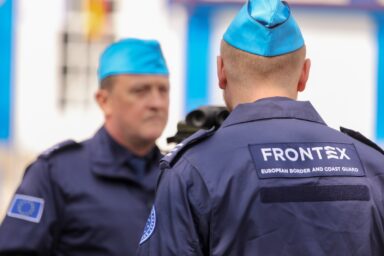
That soft power, Ms Genç believes, has hard-power implications. Turkey, NATO’s second-largest army, “anchors the southern flank, offering unmatched operational experience in hybrid threats. Geographically, its Black Sea vantage and proximity to volatile zones (e.g., Iran tensions) make it a frontline buffer, controlling migration flows and also energy corridors essential for Europe’s resilience,” she says. Such “strategic indispensability”, she adds, is “blending hard power assets with geopolitical leverage, but it is increasingly viewed through a lens of cautious necessity rather than unbridled enthusiasm.”
Strategic indispensability blends hard power assets with geopolitical leverage. — Özge Genç, Middle East Council on Global Affairs
Could the accession process, frozen solid, ever thaw? “Turkey could indeed restart the accession process, now stalled, but it demands a confluence of domestic renewal and external catalysts. The momentum is shifting from a prolonged impasse to a pragmatic, and more security-focused partnership, propelled by shared threats and US policy volatility under Trump. Forecasting optimistically, tying security pacts to reform milestones might redefine accession as a hybrid model, blending membership aspirations with strategic realism, ultimately benefiting a more resilient Europe,” Ms Genç concludes.
For now, Turkey’s leaders cite EU membership in speeches while courting Gulf money and Russian gas. Brussels, wary of both Turkey’s democratic backsliding and its indispensability against migrants and Moscow, mutters about a “positive agenda” and calls yet another technical meeting. The majority of Turkish twenty-somethings quietly keep the faith. They are not starry-eyed Europeans; they are pragmatists looking for a rules-based ladder out of cronyism. If Ankara ever reopens the door to Brussels, it is their push—not an ageing elite’s rhetoric—that may force the hinges to move.