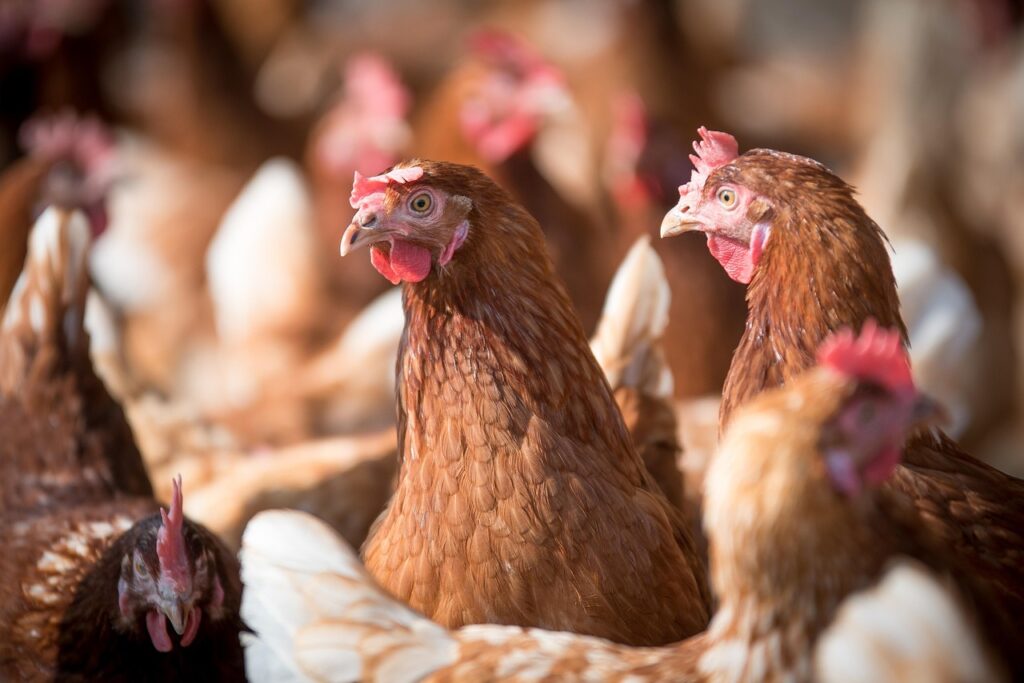

For more than a decade, the European Union has been reshaping how farm animals are kept. Now, after outlawing conventional battery cages for laying hens in 2012, policymakers and national governments are turning to the next, more contentious step: phasing out ‘enriched’ cages as well.
Across Europe, the direction of travel is increasingly clear even if the timeline is uneven. Some member states have adopted timed national bans, others are moving through industry-led transitions, and Brussels is preparing legislation that could reshape poultry farming across the bloc.
From the 2012 ban to today
The EU prohibited conventional battery cages under the Laying Hens Directive from 2012, replacing them with ‘enriched’ or furnished cages that provide perches, nesting areas and limited space for movement. Policymakers designed the compromise to improve welfare without forcing an abrupt structural overhaul of egg production.
More than a decade later, those systems are under renewed scrutiny. Scientific assessments, public campaigns and shifting consumer expectations have all fed a debate over whether even enriched cages sufficiently address animal-welfare concerns — or whether cage-free systems should become the new norm.
Czech Republic sets deadline
The Czech Republic is among the countries that have moved ahead with national legislation. Lawmakers approved a ban on keeping laying hens in cages in 2020, with the measure set to take effect in 2027.
The transition will reshape a large part of the country’s egg sector and will require producers to invest significantly in alternative housing systems such as barn, aviary and free-range production. Producers have warned of higher costs and operational challenges as they prepare for the shift, particularly in modernising facilities built around cage systems.
You might be interested

The Commission aims to present legislative proposals on the revision of the existing EU animal welfare legislation, responding to the European Citizens’ Initiative ‘End the Cage Age’ as well. – European Commission spokesperson Eva Hrnčířová
Slovenia and Slovakia move in same direction
Slovenia is among a growing group of EU countries moving away from cage systems, with a phase-out timeline running to 2028. Across the bloc, several governments and producers are signalling a broader shift toward cage-free production. In Slovakia, authorities and industry have indicated a transition during this decade, with the sector aiming to move away from cages by 2030.
As elsewhere, the pace of change will depend on financing, infrastructure and market demand.

Brussels prepares the next step
At EU level, a broader overhaul is already underway.
“Animal welfare is a key priority for this Commission, and we are committed to a comprehensive approach that ensures that the EU maintains high standards in this area,” European Commission spokesperson Eva Hrnčířová says.
The Commission is working on a revision of existing animal-welfare legislation, responding in part to the “End the Cage Age” European Citizens’ Initiative and to mounting scientific and societal pressure to rethink livestock housing systems. According to Ms Hrnčířová, consultations with farmers, businesses, civil society and public authorities are ongoing, alongside impact assessments and preparatory studies designed to understand how a transition away from cages could work in practice.
“On the basis of a sector-by-sector approach, the Commission aims to present legislative proposals on the revision of the existing EU animal welfare legislation, responding to the European Citizens’ Initiative ‘End the Cage Age’ as well.”
The first legislative proposal is expected by the end of 2026 and will be grounded in scientific evidence while taking into account socio-economic impacts, food security and the need for species-specific transition periods.
Why cages are under scrutiny
The policy shift has been driven as much by what people see as by what researchers report. Images of hens confined in tight rows of cages have become a powerful symbol in public debate, used by campaigners to argue that even improved systems restrict natural behaviour. Footage showing birds unable to fully stretch their wings, nest freely or move away from one another has helped shape public perception across Europe.
Researchers have pointed to persistent concerns including limited movement, bone weakness, feather pecking and difficulties performing instinctive behaviours such as dust-bathing or nesting. Enriched cages addressed some of the most severe welfare problems associated with earlier battery cages, but the scientific and policy debate now centres on whether cage systems can ever fully meet behavioural and health needs.
For many consumers, the issue has become part of a broader conversation about how food is produced. Questions about animal welfare increasingly sit alongside concerns about sustainability, environmental impact and the ethics of intensive farming.
From Brussels to the breakfast table
Those shifts are visible beyond policy papers. On a cold afternoon the streets of Prague, not far from a major chain grocery store, we speak to a number of shoppers . They weigh cost against welfare and production standards. Most of those we spoke with agree: they don’t want animals to suffer.
Kristina, an IT specialist, shops with her husband and says when buying eggs she doesn’t look at the price — she looks at how the hens are kept and which country they are from.
“I read the labels. Free range or with bedding. I won’t buy eggs if the hens are in cages. Not now, not ever.”
Others agree
Eva, a retiree, says rising food prices are impossible to ignore, but insists she still chooses free-range eggs when she can. Free-range eggs cost more, but she usually pays the difference. “Europe is doing the right thing on animal welfare,” she adds, arguing that it reflects badly on society “if animals are allowed to live in inhumane conditions.”
Jáchym, a young adult, says he has not followed the policy debate closely but tries to be careful about what he eats and supports animal rights in principle. His friend Alex says the few times he has bought eggs he chose free-range. It bothers him, he says imagining the animals are miserable.
One gentleman, who didn’t say his name but handles grocery shopping for his household, says he already checks labels carefully. He worries prices could rise further but says the conditions matter to him. Animal rights are important, he nods.
Not everyone sees it as a priority.
Iva, a middle-aged shopper, says the issue is not high on her list of concerns at a time when households face multiple pressures. With so many challenges, she says she would prefer not to pay more.
The brief moments seem to reflect a broader shift: animal welfare is no longer a niche issue. It has entered everyday purchasing decisions. A move away from cages seems hand-in-hand with much of public opinion.
Cost and opportunity
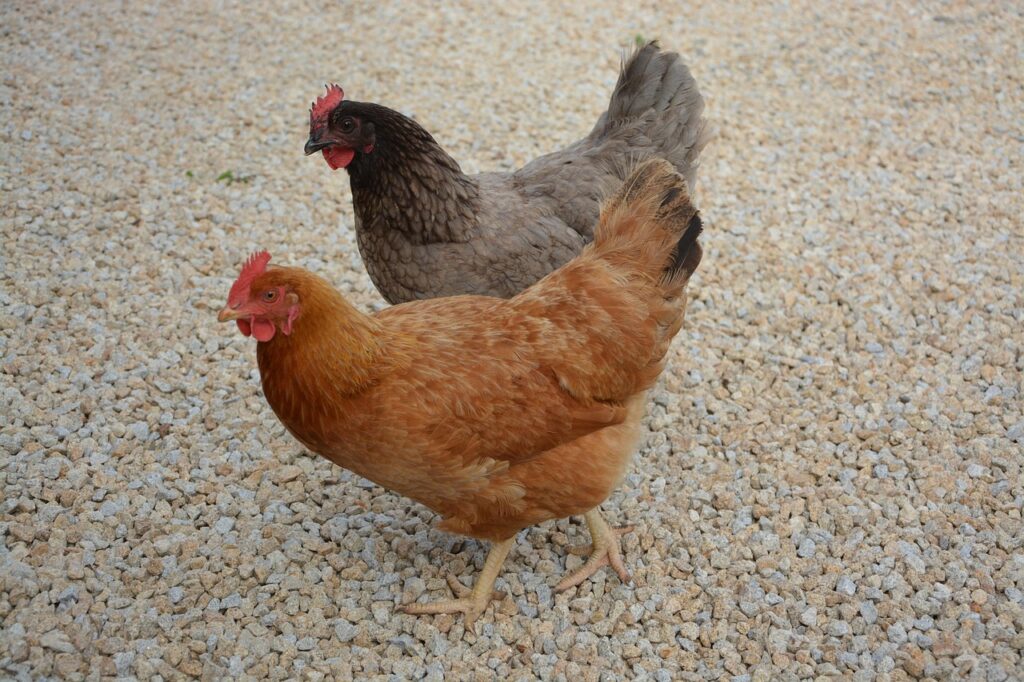
For the egg industry, the transition is not simply ethical or political. It is structural. Moving away from cage systems means redesigning housing, increasing space per bird, adapting feed and flock management and often taking on substantial debt to finance new infrastructure. Larger producers supplying supermarket chains have often begun the transition earlier, anticipating market demand and future regulation. Smaller and mid-sized farms face sharper pressure, with concerns about competitiveness, consolidation and the risk of cheaper imports produced under different standards.
Yet the picture is not uniformly negative. Cage-free production can open access to premium markets, align producers with retailer requirements and position farms for future EU rules. For some operators, the shift is less a burden than an investment in long-term viability.
A wider political question
The debate has also raised a familiar question in European policymaking: why prioritise farm-animal housing at a time of economic strain, geopolitical tension and food-security concerns?
Supporters of reform argue the issue is not about ranking crises. Standards for animals, food safety, environmental protection and labour tend to evolve together, reflecting what societies consider responsible production. Changes in one area do not replace attention to another; they become part of a broader recalibration of how agriculture operates.
Commission frames coming reforms in similar terms
On the “End the Cage Age” initiative specifically, Ms Hrnčířová said the Commission is carefully assessing how a transition could be achieved in a way that is sustainable for farmers and for the wider food system, including implications for food security.
“Work on impact assessments and consultations is ongoing,” she said, making clear future legislation will aim to balance welfare improvements with economic realities, providing support and appropriate transition pathways for the agricultural sector.
What happens next
The next decisive moment will come at EU level. If the Commission follows through with legislative proposals by 2026, the bloc could move toward a more harmonised approach to cage-free farming — though any final law would still face negotiation among member states and the European Parliament.
In the meantime, national governments such as the Czech Republic and Slovakia are already setting their own pace, pushing the industry toward systems that would have seemed politically unrealistic only a decade ago.
The post-battery-cage era has already begun. The question now is how quickly — and how uniformly — Europe decides to leave cages behind altogether.