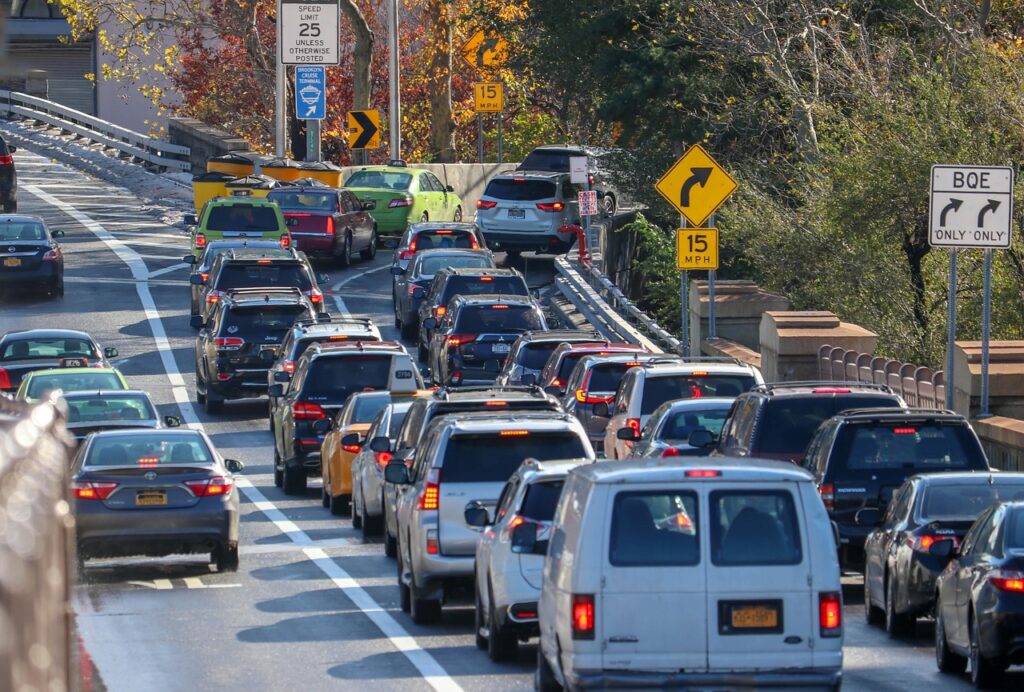

Europe’s attempts to make citizens shift from cars to public transport have made little difference so far, despite billions of euros spent from allocated budgets. EU auditors warn of local shortcomings in the implementation of sustainable urban mobility plans.
In a special report, The European Court of Auditors states that EU has built up a strong legal framework to encourage urban areas to tackle issues like commuter flows and car use. Local authorities, however, have been weak in their efforts to make meaningful changes.
The role of urban transport in carbon emissions in Europe is significant. Transport in urban areas is responsible for around a quarter of the EU’s transport-related CO₂ emissions. Estimates suggest that congestions cost the EU economy around €180bn annually.
Legal push, local gaps
The EU law requires 431 cities from 2024 to develop and implement Sustainable Urban Mobility Plans (SUMPs). These plans go a long way toward making local and regional authorities accountable for embedding climate and transport policy objectives.
The Court of Auditors says the results of the SUMPs have been “weak” so far. The plans have overlooked several priorities for action, and the planning’s “geographical scope” is too narrowly defined. Several approaches have relied on administrative boundaries instead of closely examining commuter traffic flows.
The Court reviewed the types of projects local authorities have implemented to provide better public transport infrastructure in cities. Some examples have been successful, but others have not contributed any noticeable difference to transport options for commuters.
You might be interested

Role of member states
Transport policy is a member state responsibility; the work is mostly carried out by regional and local authorities with the exception of national-level policies. The role of the EU, for all practical purposes, consists mainly of providing funding.
The EU law requires member states to ensure that plans comply with EU recommendations. Among other things, they must establish links between mobility planning and spatial planning. The Court concluded that member states and local authorities have not always lived up to these requirements.

The cities are facing strong commuter traffic and urban sprawl, the Court writes. In many cases, most suburban commuters still rely heavily on private cars. The main reason for that is that car journeys offer faster travel times within a zone of 45 minutes door-to-door from the suburbs to the city center than public transport. Although most cities have invested heavily in cleaner public transport options, only a relatively small number of urban areas have introduced measures that discourage car use.
Two imperatives
The audit confirms that many cities in the EU are struggling to meet European-wide climate goals as well as citizens’ quality-of-life aims. Substituting cleaner public transport for carbon-emitting private vehicles remains one of Europe’s key challenges in its efforts to curb climate change.
As experts scrutinise plans for Europe’s next multi-annual financial budget, transport and climate policy remain among the key priorities. Nowadays taxpayers want to know if their contributions make a difference. This report shows the pressure that exists to make sure that public money makes a difference to the objectives set.