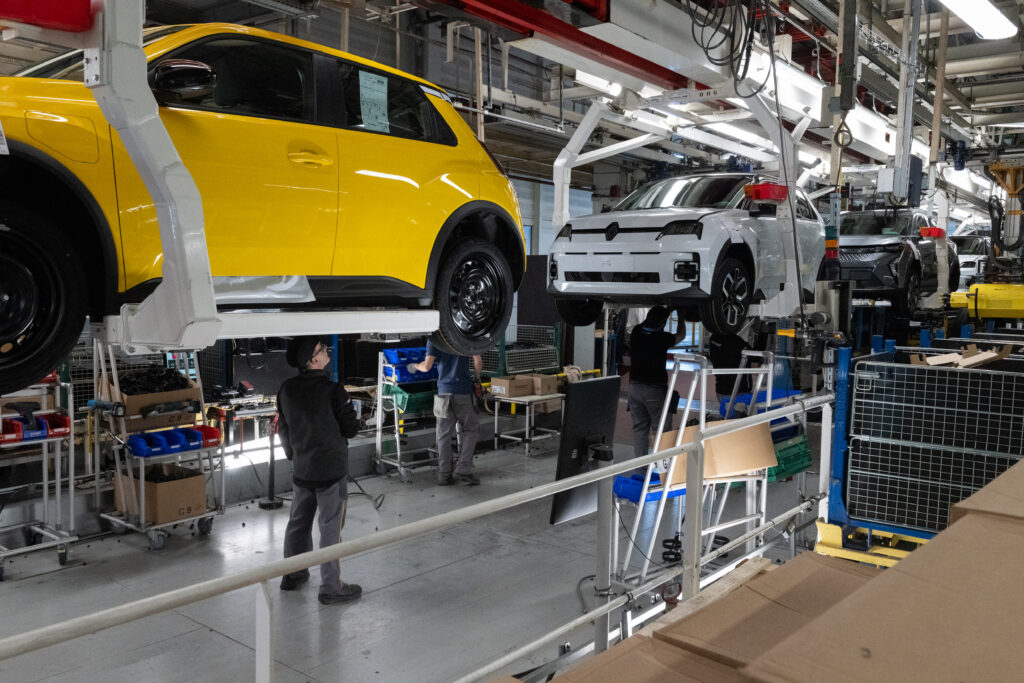

Brussels is preparing legislation that will force electric vehicle (EV) manufacturers benefiting from public subsidies to produce a substantial majority of the vehicles’ components in the EU. The aim is to protect the continent’s manufacturing base from Chinese competition.
According to EU Perspectives sources, European factories would have to assemble new electric vehicles, hybrids and fuel cell cars that receive state-backed consumer incentives. The same applies to cars that public authorities purchase or lease. At least 70 per cent of the value of their components, excluding the battery, would also have to be manufactured within the bloc. Key battery components would have to originate in the EU.
The measures are to find their way to the books through an Industrial Accelerator Act, which aims to protect the EU’s €2.6tn manufacturing sector. The sector has been finding it difficult to compete with imports from lower-cost economies, and with high energy prices and costs associated with the climate framework in force in the EU. As a result, manufacturers across a number of sectors have announced plant closures and job reductions in recent months.
A sector divided
The 70-per-cent figure required for EVs and hybrids is under discussion and may sustain changes before publication. The industry has been lobbying for less stringent requirements. As well as increased requirements for automobiles, at least 25 per cent of aluminium products and 30 per cent of plastics components of windows and doors would have to have European manufacturers. Otherwise, the products would not qualify for public subsidies.
Another aspect of the Industrial Accelerator Act is likely to require that procedures for awarding public contracts take into account the degree of carbon emissions generated by a product’s manufacture. Sectors that would feel the requirements’ effects have been energetically lobbying for their preferred formulations of the regulations. The clean technology industries are broadly supportive of the requirements.
You might be interested

The car manufacturers, however, split between those who want to see an effective “made in Europe” public procurement scheme, and those who want a wider geographical scope to include countries like Turkey and the UK, which have close trade agreements with the EU, as well as Japan. The divide between car manufacturers is emblematic of the competing interests within a sector that has a trade surplus in Europe but is heavily reliant on Asian supply chains.
The proposed requirements were among many aspects of industrial policy that came under discussion at a recent EU summit of heads of government and state. Negotiations over the details of the Industrial Accelerator Act are likely to continue until its expected publication in March.