
Talks on how to pay for clean tech, circular economy and other Brussels‘ ambitious plans failed to make major inroads at Thursday’s session of the Council of the European Union. Officials were hopeful of breaking the deadlock by next week.
The ministers filed into Brussels on 26 February ready to tackle some of the bloc’s neuralgic points. These include sagging productivity, eroding industrial base and snarled single market. The first ‘Competitive Council‘ under the Cyprus presidency promised matching rhetoric with resources. It had little to deliver.
The plan was to focus on a number of ambition-heavy topics ranging from the European Competitiveness Fund (meant to channel cash into clean tech, circular-economy ventures and digital enforcement tools) to the bloc‘s bioeconomy strategy. By dusk, however, the only firm decision was to approve conclusions on the 2030 consumer agenda—worthy, but something of a side-show to the planned rogress on the €409bn behemoth of the ECF.
Engaging and constructive
Stéphane Séjourné, Executive Vice-President of the European Commission, insisted at a subsequent press briefing that “our action in the area of competitiveness needs to be focused on four pillars of the single market for simplification.” That sounded like purpose. Yet there was precious little to follow.
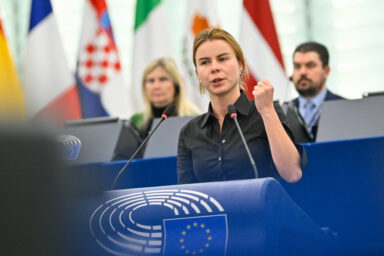
Michael Damianos, Cypriot Minister for Energy, Commerce and Industry and chair of the meeting tried to paint the outcome as momentum. “I’m very pleased with the strong, engaging and constructive start we had today at this first Compact Council under the Cyprus presidency,” he told reporters. His optimism jarred with the absence of anything tangible in the thin communiqué.
You might be interested

Mr Damianos reminded the journalists of the stakes. “Competitiveness starts with a strong and well-functioning single market, one that has no unjustified barriers, ensures effective enforcement, and provides a predictable framework for businesses and consumers alike,” he said.
Next week will tell — or not
However, both Mr Séjourné and Mr Damianos parked the thorniest questions with gusto. Which sectors deserve priority, how to share the cost and whether ‘Made in Europe‘ inputs must come only from European Economic Area suppliers? “I hope the text will be able to be presented next week. If we need to take extra time, we’ll do that,” Mr Séjourné conceded.
He then continued by calling the proposal “an ambitious text, and this is my belief, and it’s shared by part of European industry with the exception of those who no longer believe in Europe and have already relocated their value chains.” That was as concrete a statement as it got on Thursday.
At times, the press conference resembled an exercise in question-dodging. During the 30 minutes, both gentlemen succeeded in deflecting, ducking, evading, or simply ignoring any query requiring a factual answer. What measures exactly is the Commission going to propose for the ETS in March? “I can’t give you an exact answer because — because people are still thinking and talking about this subject. But I told the ministers…“ Mr Séjourné said.
Is the Commission going to act just on the base of a perception (that the ETS is a taxation tool, not an investment tool)? “You really have decided to ask me all the questions which are not in my portfolio,“ the vice-president retorted. “Clearly, I will wait to have the discussions with those commissioners…“ Did Made in Europe actually come up today at all during the discussions? Ever so courteous, the Frenchman pointed to Mr Damianos: “Please, because I don’t have the answer yet.“
Bridging demand and supply
Instead, ministers approved the 2030 consumer agenda. Mr Damianos argued that “consumer protection and competitiveness are two sides of the same coin. To protect consumers in the digital age, we must tackle harmful online practices and risks, ensure sustainable consumption, and strengthen enforcement across borders. Only through bold action on these fronts can we build a fairer, greener and safer European market for all consumers.” The agenda cracks down on ‘dark patterns’, bogus eco-labels and risks to minors online.
Consumer protection and competitiveness are two sides of the same coin. — Michael Damianos, Cyprus‘ Minister for Energy, Commerce and Industry
Linking the consumer agenda to the still-gestating Fund makes economic sense. Directive 2024/825 bans woolly green claims and obliges firms to disclose repairability scores; the Fund, once born, would finance the factories that make longer-lasting goods. Stronger enforcement through the Consumer-Protection Cooperation network promises a level playing field, which in turn helps honest firms to expand across borders.
Yet enforcement demands money. The proposal’s ‘administrative capacity‘ window could cover joint investigations and digital tools, but only if ministers release the cash. For now, the Council merely “underscores the need for more effective enforcement” and “recalls that new initiatives must seek…simplification”, its press release states. Such language costs nothing, and achieves as much.
Words, not wallets
Single-market sclerosis persists. Over lunch ministers revisited the “terrible ten” obstacles, from divergent labelling rules to sluggish permits. Mr Damianos offered the helpful observation that “the single market remains fragmented with longstanding barriers”, while insisting that “there was a consensus with respect to simplification”.
Small firms, which generate over half the Union’s value added, wait for tangible help. “SMEs need simpler access to finance, targeted support and better integration into value chains,” Mr Damianos urged. The Competitiveness Fund is supposed to deliver exactly that, channelling grants, guarantees and equity into still-risky green projects. Until member states agree on its design, national subsidy races will widen gaps the Fund had hoped to close.
Europe can ill afford drift. Stricter consumer rules raise compliance costs, yet the matching investment vehicle languishes. If the EU institutions dither much longer, they may discover that busy factories—along with the jobs and tax receipts they crave—set up shop somewhere else.