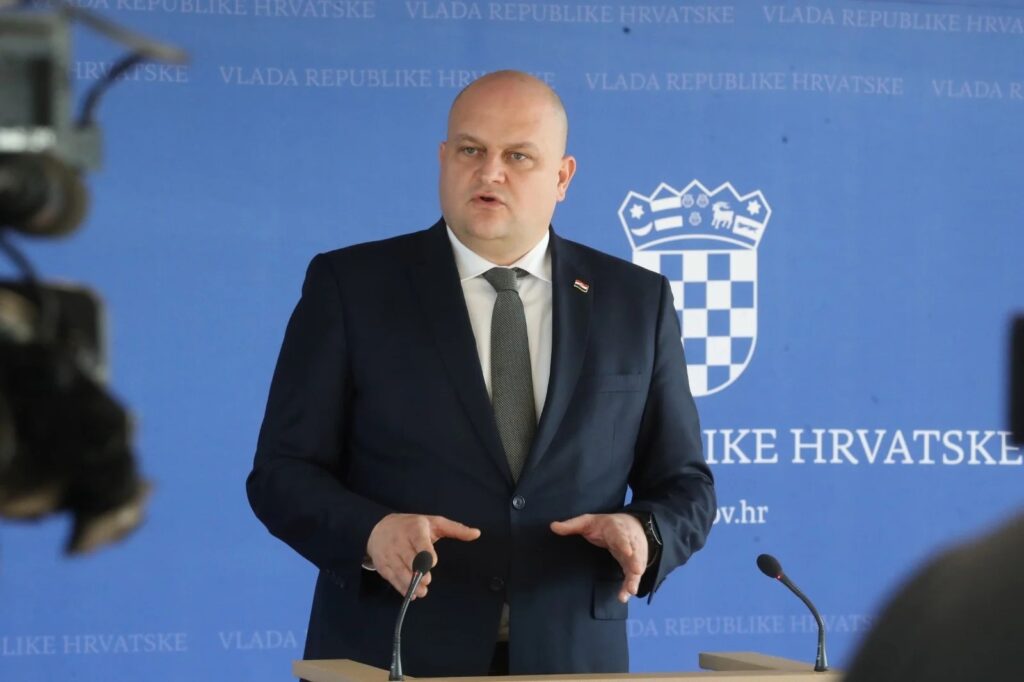

Croatian Economy Minister Ante Šušnjar relishes a scrap. In a recent viral post on X he fired a jab that ricocheted along the Danube, piercing the bubble of Hungarian hypocrisy (Budapest‘s and Bratislava‘s alike) concerning oil deliveries from Ukraine and their possible replacement.
“The Százhalombatta refinery can process 8 million tonnes of oil per year and the Bratislava refinery 6 million. Domestic production in Hungary is around 1 million tonnes. The Adria pipeline can transport 15 million tonnes of oil per year to Hungary and Slovakia. Can you do the math, or not?” Mr Šušnjar posted. The sums were simple; the politics were combustible.
Mr Šušnjar’s lesson landed soon after a Russian missile struck inside Ukraine on January 27th, knocking out the southern branch of the Druzhba pipeline and halting crude flows to Hungary and Slovakia. Both countries scrambled for alternatives. Their favoured fix—rerouting Russian barrels through Croatia’s Adriatic link, known as JANAF—ran into a red-and-white wall. Zagreb, keen to brand itself a clean-energy gatekeeper, refused to budge. The minister doubled down, arguing that “transportation fees are only about one per cent of the total price, while Russian oil is 30 per cent cheaper than alternatives.”
Numbers and nerve
The Hungarian government seethed. Cheap Urals crude has long padded the profits of MOL, Hungary’s refining champion, and supplied its land-locked neighbours. Losing it would sting wallets and wound nationalist pride. Budapest therefore framed Croatia’s stance as sabotage rather than solidarity.
Foreign Minister Péter Szijjártó joined Slovak Economy Minister Denisa Saková in a joint appeal. “We ask Croatia to allow the transport of Russian oil to Hungary and Slovakia via the Adria pipeline, as our exemption from sanctions allows for the import of Russian oil by sea if pipeline supplies are disrupted,” they wrote. Zagreb replied that the exemption covers only pipelines, not tankers, and that shipping Russian crude through JANAF would undercut the EU’s embargo.
You might be interested
Budapest raised the stakes. Officials hinted at a veto of the European Union’s €90bn macro-financial package for Ukraine and of the bloc’s twentieth sanctions round unless Croatia relented. The manoeuvre risked painting Hungary as Moscow’s useful spoiler. Slovakia, whose refinery in Bratislava also survives on Druzhba, echoed the threats but toned down the rhetoric once Brussels stepped in.
Old scars reopen
From February 19th to 22nd the European Commission convened an extraordinary Oil Coordination Group with all three capitals. Experts noted that both Hungary and Slovakia hold roughly ninety days of strategic oil stocks and face “no short-term security risk”. That judgment blunted Budapest’s sense of urgency and bought time for quiet haggling.
Energy rows between Croatia and Hungary follow a well-worn script. In 2003 Hungary’s MOL purchased a 25 per cent stake in INA, Croatia’s flagship refiner, and upped it to 47 per cent five years later. The honeymoon ended in 2011 when a Zagreb court accused former Prime Minister Ivo Sanader of bribery in the privatisation and later jailed him for ten years, of which he served about half. Croatia also issued an arrest warrant for Zsolt Hernádi, MOL’s long-time boss. Budapest refused to extradite him.
The quarrel migrated from courtrooms to arbitration panels. In 2022 the International Centre for Settlement of Investment Disputes ruled for MOL, finding Croatia’s evidence of corruption insufficient. The tribunal ordered Zagreb to pay about €169m in compensation, far below the €920m MOL had once demanded but still a stinging loss for Croatia. Arbitrators noted that the award might have risen to roughly €230–276m including interest had INA’s finances been valued differently.
Kremlin-free oil
The decision wounded national pride in Zagreb and entrenched mistrust of Hungarian motives. Mr Šušnjar, a minister with the physique of a nightclub bouncer, channels that resentment whenever Budapest flexes.
Domestic politics sharpen the edge. In 2018 MOL mothballed the Sisak refinery, prompting accusations of asset-stripping. Only in late 2019 did INA’s two main shareholders agree to modernise the plant at Rijeka, a €4bn revamp expected to finish within weeks. Once complete, Rijeka will end its dependence on Russian semi-finished feedstock and allow Croatia to boast that its own fuel is Kremlin-free.
We ask Croatia to allow the transport of Russian oil to Hungary and Slovakia via the Adria pipeline. — Hungarian Foreign Minister Péter Szijjártó
For Mr Šušnjar the latest flare-up offers a stage to showcase that freedom. He insists Croatia will make JANAF’s spare capacity available, provided the oil is not Russian. The arithmetic supports him: Hungary’s Százhalombatta and domestic production add up to roughly half the pipeline’s annual volume, leaving room for Slovakia as well. Non-Russian cargoes already arrive at Omisalj, Croatia’s deep-water terminal, and could be pumped north with minor scheduling tweaks.
Pipeline pride
Hungary counters that Croatia’s transit fees are five times the European norm and that paying them would erase MOL’s margins. Mr Šušnjar shrugs, noting that transport represents “about one per cent of the total price”. The bigger discount, he hints, is Moscow’s subsidy to sympathisers. Remove it and the maths change for everyone.
Diplomats from Vienna to Prague monitor the row nervously. If Budapest browbeats Zagreb into reopening JANAF to Russian crude, other neighbours may face similar pressure when pipelines falter. If Croatia prevails, the precedent strengthens Europe’s embargo and nudges Central Europe towards cleaner, more diversified supply.
The stalemate also exposes Hungary’s leverage inside the EU. Warsaw’s new pro-European cabinet has ended years of joint vetoes with Budapest, leaving Prime Minister Viktor Orbán’s government isolated. By coupling its oil demand to Ukraine’s funding package, Hungary risks alienating partners who once indulged its maverick streak.
Fragile arithmetic
Yet domestic politics reward confrontation. MOL’s pre-tax profit last year reached roughly €1.24bn, buoyed by cheap Urals. After tax the firm still pocketed about €764m. It is enough to cover refinery upgrades and provide a healthy dividend. Those figures erode Budapest’s claim of existential need.
Slovakia’s position is trickier. Prime Minister Robert Fico shares Mr Orbán’s scepticism of sanctions but wields little clout. Bratislava relies on Russian barrels yet cannot afford to alienate Brussels, whose cohesion funds prop up its budget. Hence Ms Saková’s softer tone after the commission’s finding that reserves suffice for now.
Can you do the math, or not? — Ante Šušnjar, Croatia’s economy minister (to Budapest)
Brussels hopes the numbers will calm tempers. Officials nudge MOL to book non-Russian cargoes while JANAF throughput and port slots remain underused. Croatia signals it will clear any such shipments swiftly. Hungary claims alternative grades may damage refinery equipment, but engineers note that Százhalombatta processes blends from Kuwait and Kazakhstan during routine maintenance of Druzhba. The technical argument, like the political one, contains more theatre than thermodynamics.
Lingering risks
Even if the immediate flare-up fades, ground remains fertile for future skirmishes. The Druzhba strike reminded capitals that wartime pipelines are brittle. The EU’s 2027 deadline for phasing out remaining Russian fossil-fuel exemptions looms. Croatia’s claim to moral leadership will intensify as that date approaches; Hungary’s economic dependence will become harder to defend.
Legal tussles could yet erupt. Budapest may ask the European Court of Justice to clarify whether Russia-origin crude counts as sanctioned once it enters JANAF. Zagreb readies its own briefs, confident the letter of the embargo is on its side. The commission prays the matter ends in a back-room settlement, not a public verdict that could pierce the sanctions regime.
For now Mr Šušnjar basks in social-media applause. His math lesson turned pipeline flow-rates into meme material and cast Croatia as the grown-up in the room. Whether the class pays attention is another story. Hungary and Slovakia still hope Ukrainian crews will soon repair Druzhba, restoring the old, comfortable order.