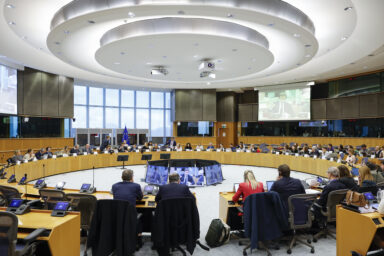

EU finance ministers moved decisively into ‘execution mode’ on Tuesday, advancing the pensions agenda, operationalising defence financing tools and reinforcing fiscal discipline under the union’s reformed economic framework.
The meeting signalled a shift away from agenda-setting towards delivery. The Council progressed work on mobilising private savings, confirmed how fiscal rules will accommodate rising defence expenditures and pushed implementation of recovery funding, underscoring that the focus has moved to applying agreed instruments rather than debating new ones.
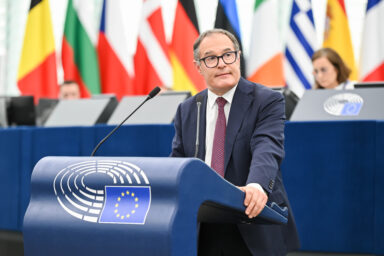
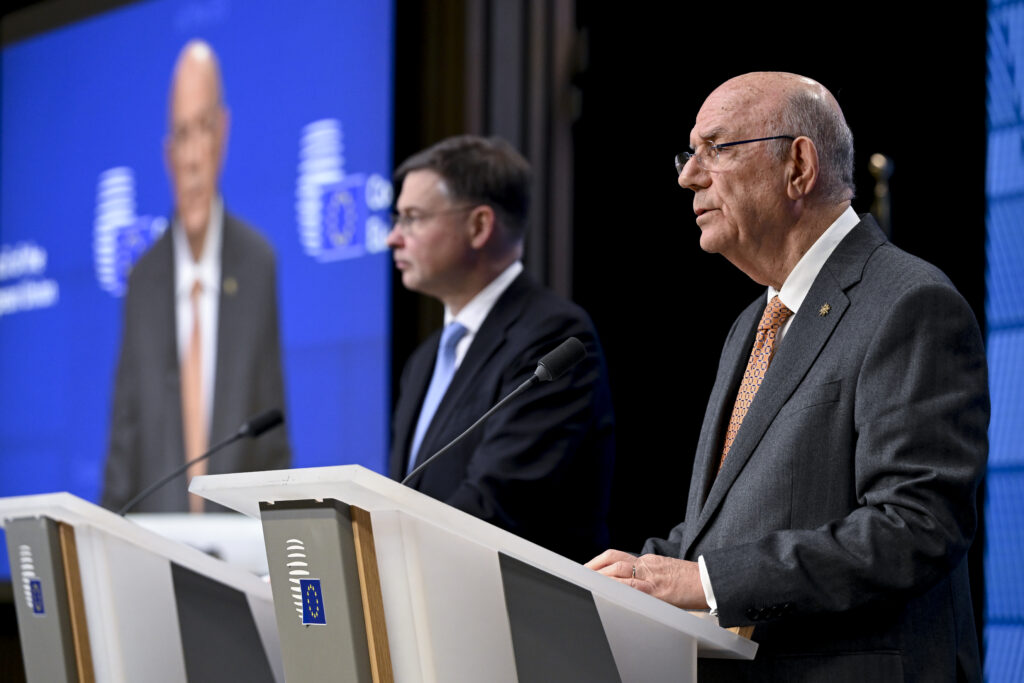
Cyprus’ finance minister, Marios Keravnos, said the pensions file sits at the centre of both retirement security and investment policy: “The overarching goal of the pensions package is to help people secure a more reasonable income in retirement (…) This will complement rather than replace public pensions in EU countries,” he said. The minister added that proposals aim to expand uptake, improve long-term performance and allow pension funds to contribute more effectively to the real economy.
Economy and Productivity Commissioner Valdis Dombrovskis framed the discussion against a steady but constrained outlook. “Despite some positive recent data releases, the outlook remains broadly unchanged (…) This underlines the need to maintain a focus on implementing the measures needed to unlock our full growth potential.”
You might be interested

Pensions and investment
The Council’s main policy exchange centred on the supplementary pensions package, treated as part of the broader savings and investment agenda and as a mechanism to channel private capital into the economy. Mr Keravnos said ministers expressed broad support for strengthening the EU framework, highlighting its potential to “ensure adequate retirement for EU citizens, mobilise long-term private savings (…) and support the sustainability of the wider economy” while stressing the need to respect national competences, particularly in social and labour policy.
He also tied the file directly to competitiveness, calling the savings and investment agenda “of pivotal importance if we want to reach that level of competitiveness that we wish to achieve” and arguing it would “mobilise forces and unleash our potential (…) make sure that funds will be channelled into productive investments”.
Defence financing moves from debate to deployment
Defence spending featured prominently through implementation decisions rather than new policy design. The Council activated the national escape clause for Austria, enabling a transition to higher defence expenditure within the fiscal framework. Cyprus’ finance minister said the measure would “facilitate a smooth transition to higher levels of defence expenditure while safeguarding fiscal sustainability”, signalling that flexibility is now being applied through existing rules.
The Council also adopted implementing decisions under the Security Action for Europe (SAFE) instrument, paving the way for long-term loans to support defence readiness and procurement. Mr Dombrovskis stressed that flexibility remains limited and temporary, warning that defence-related expenditure must be incorporated into national fiscal paths and monitored closely.
Recovery funding enters final stretch
The Recovery and Resilience Facility was treated primarily as an implementation file. Amendments to Lithuania’s national plan were endorsed and ministers were urged to accelerate delivery ahead of programme deadlines. Commissioner Dombrovskis said disbursements have reached €394 bn and described the facility as “very much now on the home straight”, calling on member states to complete outstanding milestones and accelerate work on the ground.
Mr Keravnos reiterated the Council’s commitment to fiscal discipline under the reformed framework, stressing the need for “strong, healthy and sustainable national budgets in all Member States” alongside rising investment and defence spending.
Fiscal coordination and budget planning continue
Ministers approved the Council recommendation on the discharge for the 2024 budget and adopted conclusions on guidelines for the 2027 budget, formally launching the next stage of the budgetary procedure.
The Council also approved the euro area recommendation for the year. Mr Dombrovskis said it calls on member states to promote productivity and innovation, safeguard fiscal sustainability and complete implementation of recovery plans, providing direction for policy work ahead.
Outlook steady, focus on implementation
At the outset, ministers reviewed the economic outlook, which the Commission characterised as broadly stable but still shaped by structural challenges.
The commissioner said the persistence of these constraints reinforces the need to implement agreed reforms and investment measures rather than shift course, keeping attention on delivery across existing policy instruments.
Ukraine financing and sanctions in the economic agenda
Ministers also reviewed the economic and financial impact of Russia’s war against Ukraine, including progress on EU support and sanctions measures.
Mr Keravnos welcomed agreement between the Council and the European Parliament on a package aimed at providing a €90bn loan to cover Ukraine’s financing needs in 2026 and 2027, saying the work had been a priority and that funds are expected to begin flowing from the second quarter.
Mr Dombrovskis said the Commission is moving to conclude the legislative process and prepare disbursement, stressing that “time is of essence” as Russia continues attacks on infrastructure. He also pointed to the proposed sanctions package targeting energy, financial services and trade, urging member states to move forward swiftly.
Financial services work moves up politically
Financial integration and market infrastructure emerged as operational priorities. Mr Keravnos confirmed the Council intends to accelerate work on financial-services files and bring discussions forward at ministerial level.
He said meetings would be sped up and key items advanced in the Council calendar, emphasising that political decisions are needed if progress is to be made on major files.
Questions and answers
In the Q&A, Mr Dombrovskis addressed coordination with international partners on sanctions-related financial measures, saying alignment is preferable but not mandatory.
“It’s best if we take steps in a coordinated manner (…) but it’s not an absolute precondition,” he said, adding that the EU would proceed at its own level if broader agreement does not materialise.
Questions on supplementary pensions prompted Mr Keravnos to reiterate the Council’s intention to advance the file within the savings and investment agenda and its link to competitiveness and capital mobilisation.
On financial-services legislation, Minister Keravnos confirmed the Council plans to accelerate discussions and elevate them politically, saying progress requires decisions at ministerial level if key files are to move forward.
The press conference closed with a focus on implementation — pensions, defence financing, fiscal governance, recovery funding and financial integration — signalling that the EU’s economic agenda is now being carried forward primarily through execution of existing tools rather than new policy launches.