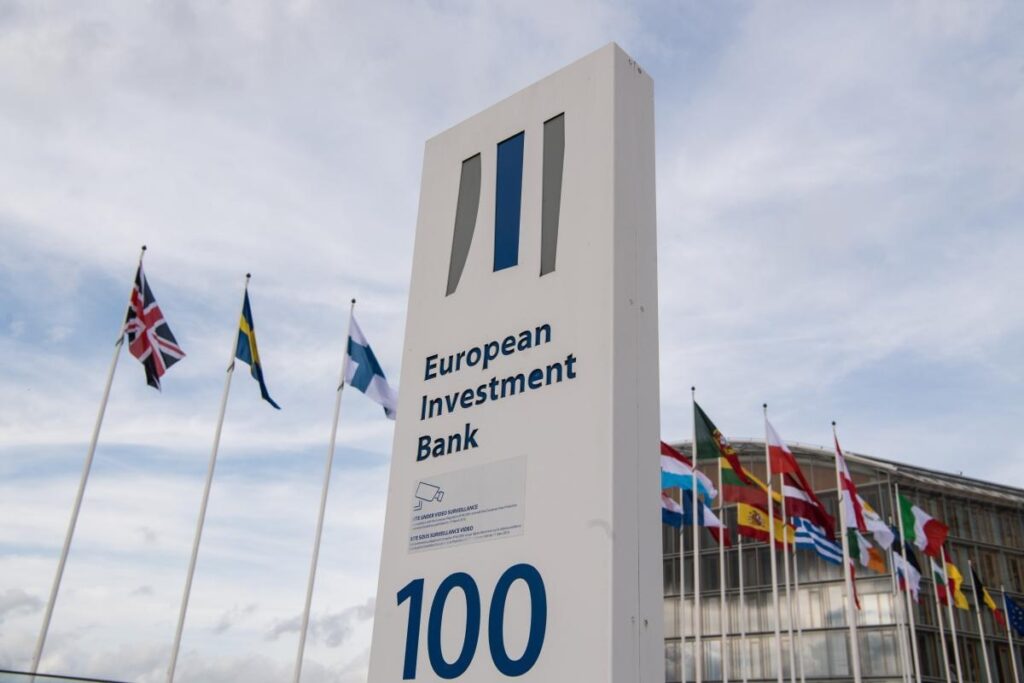

After years of cross-party pressure, the European Investment Bank is rolling out €3bn in loans to EU member states to help citizens transition to electric vehicles and heat pumps before a new carbon tax on transport and buildings takes effect in 2028.
“Investments in public transport, home renovations, and zero-emission mobility solutions take time to deliver tangible benefits. Without early and targeted action such as revenue frontloading, ETS2 risks being seen less as a climate solution and more as a financial burden,” a group of MEPs wrote in an October letter to Energy Commissioner Dan Jørgensen.
The timing is not accidental. Starting in 2028, the EU’s Emissions Trading System 2 (ETS2) will extend carbon pricing to CO2 emissions from cars, vans, and buildings. The ETS2 will require energy companies to buy permits for their carbon emissions — costs they will pass to consumers through higher bills for gas heating and petrol.
And it poses political risks: people already facing a housing crisis and high energy prices will see costs rise further, potentially triggering backlash against climate policy before they have viable alternatives.
You might be interested

EU is getting ahead of concerns
Rather than waiting until 2028 to use carbon tax revenues for transition support, the EU is mobilizing money now to help people switch before prices increase. The €3 billion from the EIB, combined with €4 billion already frontloaded to the Social Climate Fund, gives member states €7 billion to deploy before the tax starts—the result of sustained pressure from the European Parliament to ensure the most vulnerable can cope with the transition.
The Commission is steadfast on the ETS2, as the policy aims to cut emissions 42% below 2005 levels by 2030. While a moderate ambition compared to other major economies, the EU’s real differentiator is the credibility of this structural support system designed to deliver it.
“Without sufficient early investment, ETS2 remains politically fragile.” — EPICO’s executive director, Bernd Weber
Climate Commissioner Wopke Hoekstra said the funds would be available to member states “to support low and middle income households in the clean transition,” including subsidized heat pumps, electric vehicle social leasing schemes, home insulation grants, and public transport improvements. MEPs argue that putting solutions first and price increases second is essential for political acceptability.
The mechanism at play
Only countries that have adopted ETS2 into domestic legislation can access the loans, according to a European Commission statement Thursday. Countries will use these funds immediately to pre-finance transition programs. The funds operate as an advance for future tax revenue. When ETS2 begins generating revenue in 2028, member states will repay the EIB using income from the carbon permits.
No other major economy uses this kind of coordinated, advance-funded approach to carbon pricing’s social impact. The United States avoids household carbon taxes entirely, relying instead on the Inflation Reduction Act’s $369bn in tax credits and subsidies with no equivalent frontloading mechanism. China’s carbon trading system covers industrial emissions, not household transport or residential heating, and drives EV adoption through mandates and subsidies rather than social transition support.
The EU’s mechanism reflects a distinctly European challenge and competitive advantage: coordinating climate policy across 27 democracies with vastly different wealth levels, requiring supranational institutions like the EIB that can pool resources across a €20tn economy—infrastructure that doesn’t exist in either the US single-nation system or China’s state-directed model.
Avoiding the political backlash
Brussels is acutely aware that poorly timed climate policy can trigger mass protests, as France’s Yellow Vest movement demonstrated when fuel tax increases hit citizens without viable alternatives. “It is very important that people see the possibilities before the price kicks in, so that we have good examples everywhere in Europe,” warned MEPs Peter Liese (EPP/Germany), Mohammed Chahim (S&D/Netherlands), and Lena Schilling (Greens/Austria) in a joint statement.
Energy think tank EPICO noted that while the EIB’s frontloading was “not a breakthrough,” it might serve as a short-term solution to help EU countries prepare for ETS2’s social impact.
“What now matters is further scaling up and the swift, smart use of the funds, particularly in the buildings sector. Without sufficient early investment, ETS2 remains politically fragile. Frontloading is the lifeline for a 2028 start in the face of continued opposition from many member states,” said EPICO’s executive director, Bernd Weber.
The €7bn falls short of what advocates sought, with the cross-party MEP group stating they ‘regret that only €3bn will be available in this first step,’ yet it represents a significant victory after years of EP pressure on the Commission and EIB. The frontloading facility’s effectiveness depends on member states actually using the funds before ETS2 starts. Ten countries—including France, Poland, and Hungary—have yet to transpose ETS2 into national law, making them ineligible for the loans.