
Last week, the European Parliament urged the European Commission to recognise poverty as a violation of human dignity and to eradicate it by 2035. While political consensus is growing, the real question is whether the money will follow. At stake is not only social cohesion, but also Europe’s security, expert says.
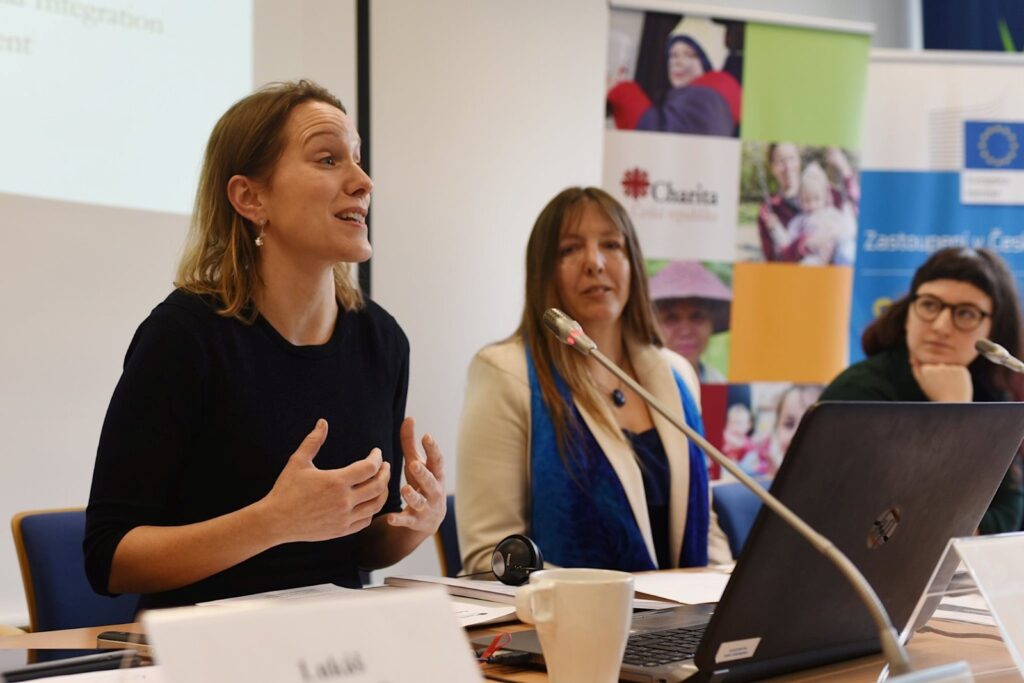
“We hope that the EU Commission’s upcoming EU Anti-Poverty Strategy will send a clear signal that no one should live in poverty and that eradicating poverty must be at the heart of European policymaking”, said Maria Nyman, Secretary General of Caritas Europa, speaking to EU Perspectives after the vote.
The European Parliament approved the report on the Commission’s upcoming Anti-Poverty Strategy by 385 votes in favour, while 141 members (MEPs) voted against. While Ms Nyman welcomed this first steps, the key question now is whether the Commission’s proposal will deliver.
Delivery will depend on the budget
What could either make or break the strategy is adequate financing. MEPs don’t mention a specific number — only call for “the allocation of adequate and sustained budgetary resources for anti-poverty measures” both through the EU’s long-term budget and national mechanisms.
Ms Nyman agrees. “To deliver on (the EU’s) ambition, the upcoming Multiannual Financial Framework must reflect the strategy’s goals: investing in dignity, inclusion and social cohesion means safeguarding Europe’s stability and our shared future,” she says, referencing the EU’s long-term budget for 2028-2034, which is currently under negotiation.
You might be interested
There are many examples worldwide of how prolonged poverty and wealth concentration can trigger unrest and severe security crises. — Maria Nyman, Caritas Europe
The ambition is not small. Already in 2021, the EU committed to reducing the number of people at risk of poverty or social exclusion by at least 15 million by 2030, including at least five million children. For reference, in 2024, 93.3 million people in the EU were at risk of poverty or social exclusion, including 20 million children, i.e., one in four.
That is alarming also according to MEPs gathered in the so-called Intergroup for Fighting Poverty. According to them, child poverty is one of the most brutal manifestations of poverty. “Funding for the European Child Guarantee should be urgently increased, with a dedicated budget of at least €20 billion in the next MFF,” they stated in the report backed by the plenary.
Recognising structural issues
But the debate goes well beyond funding. Across the EU, poverty and social exclusion remain a daily reality for millions of people. “Any anti-poverty strategy worthy of its name must place human dignity and social justice at its core,” said Ms Nyman, stressing that the root causes of poverty are complex.
“It is not only about insufficient income, but also about inequality, discrimination, marginalisation and the erosion of people’s ability to participate fully in society,” she said. The forthcoming Commission strategy, she added, “must address the structural drivers of poverty through a coherent, rights-based and adequately funded framework”. EU action, she argued, must reinforce—not weaken—the European social model. Social justice is not only a matter of fairness, but also essential for social cohesion, stability and security.
Reinforcing the European social model is also crucial for security. “A society that leaves many people behind and concentrates wealth in the hands of a few becomes fragile and more exposed to crises,” Ms Nyman explained.
Becoming fragile
“Frustration and growing precarity fuel polarisation and social unrest, making it easier for extremist and divisive narratives and movements to gain ground. There are many examples worldwide of how prolonged poverty and wealth concentration can trigger unrest and severe security crises,” the expert added.
By contrast, “when people experience tangible social protection, fair opportunities, access to support services and a sense that their dignity is respected, social cohesion is strengthened and societies become more resilient to crises, crime, disinformation and political manipulation”. In this sense, a strong European social model “is not only a question of fairness cause it functions as a kind of social immune system — it must be understood as a core long-term investment in stability, democracy and peace in Europe,” she concluded.