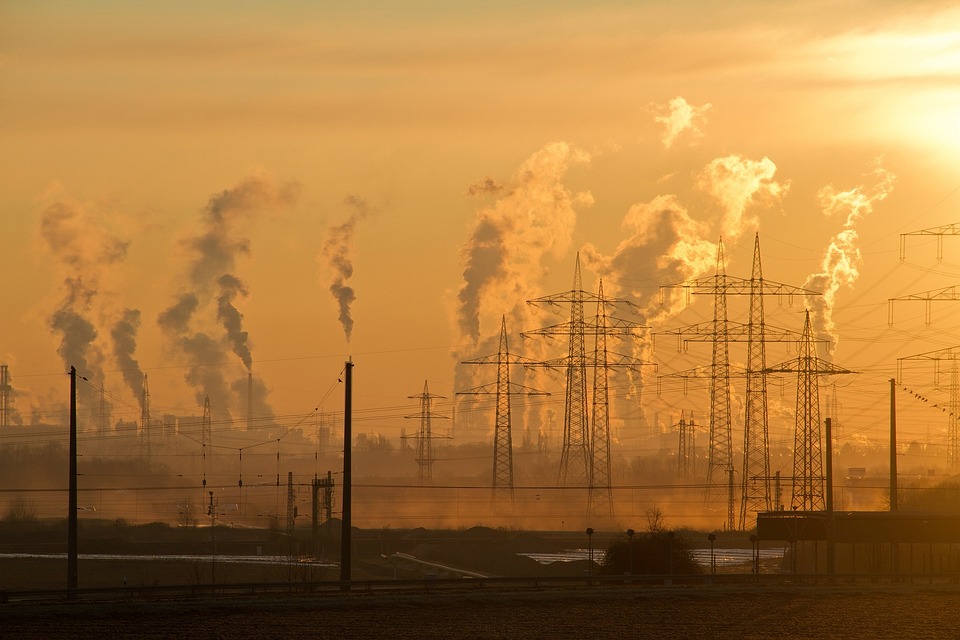

Criticism of the EU Emissions Trading System sent carbon prices tumbling, underscoring how politically exposed the bloc’s flagship climate tool has become. The backlash comes despite the system’s record of halving emissions in covered sectors since 2005. With the Commission’s own ETS reform proposal due in the third quarter, the Union’s carbon pricing future is suddenly an open question.
“If this is not achievable (reducing carbon emissions while enabling companies to transition to CO2-free production lines) and if this is not the right instrument, we should be very open to revise it, or at least to postpone it,” said German Chancellor Friedrich Merz speaking at the European Industry Summit in Antwerp.
His remarks ignited a political and financial frenzy. The price of EU carbon permits fell as much as 8 per cent to €72.18 per tonne—the steepest single-day drop in nearly four years. And at the European Council retreat, Polish Prime Minister Donald Tusk pushed for sweeping exemptions and a price cap on the carbon market. Some officials said Mr Tusk was not without allies among the 27 leaders present.
“The Emissions trading system (ETS) is becoming a punching bag for a couple of leaders… there is going to be a big push to kind of freeze ETS extensions or reform ETS in the future, exactly because this can kind of put additional fuel on the whole affordability debate,” said Dimitar Lilkov, Senior Research Officer at the Wilfried Martens Centre for European Studies.
You might be interested
Political divide
Merz attempted to walk back his remarks the following day at Alden Biesen, describing the ETS as the ’right tool’ while insisting it needs to be ’readjusted again and again’ to ensure it continues to work. But the reversal came too late to calm markets or cool the political temperature.
It forced Commission President Ursula von der Leyen to respond directly to the criticism and defend the ETS. “It says, basically, if you want to pollute, you pay. If you don’t want to pay, innovate. And this is what happened,” she said. President Emmanuel Macron joined the defence, calling the ETS ’structurally sound and relevant’.
Increasing carbon costs drive value chains out of Europe. – Markus Kamieth, CEO of BASF
Merz’s comments seemed to fall clearly on the side of industry at the Antwerp summit. “Increasing carbon costs drive value chains out of Europe,” warned Markus Kamieth, CEO of German chemicals giant BASF. The summit produced a declaration signed by over 100 industry organisations demanding emergency measures to bring down energy costs in 2026.
Energy forgotten?
For Mr Lilkov, the ETS backlash is a symptom of a larger neglect. “We simply forgot about energy in the previous mandate,” he said. “There was such a big push on climate and trying to reinvent economic growth through green growth and through the Green Deal. But we forgot that energy is the bedrock to the whole thing,” he continued.
Lilkov sees massive structural gaps. “Do we have an Energy Union? We do not. Are we properly diversifying our energy mix? Still not fully. Do we have the grids and the necessary reform for this as well? No, not yet. Do we have the grids and necessary infrastructure investment? We are still far from the needed progress,” he said.
Part of what is to blame is the lack of consensus among member states. “There is a fundamental conflict even in many capitals. What are we doing with natural gas? Are we signing long-term deals on LNG or pipeline gas? Even if it can go against our sustainability criteria,” he noted.
Results delivered, but…
The contradiction is visible in the numbers. While the EU agreed in December 2025 to ban Russian gas imports by late 2027, member states have simultaneously locked in major new US LNG contracts. EU imports of American LNG surged from 21 billion cubic metres in 2021 to an estimated 81 billion cubic metres in 2025, according to the Institute for Energy Economics and Financial Analysis (IEEFA). The US now supplies 57 per cent of Europe’s LNG imports, with new deals potentially pushing that to 75–80 per cent by 2030. These long-term fossil fuel commitments sit uneasily alongside the Union’s climate goals.
ETS1 has helped cut emissions from covered sectors—factories, power plants, aviation, and shipping—by approximately 50 per cent since 2005. – European Commission
The irony is that ETS1 has delivered results. According to the Commission, the system has helped cut emissions from covered sectors—factories, power plants, aviation, and shipping—by approximately 50 per cent since 2005. Emissions in sectors outside the ETS have fallen by only around 20 per cent over the same period.
But political success and policy effectiveness are not the same thing. As affordability pressures mount and industrial competitiveness concerns deepen, the ETS is absorbing blame for energy policy failures that predate and transcend carbon pricing.
Major reform of ETS1 to come in summer
The Commission is set to unveil its proposal to reform ETS1 in the third quarter of this year. According to the EU’s revised climate law and the ETS Directive, the overhaul is mandated to address several issues. These include the role of carbon dioxide removals, potential expansion to additional sectors, new accounting rules for non-permanent carbon capture, and carbon leakage risks in sectors not covered by the Carbon Border Adjustment Mechanism (CBAM).
Commission will also review the Market Stability Reserve—the mechanism designed to balance supply and demand for carbon allowances—and examine how ETS revenues are used. And in another attempt to bring the UK and EU closer together, Brussels is exploring criteria for linking the EU ETS with other carbon markets, including the UK system.
Currently, EU companies in carbon-intensive sectors receive a portion of their emissions permits for free. That is a mechanism designed to prevent them from relocating to countries with looser climate rules, such as China or Turkey. While academic studies have found little evidence of actual large-scale relocation, industry continues to cite the risk as a core competitiveness concern.
As CBAM comes into force, taxing imports based on their carbon content, these free allowances are being phased out. Under existing regulation, sectors not at high risk of relocation lose free permits by 2030, while industries covered by CBAM keep them until 2034.
Questions around ETS2
Industry is pushing to slow this timeline. ETS2—the separate carbon market for road transport and buildings—is scheduled to begin operations in 2028, with monitoring and reporting of emissions starting this year. But the system includes a political escape valve: if oil or gas prices are very high in 2026, the start date could be further delayed.
The next major political checkpoint is the European Council in March, where leaders are expected to continue discussions on competitiveness. The Commission is also due to present its Industrial Accelerator Act on February 25, which could add further pressure on climate policy to accommodate industrial priorities.
Whether the political backlash translates into substantive legislative change—or remains rhetorical positioning—will become clear this spring.