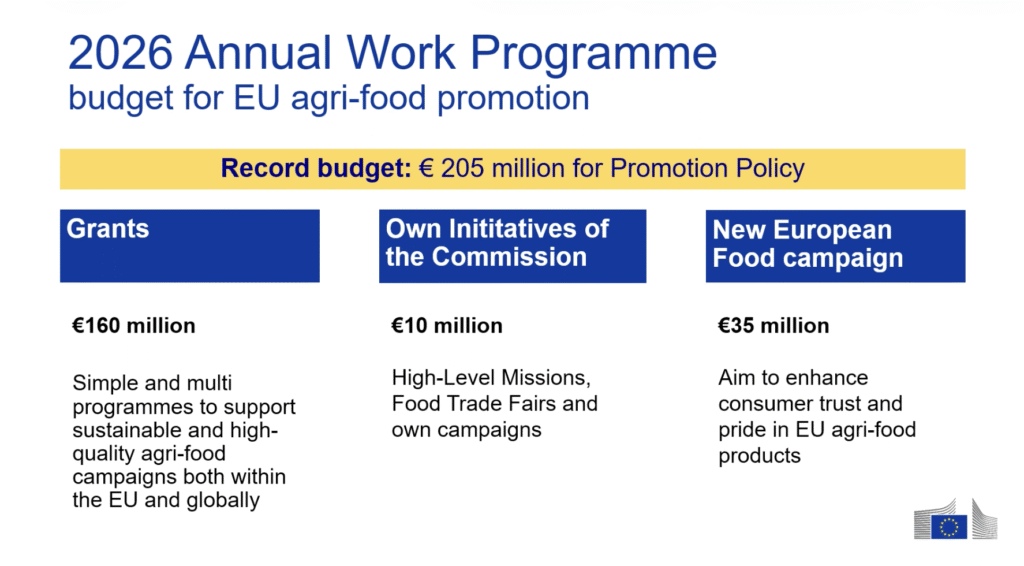
The European Commission plans to spend a record €205 million in 2026 promoting European farm products. While most member states back the move, it has drawn mounting opposition over continued support for red meat marketing and the bloc’s trade strategy towards Mercosur.
Red meat and wine. Those were the products that Diego Canga Fano, a senior official in the European Commission’s agriculture department (DG AGRI) highlighted when discussing the budget with members of the European Parliament this week. He pointed out that European beef and wine producers face an increasingly competitive market — one where other countries use aggressive marketing strategies. And therefore would be at a disadvantage if marketing funding faced reductions or withdrawal.
Several members of the European Parliament shared Fano’s sentiment with regard to red meat. This is especially true of members from states which have strong agricultural sectors. They feel that red meat is a crucial product in order for European agricultural exports to compete on the global market. The livelihood of some member states is dependent upon the success of the agricultural sector.
However, not everyone agreed.
Mercosur contradiction
One of the key sources of division within the Parliament are the long-running Mercosur negotiations between the European Union and South American countries.

The conclusion of this trade agreement would see huge quotas allocated to beef imports, which could impact the market for European farmed produce. Some members pointed out contradictions in promoting European beef and trade at the same time, which could lead to increased imports of cheaper beef from abroad. Large quotas on imported beef market could have an adverse effect on European farmed goods.
“Additional beef import pusts direct downward pressure at Europen beef prices,” MEP Ciaran Mullooly (Renew/IRE) pointed out, insisting there needs to be a way to differentiate European products.
You might be interested
There was a similar level of unease regarding the Mercosur agreement in general. The inconsistent support for beef production, with high environmental and climate standards expected of European farmers but not of South American beef producers, undermines efforts to promote sustainability.
Luke Ming Flanagan (Left/IRE) delivered one of the sharpest criticisms, accusing the Commission of undermining its own marketing narrative.
“When we raise concerns about Mercosur, we’re told not to worry — that the quality is just as good, and then we spend taxpayers’ money telling the world our food is better. You can’t have it both ways.” – MEP Luke Ming Flanagan (LEFT/IRE)
The promotion of red meat has become politicised due to concerns over the impact of red meat on health and the environment. This has led to tensions within the debate.
Let’s promote plant-based
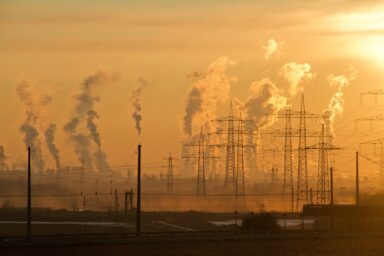
Green and left-wing parties were opposed to the promotional activity for a product which is considered to be a major cause of greenhouse gas emissions. The position of these members is that it would be better to spend the promotional funds on products which are considered to be healthy food and that is less damaging to the climate.
MEP Anja Hazekamp (Left/NDL) strongly challenged the evaluation underpinning the promotion policy, raising concerns about its methodology and conclusions. She rejected the study’s conclusion that promotion spending aligns with public health objectives simply because fruit and vegetable programmes outnumber those for red meat.
Similarly, Tilly Metz (Greens/LUX) said that the promotion budget should be set up in a way that compliments other EU strategies, including health and sustainability related ones. “Very significant share of the (agriculture) budget still goes towards animal product, especially meat and diary,” she stated, calling for more plant-based diet and more protein diversification.
European livestock farmers believe that red meat is being unfairly demonised by green parties. The strict standards for sustainability which European agriculture has to adhere to are a feature which justifies the lack of political pressure on farmers in relation to its environmental impact.
The future of European agriculture?
Most members of the European Parliament are supportive of efforts to increase agricultural exports. However, beef seems to have become a battleground for wider disputes regarding trade policy and environmental targets. There are challenges in managing the tensions between these priorities.
This highlights the complex relationship between national interests and wider European concerns. The differing views on red meat appear to reflect the different priorities of individual member states, depending on how their agriculture sector is structured. There is mounting pressure on members to find a way to reconcile these differences or risk further division within the European Union.
Member states have largely agreed the red meat promotion budget. The growing tensions within other, related policy areas suggests that environmental and trade issues may place political pressure on farming practices in the future.