
European Parliament negotiators have frozen ratification of the Turnberry Agreement following the US Supreme Court’s landmark ruling on presidential tariff authority. It raises fresh questions about whether the deal, struck under duress last year, is still one the EU wants to strike.
On Monday, the lead European Parliament negotiators suspended the EU-US trade pact. The Trump administration is increasingly unreliable in light of continued hostilities. Also, a US Supreme Court ruling that changes the foundation of the deal, adding a layer of unpredictability to the transatlantic showdown.
“Pure tariff chaos from the US administration. No one can make sense of it anymore,” MEP Bernd Lange (S&D/DEU), chair of the Parliament’s International Trade Committee, wrote on X on Sunday. He added that clarity and legal certainty are necessary before any further steps.
Certainty has been hard to find in the sevent months since the concluison of the trade agreement. The EU originally favored the agreement and did so in hopes it would bring the US to provide aid for Ukraine. That did not manifest. Secondarily, it figured it deterred the threat of heavier tariffs. With the Supreme Court ruling, that threat could now, at face value at least, be moot.
The Supreme Court strikes back
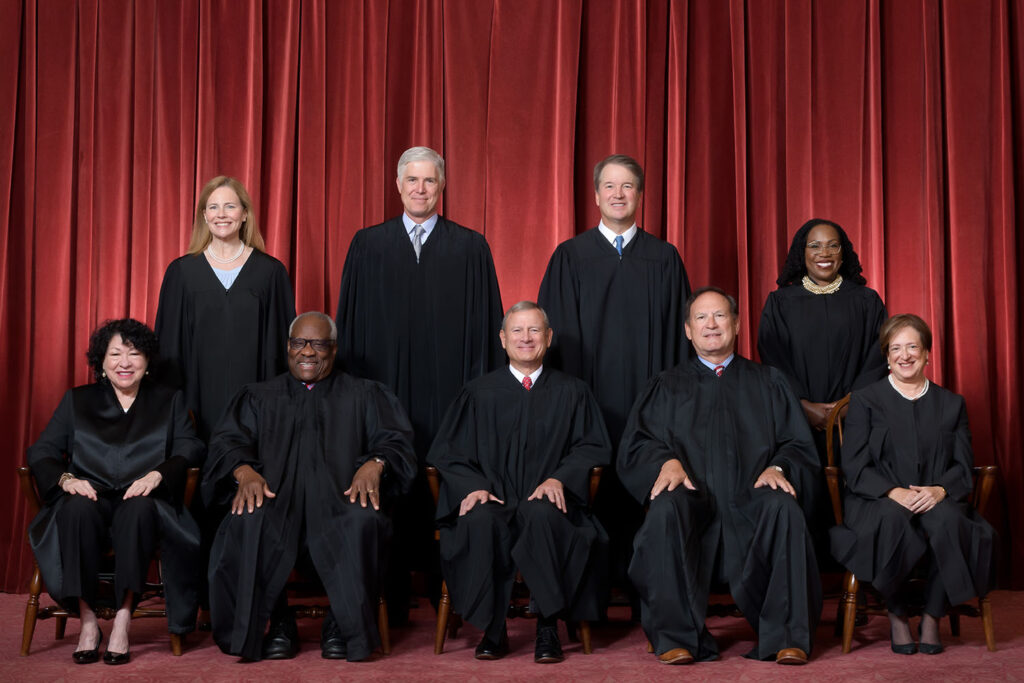
Last Friday, the US Supreme Court ruled that President Donald Trump had exceeded his presidential authority in imposing sweeping tariffs under the International Emergency Economic Powers Act (IEEPA), a US federal law passed in 1977 that grants the president broad authority to regulate international commerce and financial transactions in response to a declared national emergency.
The court held that the statute does not authorise the use of tariffs. It also reaffirmed that the power to tax—including through the imposition of duties—rests with Congress, not the executive.
You might be interested

Within hours of the ruling, Mr Trump announced a 10 per cent universal import levy under Section 122 of the Trade Act of 1974, a provision that allows temporary across-the-board tariffs when the United States faces what it defines as “large and serious balance-of-payments deficits”.
Unlike IEEPA, which placed few statutory constraints on the president’s tariff authority, Section 122 imposes hard limits: a ceiling of 15 per cent and a maximum duration of 150 days, after which Congress must vote to extend the measures or they automatically lapse. Mr Trump has already reached such a cap.
The legal basis for Mr Trump’s work around is already under question. The Peterson Institute for International Economics noted that the president’s own lawyers had previously argued Section 122 was no substitute for IEEPA. They argued that balance-of-payments deficits are conceptually different from the trade deficits the administration characterises as a national emergency.
Wanted: clarity
This legal ambiguity has required the European Commission to issue a statement asking for “full clarity on the steps the United States intends to take following the recent Supreme Court ruling on the International Emergency Economic Powers Act”.
The Section 122 tariffs are already expected to face domestic legal challenges. Analysts at the Peterson Institute note, however, that courts are unlikely to rule definitively within the 150-day window before the tariffs expire. This means litigation may outlast the measures themselves. The ruling also paves the way for American businesses to receive refunds for the estimated $130bn generated by the tariffs.
Ms Trump told reporters after that potential refunds on the struck-down IEEPA tariffs would be “locked up in litigation for years”. Meanwhile, the administration has made clear it intends to use the 150-day window to lay the groundwork for more durable tariff mechanisms under Sections 232 and 301—legal authorities historically more resilient to court challenge—any sense of certainty is unlikely to arise soon from the US side.
Parliament suspends, Commission sticks it out
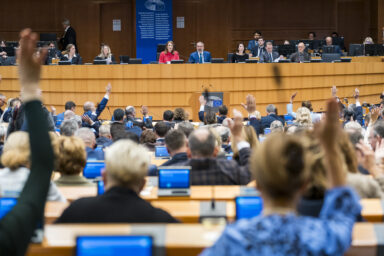
The suspension drew support from across much of the Parliament’s political spectrum. The Socialists, Greens, and the Left backed the move, with the liberal Renew group also leaning toward delay. The European People’s Party, led by Manfred Weber, and Commission President Ursula von der Leyen had pushed to keep the originally scheduled ratification vote on March 11, with EPP figures arguing that “the EU honours its word”. That position did not prevail.
Until the decision this week, the Commission stuck to that similar line favoring the deal. “We (…) continue to advocate for low tariffs” and will “work toward reducing them”, Olof Gill, Commission spokesperson for trade, said on Friday.
US Trade Representative Jamieson Greer, appearing on CBS News on Sunday, said Washington expected all parties to stand by their trade agreements despite the massive changes to the ground work for the deal.
The premise of the deal
The Turnberry Agreement was negotiated against the backdrop of threatened IEEPA tariffs. The US Supreme Court, however, has now ruled these tariffs unconstitutional. Critics of the deal argued at the time that Europe was negotiating from a position of weakness, making concessions in exchange for tariff relief and support for Ukraine that reflected American leverage more than European priorities. The US has issued no new financial support packages for Ukraine during Mr Trump’s second administration.
That context is now central to the Parliament’s hesitation. With the legal basis for the original threats removed—at least temporarily—a significant number of MEPs have questioned whether the concessions embedded in the agreement remain justified. The 15 per cent surcharge currently imposed under Section 122 technically breaches the Turnberry Agreement’s terms, according to an analysis by Bruegel. The think-tank called on the EU to suspend the deal over the weekend and prepare retaliatory measures in response to the renewed tariff uncertainty.
European leverage: A reassessment
The stakes are considerable. The EU-US trade in goods and services amounted to €1.7tn in 2024, roughly €4.6bn a day, according to Eurostat. Beyond the Supreme Court ruling, the EU enters any renegotiation with several factors in its favor.
The American public is opposed to Mr Trump’s tariff policy. Polling from YouGov last week had Americans approve of the Supreme Court’s verdict, with a significant majority pointing to increased cost of living as a result of them.
An encouraging study by the Paris-based Institut Montaigne saw the light of day in December. The authors drew on interviews with European policymakers and industry figures. They argued that Europe’s strategic position in trade negotiations is stronger than its leaders have typically acknowledged, particularly in its geopolitical chokepoints in critical technologies.
The study pointed in particular to Europe’s dominance in extreme ultraviolet lithography through Dutch company ASML as an existing example of that kind of leverage. It also identified photonic and quantum chip technologies as potential future choke points. “By fostering European leadership in cutting-edge semiconductor technologies, the EU can create choke points on which others depend, strengthening its geopolitical leverage,” the study concludes.
On the horizon
The immediate question facing Brussels is how long the pause in ratification will last and under what conditions negotiations might resume. Section 122’s 150-day clock is ticking, and legal analysts suggest the Trump administration will need to identify yet another statutory vehicle to sustain tariffs beyond that window—either through congressional action or a new executive manoeuvre.
Bruegel has urged the EU to treat the current moment not merely as a pause but as an opportunity to recalibrate, arguing that any revived deal should be anchored in binding legal commitments rather than executive arrangements that can be challenged in court or reversed by the next administration.