
Europe invested more than €1.8bn in pandemic preparedness research after 2020. Yet when Covid-19 struck, clinical trials fragmented, infrastructures operated in parallel, and promising discoveries failed to translate into deployable countermeasures. The problem was not scientific capacity, says Hervé Raoul, coordinator of the initiative designed to fix it. It was coordination.
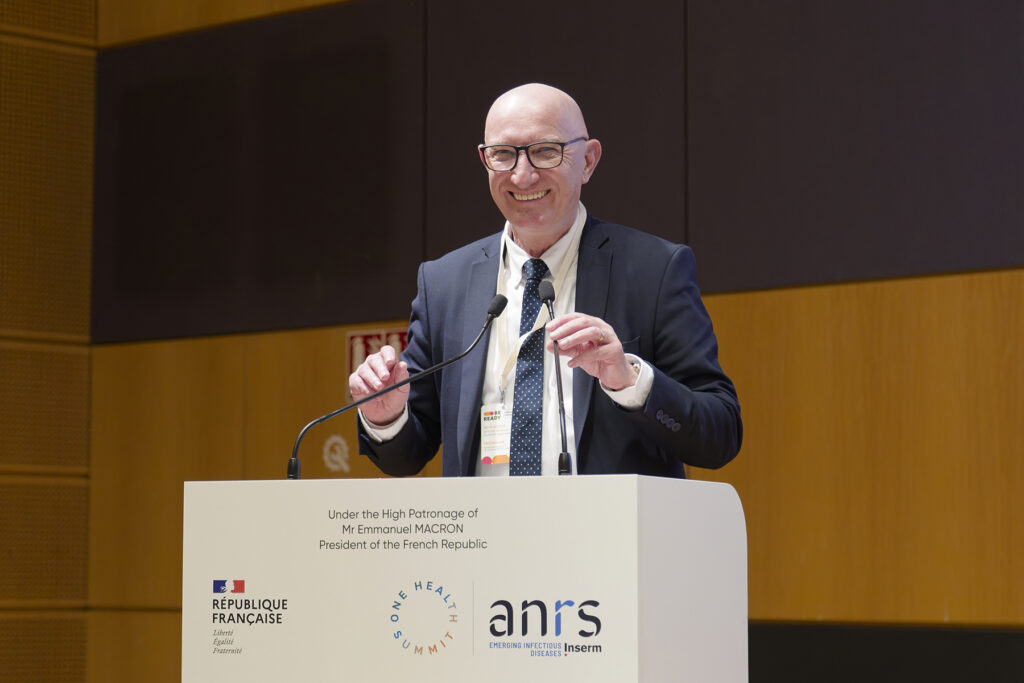
In an interview with EU Perspectives, Dr Hervé Raoul, Deputy Director of France’s ANRS Emerging infectious diseases research agency and coordinator of the newly launched BE READY European Partnership, explains how the initiative aims to align member states, integrate research infrastructures and push preparedness closer to clinical deployment.
With a €240m budget over ten years, BE READY seeks to keep Europe’s preparedness ecosystem in what he describes as an “ever warm state”, maintaining research infrastructures, clinical trial networks and translational pathways so they can switch into crisis mode within days, supporting research activities on emerging infectious diseases.
Europe has invested more than €1.8 billion in pandemic preparedness research since 2020. What gap does BE READY address that previous programmes did not?
The gap remains the gap. The difference is the approach. Under previous Horizon programmes, each member state often pushed for a specific goal on a specific topic. Here, it is a partnership. This means that participating member states agree to align on shared priorities and commit funding to preparedness activities.
You might be interested

The gap analysis itself is more or less the same. But what is essential, in my view, is that we identify key priorities that all the participating countries share. That alignment is the first pillar of the partnership.
The initiative took over three years to prepare. During that time, we analysed lessons learned from different epidemics, not only Covid-19. Based on this work, we agreed on a list of priorities set out in the Strategic Research and Innovation Agenda.
Very often, even when proof of concept works in animal models, the data produced lead to a good scientific publication but industry cannot adopt them, because academic research does not always take into account what is necessary for further development. — Hervé Raoul, Coordinator, BE READY
What do you consider the most important priority within that agenda?
It is not a single priority. If you look at emerging infectious diseases over the past decades, there have been scarce investments in basic research. But basic research is not only there to produce high-level publications. It must translate into countermeasures and inform public health decision-making.
We need to study diseases at the most fundamental level. Afterwards, it is important to develop proof of concept, at least at the preclinical level, to demonstrate that discoveries can translate into future countermeasures, diagnostics, treatments or vaccines.
But that is still not enough. We also need to produce data that can transfer to the private sector and move into clinical phases and clinical tests. Very often, even when proof of concept works in animal models, the data produced lead to a good scientific publication but industry cannot adopt them , because academic research does not always take into account what is necessary for further development.
This is something we want to support and improve. Otherwise, nothing will work. Within BE READY, support can potentially go until Phase I clinical trials.
You also emphasised the importance of social and human sciences. Why is that part of preparedness?
One of the priorities is to push on social and human sciences, which are clearly underdeveloped in the field of emerging infectious diseases.
We have seen issues related to acceptance, acceptance of vaccination, acceptance of containment measures. Trust in the scientific community has also been an issue. Most of the emerging infectious diseases are of zoonotic origin. In this frame, there is a need to better understand the link between the animal compartment and the human one through societal considerations. To improve this, we need to support research at this level as well.
You have described the need to keep infrastructures in an “ever warm state.” What does that mean in practice?
Europe already has many mature research infrastructures, supported at national or European level, that provide access for basic and technical research. The idea is not to create one big centre somewhere in Europe. It is to coordinate distributed national infrastructures that accept to provide access to the European and international scientific community.
These infrastructures need to function during inter-epidemic periods but be able to switch into crisis mode within days. That requires anticipated coordination mechanisms and shared processes. For example, when one infrastructure is dedicated to imaging and another to containment facilities, we need to ensure that, if they must be activated within one project, everything can work quickly.
The partnership does not have the budget to fund all infrastructures. The objective is to coordinate what already exists and develop mechanisms so they can work together, especially in case of crisis.
Clinical trials were fragmented during Covid-19. How does BE READY aim to address that?
We saw that different countries used different protocols and procedures. There was limited communication. At the end, it was difficult to conduct conclusive trials. The idea is not to modify everything at the national level, because that would not work. But we need to connect European clinical trial networks and national infrastructures so that they know each other and can operate under shared procedures when needed.
These networks can have their own life during inter-epidemic periods, but they must be able to turn into crisis mode at the European level when necessary. There is still a lot of work to perform. It is not always easy to find alignment. But I think we are in the right way, even if it takes time.
How would BE READY operate in the event of a new outbreak? How does activation work in practice?
The infrastructures and networks we coordinate have their own life during inter-epidemic periods, but they are in a state where they can turn into crisis mode at the European level if necessary.
We have developed processes in case of crisis to quickly identify what would be the priorities in terms of research. Sometimes this may require action even at the preclinical level, because we know we will not solve everything within a few years. In some cases, we may need within a few weeks to develop proof of concept that we could push into clinical trials.
If good medical countermeasures candidates are already available, the objective would be to move directly to clinical trials at population level, provided it is possoble to obtain authorisation.
However, in a crisis, decision and funding would not come from the partnership itself. The European Commission would activate its own crisis management mechanisms. We would submit research and clinical trial priorities. They would discuss and decide to provide funding based on those priorities.
So our role is to guide and define priorities. The Commission decides and provides the funding before the partnership implements the decisions.
How is the partnership funded in normal times?
The budget is €240m over ten years. Half comes from participating member states and half from the European Commission. In joint transnational calls, each member state funds its own national teams within European consortia. The Commission contributes a significant share, at least around 27 per cent in these calls.
At present, 21 EU countries and six associated countries participate. Associated partners include the UK and Norway. New Zealand has officially joined, and Canada, Australia, Morocco and Tunisia have expressed interest.
How does BE READY align with HERA, EMA and ECDC?
We are embedded in the broader European preparedness landscape. HERA supports activities further downstream, including production and stockpiling. EMA is important for adapting regulatory frameworks in terms of development and crisis management. We are also closely linked to ECDC, whose information helps guide priorities.
We are aligned and actively involved with WHO roadmaps on pathogen prioritisation as well. One of the main problems in the private sector is that companies estimate there is no market.
Industry often argues there is no viable market for emerging infectious disease countermeasures. How do you respond?
One of the main problems in the private sector is that companies estimate there is no market. We have to engage with industry so they express their needs and co-construct strategies with the partnership.
Ultimately, what will determine whether BE READY succeeds?
It will strongly depend on the continuous support of the member states. This will be closely linked to the demonstration of the added value and impact of the partnership for a better response to future epidemic or pandemic crises. Of main importance, will also be the proper integration of the activities within the global European Health Security Framework.
We have just moved to the implementation phase and there is still a lot of work to perform. But we are convinced that preparedness activities that will be conducted during inter-epidemic periods will enable us to achieve this objective.