
Speakers at the European Economic and Social Committee warned of the lasting impact of Russia’s war on Ukrainian children and called for sustained protection and rehabilitation efforts at a plenary session of the European Economic and Social Committee on Wednesday. The fourth anniversary of the conflict is only days away and the idea of a just and lasting peace remains beyond reach.
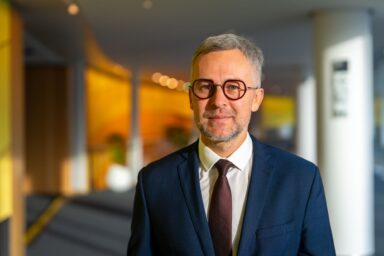
Opening the debate, the session chair, Séamus Boland, President of the European Economic and Social Committee (EESC), framed the discussion around the human cost of the war and its impact on families and young people, warning that the conflict has reshaped childhood across Ukraine. He described Russia’s continued attacks on energy infrastructure during winter as leaving civilians in “barbaric” conditions and said the war’s effects on children, families and communities must remain at the centre of European attention.
Children in Ukraine have grown up in circumstances “no parent would ever want to see a child”, he added, with many losing stability, safety and a sense of the future. Beyond the destruction of homes and schools, he warned, the conflict has eroded identity and security for a generation of young people.
War’s toll on childhood
The session turned to the issue of deported children, which he said must form part of any future peace settlement, alongside accountability. An “incredible path to just and sustainable peace must include bringing these children home and holding those responsible for the crime to account”, Mr Boland said.
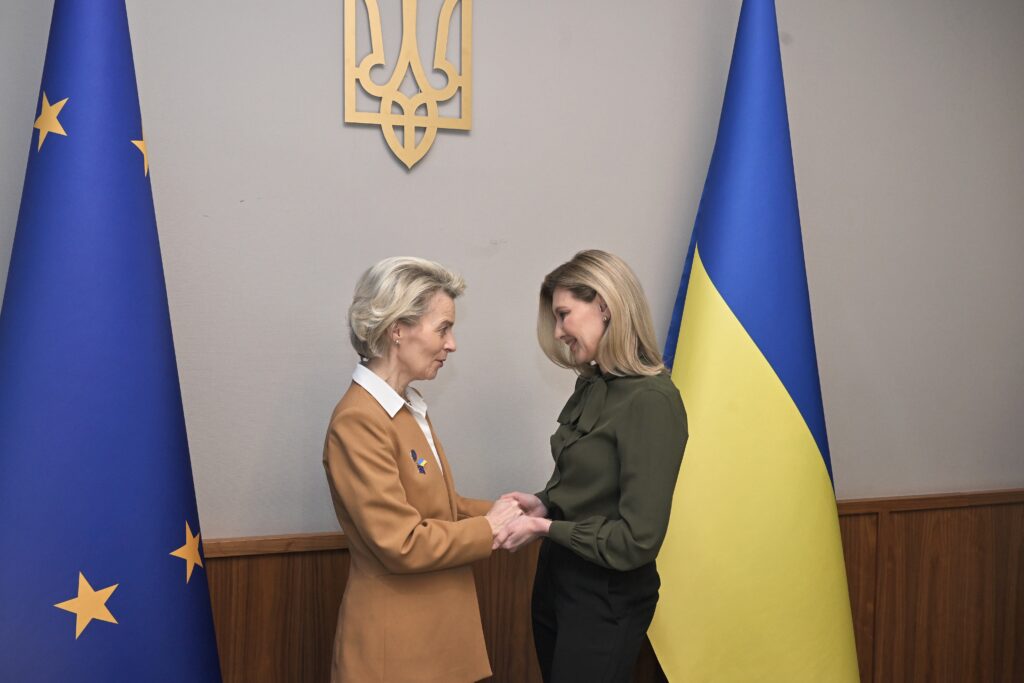
The debate then shifted to a video address from Ukraine’s First Lady Olena Zelenska, who outlined the scale of the humanitarian and psychological toll on children and described the strain on Ukrainian society as it attempts to maintain social services and the functioning of the state during wartime.
You might be interested
“Four years is a long time even for an adult. For millions of Ukrainian children, it’s almost their entire childhood,” she said.
Education, trauma and displacement
She said Russia’s invasion forced hundreds of thousands of Ukrainians who had worked in business, agriculture, education and civil society to take up arms or help keep the state functioning under wartime conditions, leaving communities to manage multiple pressures simultaneously.
The consequences for children, she stressed, are severe and long-lasting. “The worst part is that 684 of our children died. Over 2,000 children have been wounded over those years.”
The war has disrupted schooling for millions of children, destroying, occupying or rendering schools unsafe and leaving some primary pupils without any classroom education at all.
Long-term impact and recovery
The war’s impact extends beyond immediate physical harm, First Lady Zelenska warned, affecting mental health, development and prospects for the future. Surveys conducted before the current winter showed only a third of children and teenagers were making plans for further study or careers, a sign of deep uncertainty among young people. PTSD is a subject that also came under scrutiny later.
Ms Zelenska said “20,000 children were abducted by Russia” and that Ukraine had secured the return of at least 1,925 children through international efforts, though many remain outside the country and require long-term support if they are to reintegrate. Ukraine, she said, is attempting to rebuild support systems even as attacks continue, including providing remote education tools, expanding school meal programmes and developing psychological rehabilitation services for children affected by the war.
“These measures that rescue us now and will help us now will help us tomorrow, and it’s very important to support us,” she said.
Her remarks linked humanitarian recovery directly to international co-operation, with governments, civil society and international organisations working together to support rehabilitation and reconstruction.
ICC arrest warrants
The issue of deported children has already entered the international legal arena. In March 2023, the International Criminal Court issued arrest warrants for Russian President Vladimir Putin and the country’s children’s rights commissioner over the unlawful deportation and transfer of Ukrainian children from occupied territories, a charge classified as a war crime.
Speakers said the long-term consequences for Ukrainian society are now becoming clearer, with education systems reshaped, social services under strain and a generation growing up under conditions of instability and fear.
Beyond emergency response
The plenary then moved to a second segment bringing together policymakers, humanitarian organisations and legal experts working directly on Ukraine. Contributions came from representatives of the European External Action Service, UNICEF, the UN Human Rights Monitoring Mission, Save the Children and Ukrainian civil society organisations, alongside analysts and legal specialists documenting the impact of the war on children and families.
A documentary sequence shown during the session highlighted the psychological consequences of the war on children, showing a child ushered quickly out of danger and into a bunker as bombing begins. Ukrainian youth survivors also gave personal testimony, showing how deeply the conflict has reshaped their daily lives, education and sense of the future.
Among those addressing the session were EEAS Ukraine division head Baiba Tavaresa, UNICEF representative to Ukraine Munir Mammadzade, UN human rights monitoring mission head Danielle Bell, Save the Children adviser Rachel Watkins and Ukrainian civil society and legal experts working on child protection and deportation cases.
What can be done
Speakers focused on protection mechanisms, documentation of violations, psychological rehabilitation, education disruption and the return of deported children, outlining the scale of the policy and humanitarian response now required at both Ukrainian and European level.
Ms Zelenska closed by urging continued support, saying Ukraine’s recovery depends on maintaining international attention and solidarity. “Remember about the strength of your voice. You are civil society. You can achieve the difference, and it’s up to you to let Ukrainian children feel you and your support,” she said.